Amazon deforestation hits record low ahead of Brazil election
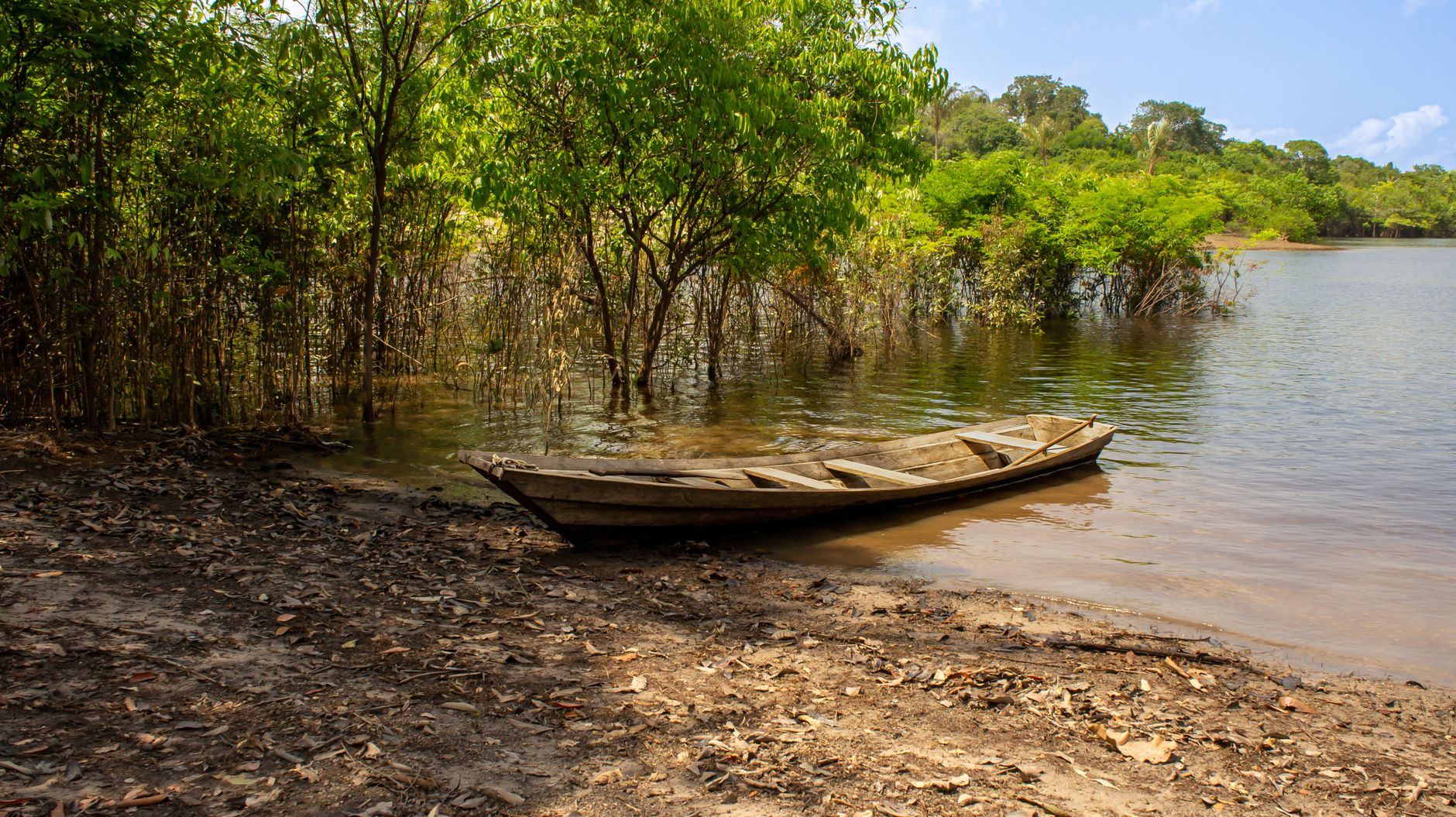
- Amazon deforestation fell 41.8% in the year leading to July 2026.
- The current rate is the lowest since records began in 1988.
- President Lula and Flavio Bolsonaro face a run-off on 25 October.
- Enforcement measures like the PPCDAm are credited for the decline.
- Brazil aims to achieve zero illegal deforestation by 2030.
Annual deforestation in the Brazilian Amazon fell by 41.8 per cent in the year leading up to July 2026, reaching its lowest level since official records began in 1988. Al Jazeera reported a 42 per cent decrease in forest clearance over the same period.
This decline is part of a broader trend, as deforestation in Brazil has fallen every year since 2022. Government data indicates that forest loss has reduced by 71.2 per cent over the past four years.
Under the administration of President Luiz Inácio Lula da Silva, deforestation has fallen by 71 per cent since 2023. Brazil's government reports that deforestation rates in the country's Amazon and savanna regions have fallen to record lows ahead of the presidential election run-off.
Presidential run-off set for 25 October
President Luiz Inácio Lula da Silva will face Senator Flavio Bolsonaro in a presidential run-off election on 25 October 2026. The Brazilian government reports that environmental progress, including record low deforestation in the Amazon and savanna regions, is occurring ahead of this vote.
Polls indicate a neck-and-neck race between the incumbent President Lula da Silva and the challenger Flavio Bolsonaro. In the first round of voting, Flavio Bolsonaro finished 2.2 million votes ahead of the President.
Enforcement measures drive environmental progress
The government revived the Action Plan for the Prevention and Control of Deforestation in the Legal Amazon, known as PPCDAm, in January 2023. This programme includes four pillars: strengthening monitoring and enforcement, promoting a sustainable economy, managing protected areas and determining how undesignated public forests should be used, and using regulations and financial incentives to curb deforestation.
According to data from Brazil’s National Institute for Space Research, the deforestation rate has slowed by 71.2% since the start of the Lula administration in 2022. The AFP news agency reported that this decline resulted from greater monitoring and stiffer penalties for illegal logging.
Government measures included restoring sanctions for illegal forest clearing detected by satellites. Authorities also barred properties with illegal deforestation from receiving bank loans and allocated funding to priority Amazon municipalities that demonstrated reductions in forest loss.
Historical comparison with the Bolsonaro presidency
Deforestation in the Amazon surged under the presidency of Jair Bolsonaro between 2019 and 2022. During this period, the Amazon lost nearly 60% more forest land compared to the previous four years. Official data shows that more than 45,000 square kilometres, or 17,400 square miles, were cleared during those four years.
Monica de Bolle of the Peterson Institute for International Economics reported that carbon emissions in Amazonia nearly doubled in 2019 and 2020 compared to average levels recorded between 2010 and 2018. By comparison, official satellite data indicated that the Amazon rainforest lost 3,335 square kilometres, or 1,300 square miles, from August 2025 through July 2026.
Candidates outline zero deforestation pledges
President Lula, who pledged to end deforestation by 2030 upon taking office three years ago, stated in a post on X on Friday: "Our goal is to achieve zero illegal deforestation by 2030". Meanwhile, challenger Flávio Bolsonaro has pledged to achieve zero illegal deforestation by 2029.
Flávio Bolsonaro is expected to continue his father's policies if he wins the election, though he has promised to fight organised crime in the Amazon. Carlos Nobre, a climate scientist at the University of São Paulo’s Institute for Advanced Studies, described Flávio Bolsonaro as a "climate denier" and warned of risks to the Amazon if he wins.
Experts praise historic achievement
Brazil’s Environment Minister, Joao Paulo Capobianco, described the recent decline in Amazon deforestation as "absolutely stratospheric". Mr Capobianco currently leads the ministry following the resignation of Marina Silva in April 2026 to run for Congress.
Marcio Astrini, executive secretary of the climate advocacy group Observatorio do Clima, described the drop as a "historic achievement". He said the figures prove that with political will, it is possible to curb both deforestation and greenhouse gas emissions.
Mr Astrini stated the formula for this success is consistent and effective, involving determination, enforcement on the ground, fighting crime and enforcing the law. He added that the data shows Brazil’s pledge to reach zero deforestation by 2030 is achievable.
He also noted that Brazil’s agriculture sector has been setting production and export records while deforestation has fallen. He said this trend disproves the false narrative that protecting the environment holds back the country’s development.
Regional deforestation data by state and biome
Pará recorded the highest level of deforestation in 2026, accounting for 33.9% of the total, while Mato Grosso followed with 25.5% and Amazonas with 15.7%.
The Cerrado, which is Brazil’s savanna region, experienced a 23.8% decline in its deforestation rate during the year leading up to July 2026.
Carbon storage and illegal land clearing
The Amazon rainforest stores approximately 175 billion metric tons of carbon, an amount equivalent to roughly 15 years of global carbon dioxide emissions, according to Grist. Deforestation and other land-use changes remain Brazil's largest sources of greenhouse gas emissions.
MapBiomas estimated that 97 per cent of Amazon land clearing in 2025 showed signs of illegality. On 15 October 2026, a helicopter was observed flying over an area affected by fires in the Autazes region of Amazonas, northern Brazil.
Frequently Asked Questions
- Brazil sees record fall in Amazon deforestation as key election looms (bbc.com)
- Brazil sees record fall in Amazon deforestation as key election looms - 10bmnews.com (10bmnews.com)
- BBC 🔵 Brazil sees record fall in Amazon deforestation as key election looms (shango.media)
- Brazil sees record fall in Amazon deforestation as key election looms - Symplexia Labs (news.symplexia.com)
- Brazil’s Amazon deforestation hits lowest level on record | Climate News | Al Jazeera (aljazeera.com)
- Brazilian Amazon deforestation falls to lowest on record as pivotal vote looms | Amazon rainforest | The Guardian (theguardian.com)
- Brazil’s election could determine the fate of the Amazon (grist.org)
- Brazil says Amazon deforestation fell to the lowest level since 1988 (boston25news.com)
Add NewsPulse Time as a preferred source on Google