How AI Fitness Apps Track Workouts and Correct Your Form
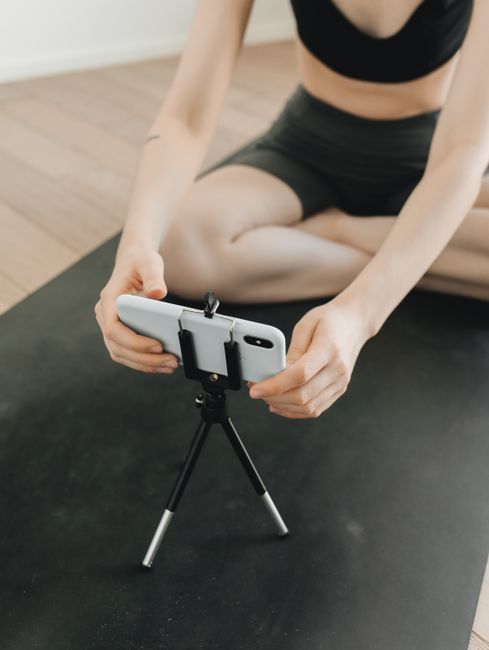
- AI apps use smartphone cameras to track joint movement in real-time.
- Data from wearables adjusts workout intensity based on your recovery.
- Automated feedback offers form correction without a human trainer.
- Privacy remains a trade-off when uploading movement data to the cloud.
How does AI exercise form correction work?
AI fitness apps turn your smartphone camera or wearable device into a digital coach by using computer vision to analyze your physical movement. They track specific joint points on your body to measure your range of motion and count your repetitions accurately. By processing thousands of data points every second, these tools adjust the intensity of your training based on your actual performance rather than a static plan. You get the benefits of a guided session without the high cost of a private gym membership. It is a data-driven approach to health that adapts to your unique body.
Can computer vision fitness apps replace a gym coach?
Most apps use your phone's front-facing camera to map your skeletal structure. According to the developers of popular apps like Freeletics, the software detects when your back arches too much or your squat depth is insufficient. It then provides an audible alert or a visual indicator on the screen. But this requires perfect lighting and positioning for the best results. So, you often have to clear space in your living room to ensure the camera sees your entire body. If your limbs are blocked, the AI cannot provide accurate feedback.
What data do AI personal trainers track?
AI is excellent at counting reps and correcting basic posture, but it lacks the nuance of human experience. A human trainer can observe your energy levels, assess your mental state, and offer emotional encouragement that an algorithm cannot replicate. However, AI is significantly cheaper. Most premium subscriptions cost between $10 and $20 per month, which is a fraction of the $60 to $150 hourly rate for a human coach. You choose between convenience and the specialized intuition of a professional.
How do wearables feed fitness apps?
Wearables provide the missing piece of the puzzle: your internal physiological data. Devices like the Oura Ring or Apple Watch track your heart rate variability, sleep quality, and blood oxygen levels. Apps ingest this data to determine if you are ready for a heavy lifting session or if you need a recovery day. According to standard fitness industry documentation, this prevents overtraining by capping your recommended load based on your body's actual stress levels. It creates a closed loop where your rest directly informs your next workout.
What are the privacy risks of AI fitness apps?
Using AI for fitness requires you to share personal movement patterns and biometric health data. Most companies store this information in the cloud to process it, which creates a potential privacy concern for users. Some apps allow you to process data locally on your device to mitigate this risk. You should check the settings menu of your chosen app to see if it offers offline processing. Always read the privacy policy to confirm if your health data is being sold to third-party advertisers.
How much do AI fitness tools cost?
Pricing models for these tools typically follow a tiered structure. Basic versions are often free but limit the amount of feedback or the number of custom routines you can access. Full-featured versions usually cost about $150 per year for an annual subscription. Some platforms charge a one-time fee for specific training programs, while others require a monthly commitment. Compare the features closely before paying, as some apps bundle hardware like sensors into their premium pricing tiers.
Frequently asked questions
AI form correction is highly accurate for standard movements like squats or lunges, using computer vision to map joint angles. However, it may struggle with complex, multi-planar movements compared to an in-person coach.
Most AI fitness apps only require a smartphone camera. Some advanced systems may integrate with wearables or smart mirrors to capture more precise biometric data, but standard computer vision works via your phone's lens.
Reputable AI fitness apps use encrypted cloud storage and often process video data locally on your device to protect privacy. Always review the app's privacy policy to see if your movement data is used to train their models.