Why AI Data Centers Require Massive Amounts of Electricity
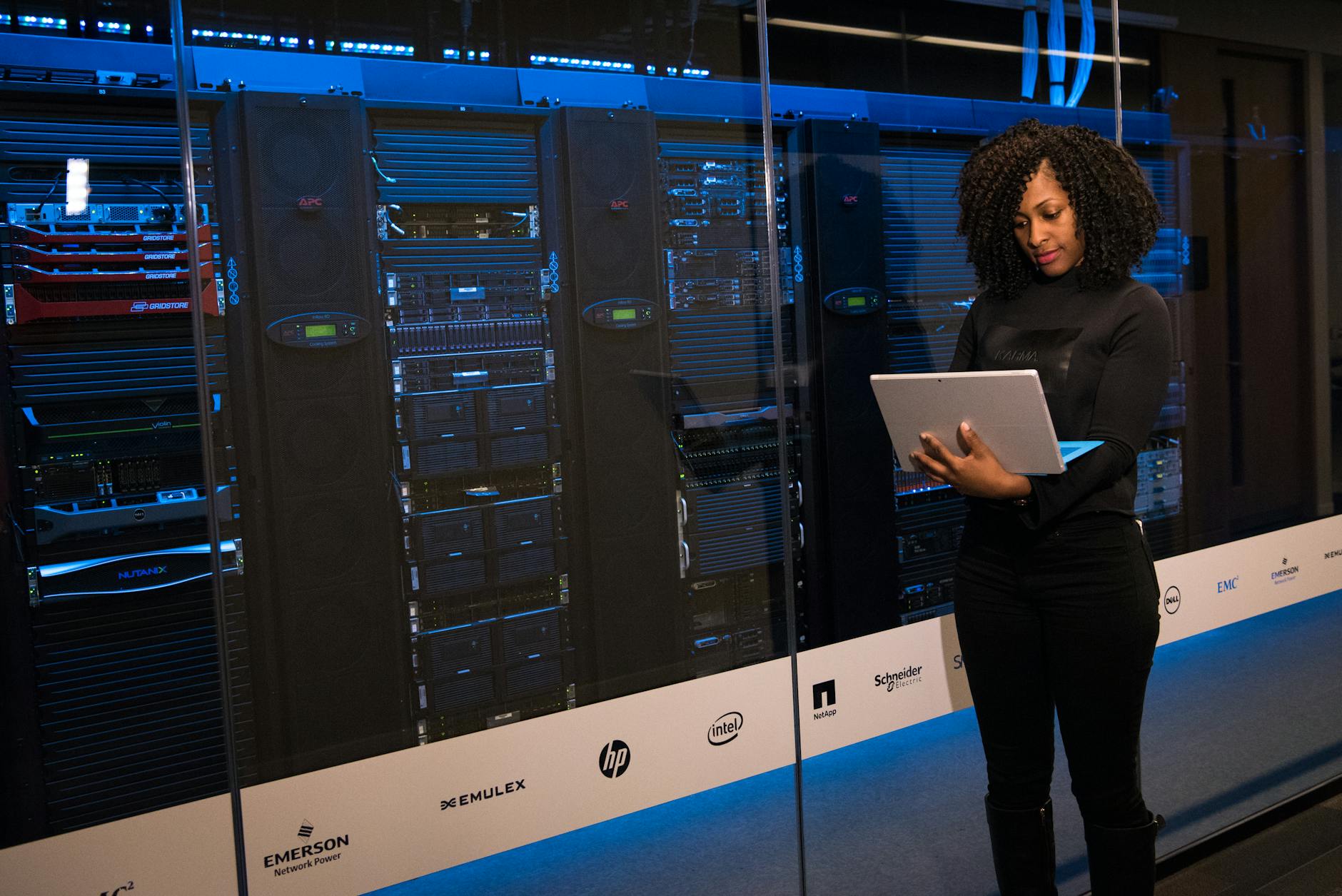
- Global data center energy use is projected to nearly double to over 950 TWh by 2030.
- Training frontier AI models can consume energy equivalent to small towns.
- Cooling systems account for up to 40% of an AI data center's total energy consumption.
- Hyperscale facilities are scaling up to 1 GW in electricity demand.
How much energy does AI use globally?
AI is significantly expanding global electricity demand, with data center power use potentially doubling by 2026. Global data center electricity consumption is projected to rise from approximately 485 terawatt-hours in 2025 to over 950 terawatt-hours by 2030.
According to Duke Energy, this represents a 95% growth over a five-year period, rising from 485 terawatt-hours in 2024 to 945 terawatt-hours by 2030. The International Energy Agency projects that the AI data center sector will consume 3% of global energy in 2030. Within this total, AI could account for 30% to 50% of all data center electricity use by 2030.
What defines a modern AI data center?
A data center is defined by the United States' Energy Independence and Security Act of 2007 as any facility that primarily contains electronic equipment used to process, store, and transmit digital information. This definition includes free-standing structures or facilities within larger buildings that use environmental control equipment to maintain the proper conditions for the operation of that electronic equipment.
Data centers date back to the 1940s, with the U.S. military's Electrical Numerical Integrator and Computer as an early example. Modern hyperscale data centers designed for AI workflows like training, fine-tuning, and inference are much larger, starting at 10 megawatts in electric demand and scaling to over 100 megawatts, or as much as 1 gigawatt.
Why is AI energy demand growing so fast?
AI computing demand is growing by approximately 25% to 35% each year, a rate that significantly exceeds the growth of traditional data center workloads. This rapid increase occurs because each new generation of large AI models requires roughly 4 to 6 times more energy than the previous one, driven by longer training cycles and larger parameter counts.
Training frontier AI models requires between hundreds of megawatt-hours and multiple gigawatt-hours of electricity, which is comparable to the energy consumption of a small town over the same period. Because of these high computational requirements, AI-focused data centers alone could double the global electricity demand from data centers by 2026.
How do cooling requirements drive energy use?
Cooling systems represent 30% to 40% of the total energy used by an AI data center, a cost driven by the extreme heat output of GPUs under continuous load. To manage this, data centers operating at high density are moving toward the adoption of liquid cooling systems. These systems are required for hardware configurations that can exceed 30 kilowatts per rack.
How are companies scaling to meet these power needs?
Amazon and Microsoft are scaling their infrastructure to meet electricity requirements for AI workflows. For example, Amazon is currently building a data center site in Richmond County, North Carolina, that will require up to 400 megawatts of electricity.
Microsoft is also expanding its capacity, having recently announced a 600-megawatt data center site in Person County, North Carolina.
What is the 'Bring Your Own Generation' strategy?
The FREEDM Center at NC State University recently hosted a workshop to discuss grid integration, energy demands, and policy considerations for these facilities. One strategy to bridge capacity gaps while waiting for utility transmission and distribution issues to be resolved is known as "Bring Your Own Generation".
According to Jim Smith, President of PowerSecure, companies use a combination of generation and storage located behind the meter to ensure grid resilience. These onsite energy choices include fuel cells, geothermal systems, and thermal energy storage. After 5 to 10 years of operation, these onsite generation assets can be repurposed to serve as grid assets, providing peak capacity for the data center.
- How much energy does AI use , and why does it need so many data centers ? — GDELT, Oct 18, 2026
- Data center (Wikipedia — background) — Wikipedia
- AI Data Center Energy Statistics — whatsthebigdata.com, Oct 2, 2026
- Perspectives on Energy and AI Data Centers — nccleantech.ncsu.edu
Add NewsPulse Time as a preferred source on Google
Frequently asked questions
AI data centers require massive electricity to support high-density computing for training and inference. Each new generation of AI models uses 4x to 6x more energy than the last. Cooling systems needed to manage extreme GPU heat output account for 30% to 40% of total energy use, driving demand significantly higher.
Related reading

FreeCast Named Best Streaming Technology Platform of 2026
Gelion Sulfur Battery Technology: Advancing High-Power EV Performance

The Evolution of Battery Technology and American Energy Innovation