Meta Muse Spark Open: 816B‑Parameter Model for Coding & Agentic Tasks
- Muse Spark Open features 816 billion total parameters and a 1-million-token context window.
- The model is optimized for coding, complex software engineering, and multi-step agentic tasks.
- It supports local execution on Apple Silicon via the MLX framework and multiple API platforms.
- Meta has released the model under a license allowing for limited commercial use.
What is Meta's Muse Spark Open model?
Muse Spark Open is an open-weight AI model released by Meta on 15 October 2026. It features 816 billion total parameters and 42 billion active parameters. Meta describes it as the most capable U.S. open-weight model available to date.
The model is natively multimodal and includes a 1-million-token context window. It was developed by Meta Superintelligence Labs, which introduced the original Muse Spark in April 2026 and launched the 1.1 version in July 2026. Engadget reports that the model is large enough to require significant memory to run locally.
Which tasks is Muse Spark Open designed to handle?
This model is built for coding, complex software engineering, and long-running agentic tasks. It also handles multimodal reasoning.
Meta demonstrated these agentic workflows by using Muse Code to fix bugs in the Ice Cubes Mastodon client and to control DaVinci Resolve for reviewing and cropping video footage. The model excels at long-horizon tasks and multi-step reasoning.
How do I access the Muse Spark Open model?
You can access Muse Spark Open through multiple API platforms, including Baseten, Fireworks AI, Groq, Modal, Nebius, OpenRouter, and Together AI.
If you prefer to host the model yourself, weights are available on Amazon SageMaker AI, Google Cloud Model Garden, Hugging Face, and Microsoft Foundry Models. Meta and Apple are collaborating on the model, which supports inference engines and hardware from AMD, Apple, Intel, and NVIDIA.
Can I run this model on Mac hardware?
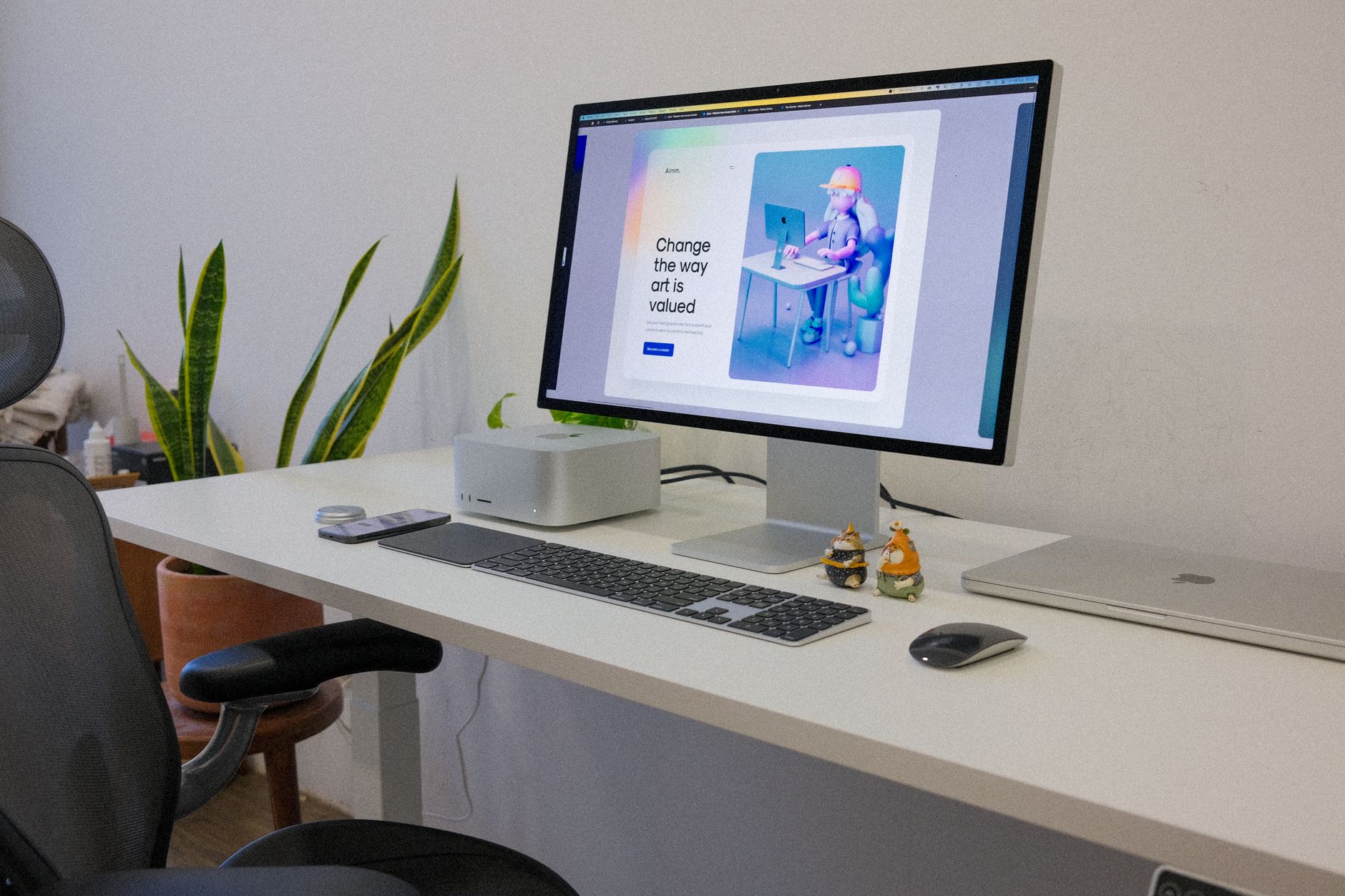
Meta and Apple have partnered to enable local execution of this model on Mac computers. Meta optimized the model for Apple Silicon using the MLX framework.
You can run the model on two Mac Studios equipped with M5 Ultra chips. Each of these machines features up to 512GB of unified memory and 1.2TB/s memory bandwidth.
The model can also run on a desktop setup using two Apple M2 Ultra Mac Studios. This collaboration allows you to leverage integrated GPU power for heavy AI workloads on Apple hardware.
What hardware costs and requirements does Muse Spark Open have?
While the 512GB M5 Ultra Mac Studio has not yet shipped, it is expected later in October 2026.
A setup utilizing four 256GB M5 Ultra Mac Studios is estimated to cost roughly $38,000, while a single 256GB Mac Studio is priced above $10,000. If you choose to use the API instead, the cost is $1.25 per million tokens.
How does Muse Spark Open compare to other AI models?
Meta’s model card assigns Muse Spark Open an Artificial Analysis Intelligence Index score of 39, while the MiMo-V2.6-Pro model scored 46. Internal benchmarks from Meta show the model outperforming GLM 5.3 and Kimi K3 on agentic tasks and visual reasoning.
It also leads rivals on JobBench and MCP-Atlas metrics. However, it trails Kimi K3 and GLM 5.3 in terminal coding, long software-engineering work, and GDPVal-AA. The scorecard also compares the model against Inkling, Nemotron 3 Ultra, Beam, and Mistral 4 Large.
What limitations does Muse Spark Open have?
Muse Spark Open is released under a license that allows for limited commercial use. It is less capable than Meta’s stronger Muse Wonder model, which the company has decided to keep closed.
Meta’s chief AI officer, Alexandr Wang, stated on 12 October 2026 that the company will not open-source its most powerful models, as Muse Wonder has reached the frontier.
How does it perform on different hardware?
The model supports several inference engines, including SGLang, vLLM, TensorRT-LLM, Hugging Face Transformers, Apple MLX, llama.cpp, and Unsloth. It includes optimizations for AMD, Apple, Intel, and NVIDIA silicon.
The open-weight version features auto-tunable Helion GPU kernels in SGLang, which provide 1.03 to 3.95 times speedups on NVIDIA and AMD GPUs. These kernels also offer a 3% end-to-end speedup on AMD MI350.
How is the model secured?
Meta assessed the model using its Superintelligence Scaling Framework. Before releasing the model, the company included additional post-training safety measures to ensure it meets internal standards.
You should review the model documentation provided by Meta on their research platform before deploying it in your software engineering environment.
| Hardware Setup | Memory Requirement |
|---|---|
| Two M5 Ultra Mac Studios | 512GB Unified Memory each |
| Four M5 Ultra Mac Studios | 256GB Unified Memory each |
- Muse Spark Open Is Meta's Latest Open-Weight AI Model — Google News, Oct 16, 2026
- Apple and Meta to collaborate on new AI model — Google News, Oct 16, 2026
- Meta releases open-weight Muse Spark AI model for coding and AI agents — Google News, Oct 16, 2026
- Muse Spark (Wikipedia — background) — Wikipedia
- Muse Spark Open Is Meta's Latest Open-Weight AI Model — timesofai.com, Oct 16, 2026
- Introducing Muse Spark Open, The Most Capable US Open‑Weight Model to Date — research.meta.ai, Oct 15, 2026
- Meta releases Muse Spark Open, an 816-billion-parameter open-weight model that runs on Mac Studios — pollar.news, Oct 15, 2026
Add NewsPulse Time as a preferred source on Google
Frequently asked questions
You can run it on two M2 Ultra Mac Studios or, once available, on M5 Ultra Mac Studios. The model requires significant memory, with setups involving multiple Mac Studios and up to 512GB of unified memory per device. It is specifically optimized for Apple Silicon using the MLX framework.



