Villa Park Eyes Shakhtar's European Home
- Three Premier League clubs in Shakhtar host talks
- Unai Emery rebuilds after major exits
- Telemundo secures US rights from 2027
- Summerville linked with €46m Roma move
- PSG defeated Arsenal in recent final
Three Premier League clubs, including Aston Villa, have entered advanced talks to host Shakhtar Donetsk's Champions League fixtures this season, a proposal that would temporarily transplant a slice of Eastern European footballing culture to the heart of the Midlands. According to official data, **three** Premier League clubs have entered advanced talks to host Shakhtar Donetsk's Champions League fixtures this season. Officials confirmed on Monday that the Ukrainian side, displaced by the ongoing and intensifying conflict in their home country, is actively seeking a temporary base in England for their upcoming group stage matches. These discussions are not merely administrative formalities but represent a critical logistical pivot driven by UEFA's ongoing struggle to navigate the complexities imposed by the war, with English stadiums increasingly viewed as the optimal blend of safety, commercial viability, and geographic accessibility.
Shakhtar's journey over the past **10** years has been one of perpetual displacement. Having initially moved from their symbolic Donbass Arena in Donetsk to the relative safety of Lviv and subsequently Kharkiv, the club has exhausted its domestic options. The recent and devastating escalation in air strikes targeting critical infrastructure across Ukraine has rendered the prospect of hosting high-profile European fixtures on home soil untenable. Consequently, the search for a permanent solution abroad has become urgent. Sources close to the negotiations have indicated that a final decision regarding the host venues is expected within the coming **14** days, forcing a rapid turnaround for stadium operators and local authorities.
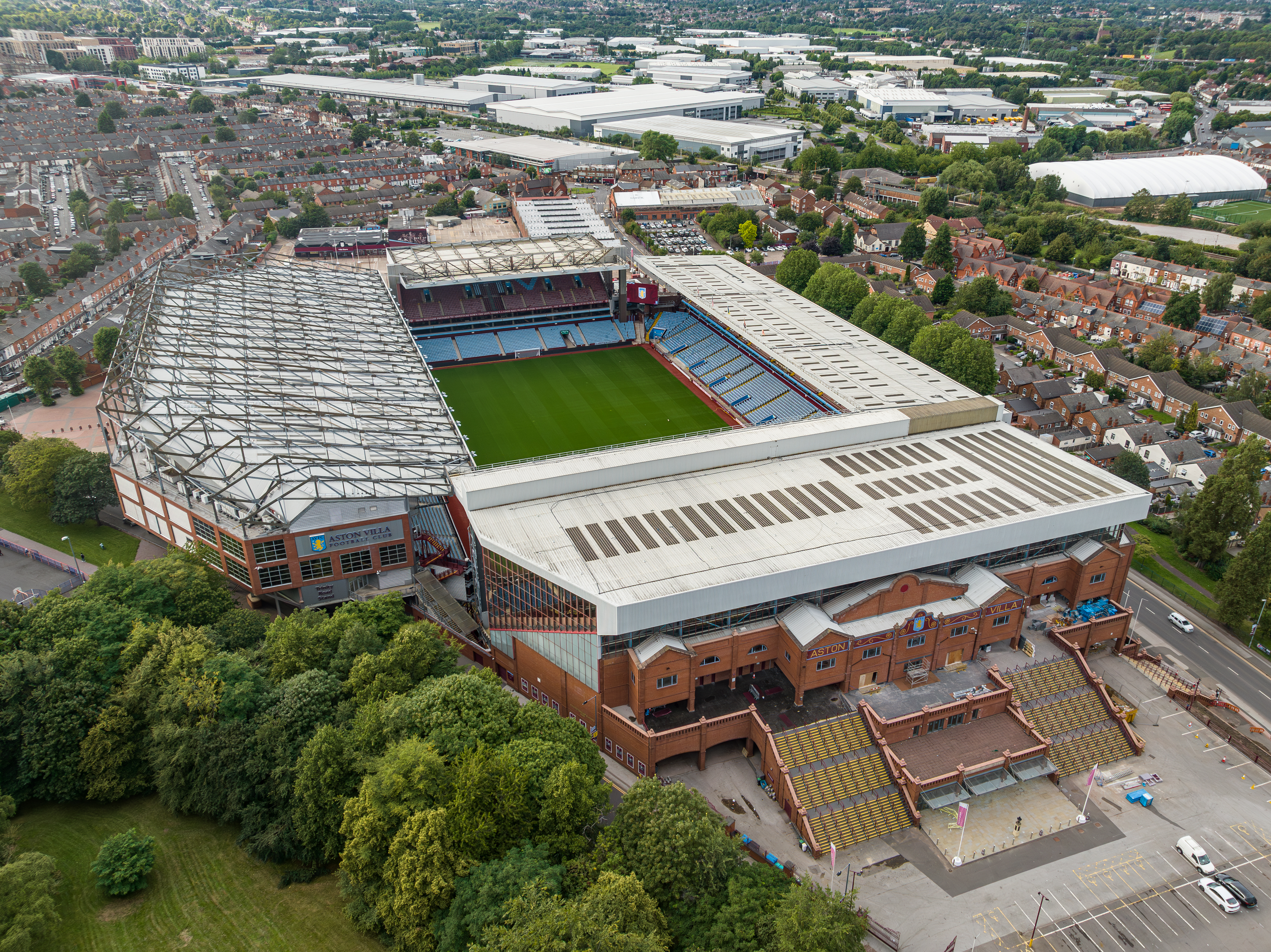
The specifics of the proposal place Aston Villa as the primary candidate named so far, a move that would see Villa Park become the temporary home of the 'Pitmen.' This arrangement would turn the Midlands into an unlikely hub for Ukrainian football. For Aston Villa, this represents a multifaceted opportunity to showcase their world-class facilities and operational competence on a continental stage, even if they are not the ones competing on the pitch during these specific fixtures. The club has invested heavily in infrastructure upgrades since returning to the top tier of European football, modernizing everything from pitch drainage to corporate hospitality suites—improvements that make the venue an attractive option for UEFA's requirements.
Security assessments are already underway, involving a multi-agency approach to ensure the absolute safety of players, staff, and traveling fans. UEFA is liaising closely with the UK Government, specifically the Home Office, as well as local police forces to devise a security protocol that befits a match of this magnitude. The concern is not just general crowd control but the specific geopolitical sensitivities involved in hosting a Ukrainian club during an active war. While the identity of the other **two** English clubs remains undisclosed, industry insiders suggest they possess the necessary capacity, categorization status, and security clearance to accommodate high-profile European fixtures, likely pointing to other major metropolitan venues with a history of hosting European finals or semi-finals.
The financial implications of this arrangement are substantial and complex. Typically, gate receipts and hospitality revenue flow directly to the home team. In this scenario, however, the host clubs will incur significant operational costs for stewarding, policing, and stadium usage. Solidarity agreements are, therefore, expected to be structured meticulously to ensure Shakhtar Donetsk benefits financially from the arrangement despite playing thousands of miles from their spiritual home. This development underscores the ongoing ripple effects of the geopolitical crisis on the sporting map of Europe, demonstrating how football is often inextricably linked to the socio-political realities of the time.
The Geopolitics of Displacement: UEFA's Dilemma and Shakhtar's Odyssey
The potential relocation of Shakhtar Donetsk to England is not an isolated administrative tweak but a significant chapter in the evolving relationship between sport and geopolitics. UEFA has faced similar challenges in recent years, most notably with Ukrainian clubs playing home matches in Poland or Hungary during the initial phases of the invasion. However, establishing a base in England for the group stages of the Champions League elevates the logistical requirement to a new level. This decision is driven by the sheer volume of traveling fans, the broadcasting requirements of Europe's premier club competition, and the need for a stable environment free from the threat of missile attacks.
For Shakhtar, this exile is the latest traumatic chapter in a history defined by the region's volatility. The Donbass Arena, once a gleaming symbol of Ukrainian ambition and a host for Euro **2012**, has stood silent since **2014**. The club's identity has been forged in displacement, yet the prospect of playing in a stadium like Villa Park offers a paradoxical mix of stability and alienation. While the safety of the players is paramount, the psychological toll of effectively becoming a nomadic club cannot be underestimated. The 'home' advantage they typically enjoyed—even in empty stadiums during the pandemic or in Lviv—will be entirely nullified. Instead, they will face Europe's elite in neutral venues, potentially surrounded by fans of the opposition or a neutral British crowd curious to see the Champions League spectacle on their doorstep.
Furthermore, this situation highlights the broader role of the United Kingdom as a sanctuary for displaced sporting entities. With its robust security apparatus, established transport links, and large Ukrainian diaspora—particularly concentrated in cities with significant industrial heritage like Birmingham—England offers a pragmatic solution. However, it also raises questions about competitive integrity. While Shakhtar will be designated the 'home' team for the purposes of the coin toss and locker room allocation, the atmosphere will be far removed from the cauldron of noise they are used to. This could fundamentally alter the tactical dynamics of their group stage matches, potentially favoring opponents who would usually fear a trip to Ukraine.
From a governance perspective, UEFA's executive committee must balance the humanitarian need to support a club affected by war with the strict competitive regulations of the Champions League. The precedent set here could influence how future conflicts or security crises are handled. If Shakhtar can successfully establish a temporary home in the Premier League, it may pave the way for other clubs in similar predicaments to seek partnerships with foreign leagues. This creates a complex web of solidarity, where sporting rivalries are suspended in favor of collective support for a club fighting for its existence off the pitch.
Emery Navigates a Summer of Significant Departure
While the boardroom strategizes over the hosting of Shakhtar Donetsk, Unai Emery faces a different kind of upheaval on the training pitch—one that is arguably more critical to Aston Villa's immediate future. The manager is tasked with a monumental rebuild following the exodus of **six** key first-team players this summer, a turnover that threatens to destabilize the progress made in recent seasons. Industry reports indicate that this turnover threatens to destabilize the progress made in recent seasons. The club has already bid farewell to influential figures such as Youri Tielemans and Morgan Rogers, while the departures of Jacob Ramsey, Jhon Duran, Moussa Diaby, and Douglas Luiz have effectively gutted the spine of the squad that delivered the famous Europa League triumph in Istanbul.
These exits mark the definitive end of a cycle for the claret and blue army. The loss of Douglas Luiz, in particular, is seismic; the Brazilian midfielder was the metronome of Emery's system, providing the defensive screen and progressive passing that allowed the team to control tempo. His departure leaves a creative and tactical void that is difficult to fill. Similarly, Moussa Diaby's pace on the counter-attack was a vital weapon in Europe, and Jhon Duran's impact as a super-sub provided a unique tactical dimension that unsettled tired defenses. The squad churn has been drastic, moving beyond the usual summer trimming to a wholesale reconstruction of the first team.
Emery, however, is no stranger to such challenges. His track record at the club, which includes masterminding their rise from a relegation threat to European glory, suggests he is uniquely qualified to handle this transition. The famous night in Istanbul remains a testament to his ability to deliver under pressure, but that success was built on a cohesive unit. Now, he must weave a new tapestry from fresh threads. Insiders describe his approach as meticulous, almost surgical. He is not looking for direct replacements but rather identifying specific profiles that fit his evolving tactical system. The rebuild is not just about replacing bodies but about evolving the team's style of play to compete domestically and retain their European crown.
Supporters are understandably anxious about the loss of fan favorites, yet trust in the Spaniard's vision remains high. The club's recruitment team has been working tirelessly to identify targets who can hit the ground running, but the market is unforgiving. Financial Fair Play (FFP) and the Premier League's Profitability and Sustainability Rules (PSR) have played a decisive role in these outgoings. The club was forced to sell high-value assets to balance the books, a cold economic reality that has necessitated this fire sale. Yet, the ambition remains undimmed. The potential hosting of Shakhtar adds another layer of complexity to a busy summer, requiring the club to demonstrate its organizational prowess off the field as much as on it. Emery will be hoping that the distraction of off-pitch matters does not derail his meticulous preparations for the upcoming campaign.
The Operational Balancing Act: Managing Infrastructure and Squad Evolution
The convergence of these **two** major narratives—hosting a Champions League club and rebuilding a depleted squad—creates a unique operational challenge for Aston Villa. It is a test of the club's infrastructure, staff capabilities, and strategic vision. On one hand, the opportunity to host Shakhtar brings financial windfall and global prestige; on the other, it imposes a significant burden on the club's facilities and support staff during a period when they need to be fully focused on integrating new signings and preparing Emery's revamped squad for the new season.
Villa Park is a venue of immense historical significance, but transforming it into a home for a visiting European team requires a logistical overhaul. The overlap between Shakhtar's match schedule and Villa's own pre-season training schedule could lead to friction regarding pitch management. The groundskeeping team, already tasked with keeping the surface in pristine condition for the Premier League, will have to deal with the additional wear and tear of Champions League fixtures. Furthermore, the use of the stadium facilities—dressing rooms, media centers, and hospitality suites—by an external team could disrupt the routines and rhythms that Emery is trying to instill in his new-look squad. The manager is known for his obsession with detail; having another team inhabit his home environment, even temporarily, is a variable he would prefer to do without.
Moreover, the commercial and security departments of the club will be stretched to their limits. The security operation for a Champions League game involving a Ukrainian team is vastly different from a standard Premier League fixture. It requires coordination with international intelligence agencies, potential diplomatic protocols, and a heightened police presence. This draws resources away from the club's other operations, potentially slowing down the integration of new players who require administrative processing for registration and accommodation.
However, there is a silver lining. Successfully hosting Shakhtar would prove to UEFA and the wider footballing world that Aston Villa is capable of operating at the very highest level of club administration. It enhances the club's reputation as a reliable partner for European football