Huntington Mayor Defends Flock Cameras as Privacy Row Deepens
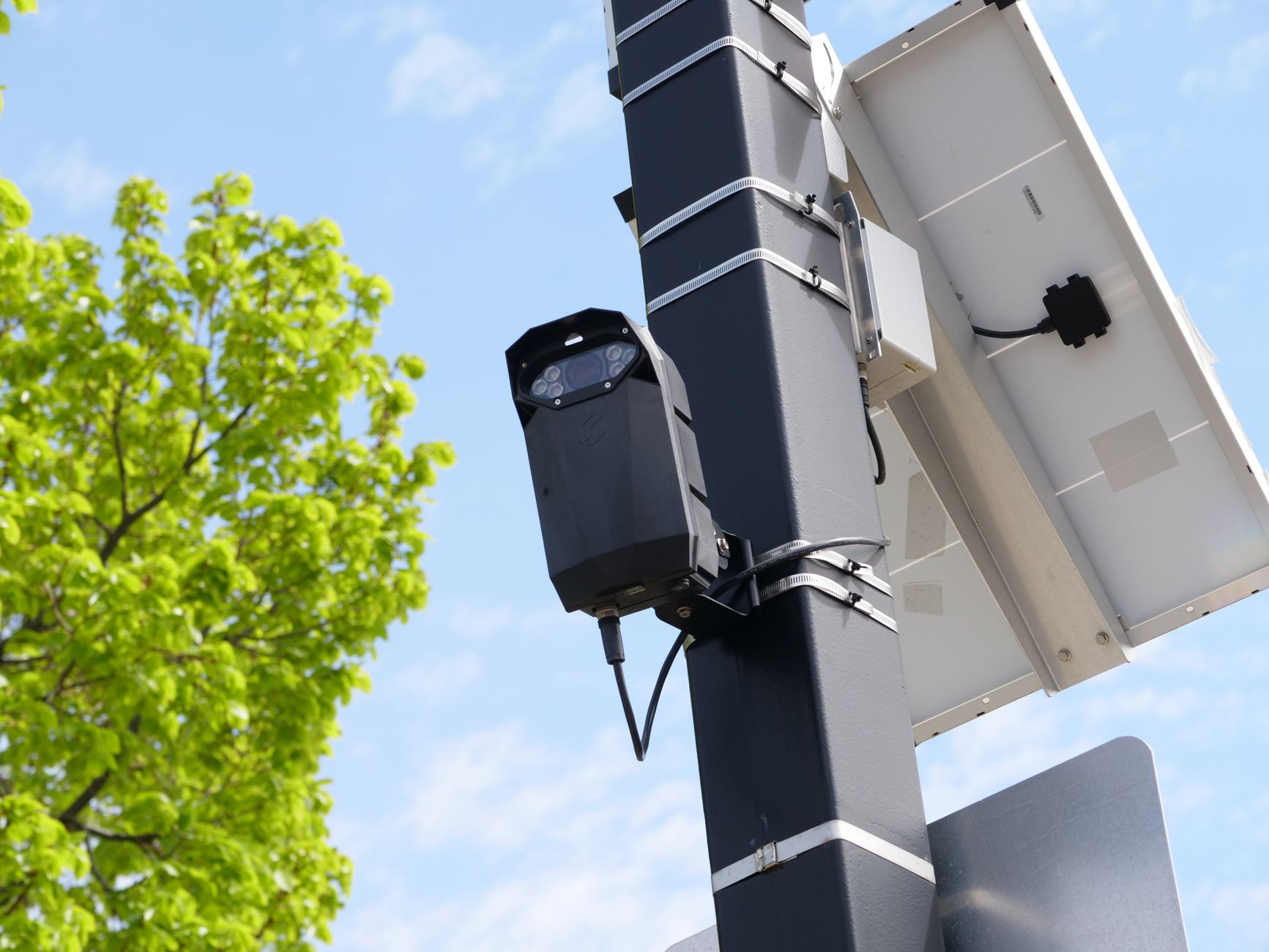
- Huntington Mayor calls Flock cameras 'investigative tools' only
- Flock CEO apologises for calling activists 'terrorists'
- Detroit cities split on renewing Flock surveillance contracts
- Tampa separates RedSpeed data to prevent ICE access
The Mayor of Huntington has moved to quell a rising storm over civil liberties, firmly defending the town's acquisition of Flock Safety cameras amidst a polarized community reaction. In a detailed interview released today, the official characterised the AI-powered surveillance system as a vital investigative aid rather than a mechanism for monitoring ordinary citizens, attempting to draw a hard line between public safety and perceived government overreach. This defence comes at a critical juncture for Flock Safety, as its chief executive, Garrett Langley, simultaneously attempts to repair his company's fractured image after describing activists as a "terrorist organisation." The controversy highlights a growing national divide in the United States over the balance between public safety and the right to anonymity in public spaces, a debate that has moved from academic circles to town council chambers with alarming speed.
Officials in Huntington emphasised that the technology is strictly for solving crimes, attempting to frame the narrative around efficacy rather than surveillance. "These cameras are not monitored to follow law-abiding citizens as they go about their daily lives," the town administration stated. "They are strictly investigative tools that help law enforcement quickly identify vehicles associated with crimes." This distinction is central to the municipality's legal and public relations strategy. By positioning the cameras as reactive rather than proactive, they hope to avoid the "Big Brother" stigma that has plagued similar initiatives in other jurisdictions. However, the assurance that these tools are merely for "investigation" does little to soothe critics who point to the technology's capability to aggregate vast amounts of data on movement, creating a digital history of residents' lives that can be queried retroactively.
The debate is no longer theoretical. Across the country, from the suburbs of Detroit to the streets of Tampa, communities are grappling with the rapid proliferation of automated license plate readers (ALPR). For Huntington, the decision is a calculated risk. The town leadership believes the benefits in solving cases involving stolen vehicles, missing persons, and burglaries outweigh the potential privacy costs. They cite statistics from other municipalities where clearance rates for auto theft have reportedly spiked following the installation of Flock's "Falcon" cameras. Yet, for privacy advocates, the issue is not merely about the current intent of the police but the potential for "mission creep." The fear is that a system justified by car theft could eventually be used to track protestors, monitor attendance at political rallies, or enforce minor infractions, fundamentally altering the relationship between the state and the citizenry.
The Mayor's address is an attempt to bridge that gap, promising transparency while holding firm on the utility of the system. "We understand that anytime new technology is introduced, questions about privacy are completely appropriate," the town said in a prepared statement. "We welcome those questions. Transparency is vital, and our citizens deserve accurate information, not rumors." This pledge of openness is the new frontline for local governments adopting surveillance tech. It is not enough to catch criminals; the authorities must now convince the public they are not becoming a police state by proxy. To this end, Huntington officials have promised to release quarterly reports on how often the system is accessed and for what types of crimes, a move they hope will foster trust. However, without independent oversight or strict statutory limitations on data retention, skeptics argue that such voluntary transparency measures are insufficient safeguards against potential abuse.
Langley Apologises for 'Terrorist' Remark Against Activists
The executive leadership of Flock Safety is facing a separate crisis of confidence, stemming from aggressive rhetoric used against its critics that has inflamed the very communities it seeks to serve. Chief Executive Garrett Langley has publicly apologised for a November 2025 interview in which he labelled activists and the group "Deflock" as a "terrorist organisation" whose "primary motivation is chaos." The comments, made to Forbes, drew immediate derision from privacy advocates and even prompted a chuckle from the interviewer, Tom Brewster, who suggested the activists might take offence at the melodramatic label. The apology is a rare moment of contrition for a tech sector that often doubles down in the face of public backlash, signalling that Flock Safety recognises the existential threat to its business model posed by a hostile public image.
Langley's acknowledgment of the company's "evolving understanding of privacy concerns" suggests a strategic pivot. Flock Safety, now valued at roughly $4 billion, can ill afford to be seen as an enemy of the people while trying to sell its hardware to thousands of municipalities. The company's growth trajectory has been explosive, largely driven by a Software-as-a-Service (SaaS) model that charges cities a recurring subscription fee for access to the ALPR network. But so has the resistance. Online communities on Reddit, Signal, and Discord have begun to celebrate the disabling of Flock cameras, turning the vandalism of surveillance tech into a subculture of civil disobedience. Activists share techniques for blinding lenses with infrared LEDs or physically masking the cameras, viewing these actions as a form of direct defense against an encroaching surveillance state.
Langley's attempt to frame this vandalism as terrorism backfired spectacularly, painting the multi-billion dollar firm as a bully against local residents. In his apology, Langley acknowledged the importance of community input, a stark reversal from his previous stance. The incident underscores the widening gulf between Silicon Valley-style growth hacking and community values. While Flock sees its product as a crime-fighting necessity, a significant portion of the public views it as an intrusion. The CEO's remarks have become a rallying cry for the opposition, used as evidence that the company holds ordinary citizens in contempt. Repairing that trust will require more than a press release; it will demand a demonstrable change in how the company engages with the towns it seeks to serve.
The timing is critical. As more cities review their contracts, the last thing Flock needs is for its CEO to be quoted on town council floors as proof that the company cannot be trusted with sensitive data. The "terrorist" comment has provided ammunition to civil liberties groups like the ACLU and the Electronic Frontier Foundation (EFF), who are increasingly litigating against the widespread use of ALPR technology. These groups argue that the aggregation of license plate data constitutes a searchable database of public movements, chilling the First Amendment rights to association and free speech. For Flock Safety, the challenge is no longer just technical—keeping the cameras running—but sociological: convincing a skeptical public that the watching eye is benevolent, not malevolent.
Detroit Cities Split on Surveillance Contracts Amid Public Outcry
The response to Flock Safety's technology is far from uniform across the United States, with the Detroit metropolitan area serving as a microcosm of the national debate. In Warren, a city grappling with property crime and auto theft, the council voted to renew its contract with Flock, despite vocal opposition from a contingent of residents worried about privacy. The decision was not made in a vacuum. Officials like Councilman Eddie Hawkins have maintained that the technology has "great value to law enforcement" and pledged to use it in a "legal and reasonable way." This sentiment is shared by some residents who feel the benefits are tangible and immediate. Garry Watts, a 70-year-old resident of Warren, publicly endorsed the cameras at a council meeting. "They are one of the best tools the police department has received lately," Watts said. His viewpoint highlights the generational and experiential divide on surveillance; those who feel unprotected often prioritise efficacy over abstract privacy concerns.
Yet, just a few miles away in Ferndale, the narrative is entirely different. Known as a liberal enclave with a strong commitment to civil liberties, Ferndale was one of the first cities in the region to distance itself from Flock. The city council there listened to the same pitch about crime reduction but reached the opposite conclusion, swayed by arguments from civil liberties groups and the potential for misuse. The council expressed concerns that the technology could be used to target marginalized communities or track political dissidents. This rejection is significant because Ferndale is adjacent to Detroit, a city that has struggled with high crime rates, illustrating that the desire for safety does not automatically equate to acceptance of surveillance.
This patchwork of adoption creates a complex security map. A criminal can easily avoid surveillance by simply staying within the bounds of cities like Ferndale that have rejected the technology, rendering the regional network less effective. Conversely, it creates privacy havens for residents who wish to move about the city without their license plate being logged, timestamped, and stored in a cloud database. The divergence in policy also puts pressure on regional law enforcement cooperation. If Warren has data on a suspect's vehicle that Ferndale does not, or will not access due to policy constraints, it complicates investigations that cross municipal borders. Police departments often rely on mutual aid agreements, but conflicting surveillance policies can create friction and delays in manhunts or Amber Alerts.
The split in the Detroit area is being watched closely by other municipalities. It proves that the decision to adopt Flock is not a foregone conclusion but a political choice that reflects the specific values of a community. As contracts come up for renewal elsewhere, the arguments heard in the Detroit suburbs—efficacy versus intrusion—will likely be replayed in city halls from coast to coast. The situation also highlights the lack of a cohesive national standard, leaving each town to navigate the ethical and legal quagmires of AI surveillance on its own. This decentralized approach results in a checkerboard of privacy rights across the country, dependent entirely on the zip code one inhabits.
Tampa's RedSpeed Deal Raises Fears Over ICE Data Access
While the debate often centres on local police forces, the implications of surveillance technology extend into the fraught realm of federal immigration enforcement. In Tampa, the city council recently approved an expansion of camera technology in school zones, but with strict conditions aimed at safeguarding immigrant communities. The contract involves RedSpeed, a UK-based company that provides speed safety cameras, but the concerns mirror those surrounding Flock Safety. The primary anxiety among activists is that data collected for local safety purposes could be siphoned off by federal agencies, specifically Immigration and Customs Enforcement (ICE), to deport undocumented immigrants.
The council's approval was contentious, requiring a tie-breaking vote from the mayor after hours of public testimony. Immigrant rights groups argued that even if the Tampa Police Department promises not to share data with ICE, legal loopholes exist. Under certain circumstances, federal agencies can subpoena data from third-party vendors, bypassing local sanctuary policies. This means that a camera installed to protect children from speeding cars could become a tool for family separation. The council responded by adding a clause to the contract explicitly prohibiting the sharing of data with federal immigration authorities, though legal experts question the enforceability of such a provision against a federal warrant.
This situation underscores the "dual-use" nature of surveillance infrastructure. Technology marketed for benign purposes, such as traffic safety or amber alerts, is often built on platforms that allow for expansive data analysis. Once the infrastructure is in place, the capability to repurpose it for more aggressive surveillance is often just a software update away. In Tampa, the fear is palpable; communities with large immigrant populations report that residents are already altering their driving habits to avoid certain intersections, effectively eroding their freedom of movement.
The Tampa case also highlights the global nature of the surveillance industry. While Flock Safety is a domestic U.S. giant, companies like RedSpeed and Jenoptik bring international perspectives—and data practices—to American streets. The lack of a federal privacy law in the United States makes these municipalities particularly vulnerable to data harvesting. Unlike the European Union's GDPR, which strictly limits how long personal data can be stored and who can access it, U.S. laws are a patchwork of state regulations. Consequently, data collected in Tampa could theoretically be stored on servers in another state or country, subject to a different jurisdiction's privacy laws. This opacity fuels the distrust that local officials are struggling to manage.
The Architecture of Surveillance: How ALPR Technology Works
To understand the intensity of the backlash, one must understand the capabilities of the technology being deployed. Modern Automated License Plate Readers (ALPR), such as those sold by Flock Safety, are a far cry from the early grainy cameras of the past. Today's systems are sophisticated AI-driven nodes that capture not just the license plate but a "vehicle fingerprint." Using optical character recognition (OCR) and machine learning, these cameras analyze the make, model, color, and even distinctive features like bumper stickers or missing hubcaps. This allows law enforcement to search for a vehicle even if the suspect has swapped the plates—a common tactic among criminals trying to evade detection.
The cameras operate continuously, snapping high-resolution images of every passing vehicle and uploading them to a cloud-based server in real-time. This data is typically geotagged and time-stamped, creating a precise historical record of movements. Flock Safety's system, for instance, claims to be able to process thousands of plates per hour with high accuracy. The data is stored for a predetermined period—usually 30 days—before being purged, though privacy advocates note that this retention period is often extended during active investigations or under specific state laws. The power of the system lies in its searchability. An officer can query the database for "all red pickup trucks that passed Main Street between 2:00 AM and 3:00 AM," effectively casting a digital dragnet without a physical presence.
This "vehicle fingerprinting" capability is what sets modern ALPR apart from traditional traffic enforcement cameras. It transforms the camera from a tool for catching speeders into a tool for tracking patterns of life. Civil liberties experts warn that this capability enables the creation of "heat maps" of daily life, revealing where people go to church, what doctors they visit, and where they spend their leisure time. While companies like Flock Safety insist that the data is encrypted and access-logged, history is replete with examples of surveillance tools being repurposed. The technology is neutral, but its application is dictated by policy, a policy that is currently being written in real-time amidst heated public debate.
The Legal Battleground: State Laws and the Fight for the Future
As the technology proliferates, a legal battleground is emerging across the states, with legislatures scrambling to define the boundaries of acceptable surveillance. Currently, there is no federal law specifically regulating the use of ALPR technology, leaving a vacuum that states are filling in divergent ways. Some states, like New Hampshire and Vermont, have enacted strict bans on the use of ALPR data for anything other than active criminal investigations, effectively prohibiting the kind of dragnet surveillance that worries privacy advocates. Others, like Florida and Texas, have embraced the technology, passing laws that facilitate its integration into broader law enforcement networks.
This legislative patchwork creates a complex compliance environment for companies like Flock Safety and RedSpeed. They must tailor their data retention policies and access protocols to suit the laws of each state, a challenge that adds to the cost and complexity of their operations. Meanwhile, civil rights groups are increasingly turning to the courts to challenge the use of these systems. They argue that the long-term storage of location data constitutes a "search" under the Fourth Amendment, requiring a warrant. This argument draws on the Supreme Court's 2018 decision in *Carpenter v. United States*, which held that accessing historical cell-site location information from telecoms requires a warrant. Advocates believe the same logic should apply to ALPR data, as both reveal intimate details of a person's life.
Looking ahead, the fight over surveillance cameras is likely to intensify as the technology becomes more integrated with other systems. Predictive policing algorithms, which use historical crime data to forecast where crimes will occur, are beginning to incorporate ALPR data, raising fears of a feedback loop where marginalized communities are subjected to even greater scrutiny. Furthermore, the integration of facial recognition with ALPR systems is on the horizon, a development that would eliminate the anonymity of the driver entirely. The decisions being made today in towns like Huntington, Warren, and Ferndale are not just about solving car thefts; they are setting precedents for the future of privacy in the physical world. As the legal and societal consensus shifts, the cameras on the street corners stand as silent witnesses to a defining struggle of the digital age.