Apple Slumps 6% as Cramer Holds $300 Target
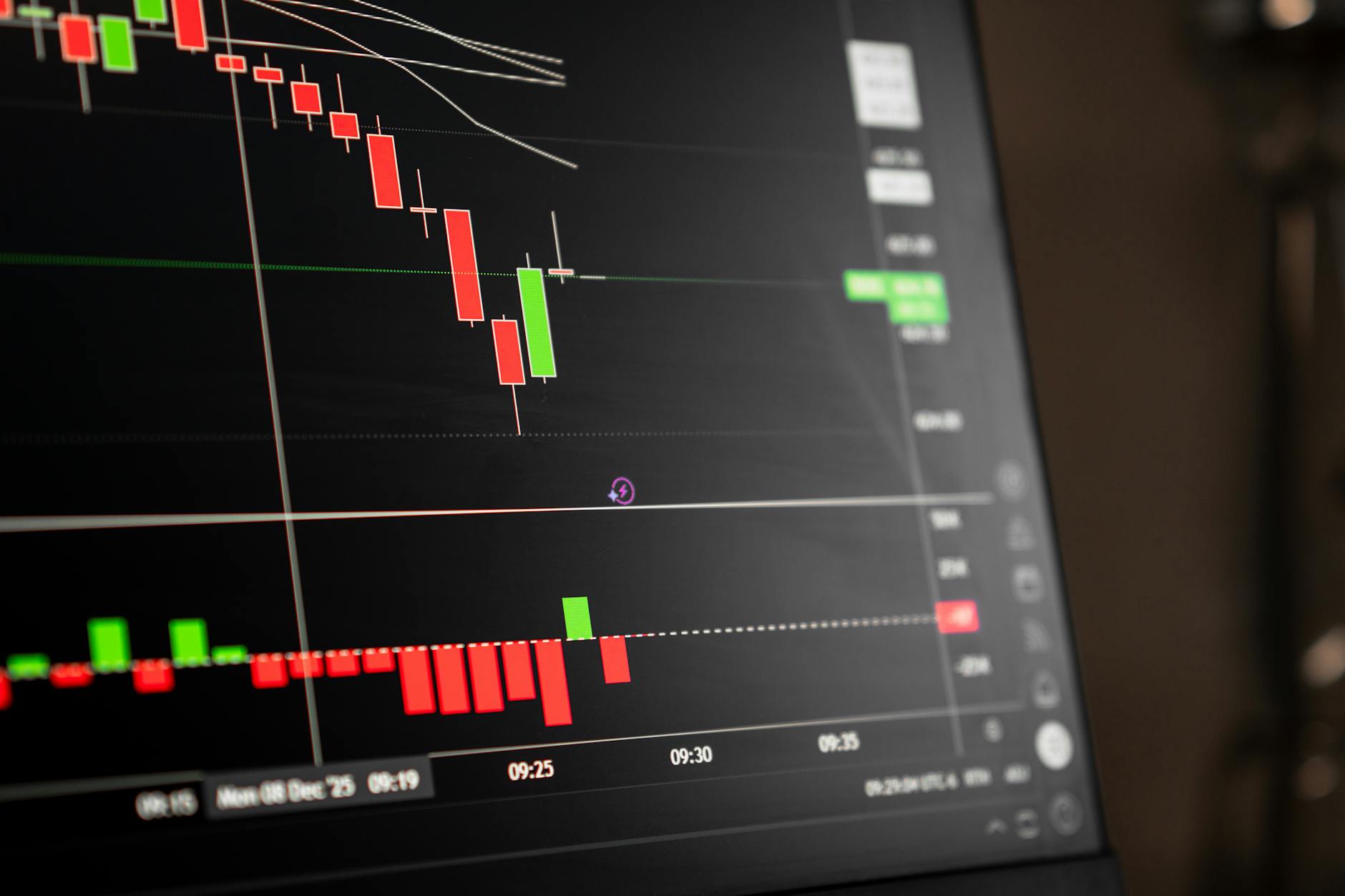
- Apple drops 6.51% to $275.15 on heavy volume
- Cramer's Investing Club maintains Hold rating with $300 target
- New Gemini-powered Siri set to launch later this year
- Mac and iPad price hikes trigger investor sell-off
- Nasdaq falls for fourth straight session as tech retreats
Apple stock faced a brutal selloff on Friday, shedding 6.51% to trade at $275.15 as investors reacted aggressively to the company's latest pricing strategy.
The tech giant saw its shares plummet from a previous close of $294.30, hitting an intraday low of $273.75 before recovering slightly.
Trading volume was exceptionally heavy, with over 102 million shares changing hands, signaling significant institutional activity.
The sharp decline comes just a day after the stock touched a record high, reflecting the extreme volatility currently defining the technology sector.
Market participants focused on the company's decision to raise prices on its Mac and iPad lines, a move that has sparked fears of demand destruction in a sensitive consumer environment.
Analysts noted that the drop represents a significant reset in expectations for the Cupertino-based giant.
The stock is now down considerably from its recent peaks, testing the resolve of long-term shareholders who have grown accustomed to a steady upward trajectory.
This price action marks a stark reversal of fortune for a company that has been a market leader for much of the year.
- Apple stock fell $19.15 to $275.15.
- Volume surged to 102,383,867 shares.
- Previous close was $294.30.
The speed of the decline caught many off guard, triggering automated sell orders across major exchanges.
Traders on the floor described the session as chaotic, with selling pressure intensifying in the final hours of trading.
The move wiped out billions in market capitalization in a single session, leaving investors to wonder if this is a temporary correction or the start of a deeper downtrend.
While the company remains a cash-flow machine, the market is clearly punishing any sign of weakness or arrogance regarding pricing power.
The timing is particularly sensitive as the broader market grapples with rising interest rates and shifting consumer spending habits.
Cramer's Club Sticks to $300 Target Amid Volatility
Despite the steep drop, CNBC's Investing Club with Jim Cramer is holding its ground on Apple, maintaining a hold-equivalent 2 rating with a $300 price target.
This target implies a potential upside of roughly 9% from current trading levels around $275.
The club's analysts view the current weakness as a buying opportunity rather than a reason to abandon the ship.
They believe the fundamental story remains intact, driven by the company's robust ecosystem and impending product refreshes.
The $300 target suggests that the recent selloff might be overdone, presenting an attractive entry point for long-term investors.
The club's philosophy, described as 'own it, don't trade it,' emphasizes holding core positions through market turbulence.
'Look, we're just being patient,' Jeff said regarding the club's stance.
'Obviously, Apple has been an 'own it, don't trade it' for so long.'
This patience is rooted in the belief that Apple's ability to generate cash and return capital to shareholders is unmatched in the tech sector.
The club acknowledges the near-term headwinds posed by price hikes but argues that the market is underestimating the loyalty of the Apple user base.
They point out that premium consumers have historically shown a willingness to pay for Apple products, regardless of macroeconomic fluctuations.
The 9% upside to $300 is not seen as aggressive, but rather a conservative estimate based on earnings growth and multiple expansion.
- Price target set at $300 per share.
- Rating maintained at Hold (2).
- Implies 9% upside from $275.
The divergence between the market's panic selling and the analyst's steady hand highlights the classic conflict between short-term sentiment and long-term value.
While traders are focused on the immediate impact of price hikes, the Investing Club is looking toward the holiday season and the next upgrade cycle.
They argue that selling now locks in losses just as the company is about to enter its most product-intensive period of the year.
The hold rating serves as a signal to investors not to react impulsively to daily price swings but to stick to a disciplined investment thesis.
This approach has served the club well in the past, allowing them to ride out volatility in high-quality names.
The AI Bet: Gemini-Powered Siri and the Next iPhone
A major pillar of the bullish thesis for Apple centers on the anticipated launch of a revamped Siri, powered by Google's Gemini AI technology.
This new-and-improved digital assistant is expected to be significantly more conversational and capable, addressing a long-standing weakness in Apple's software offering.
The feature was previewed at the annual developers conference six months ago, generating considerable excitement among developers and consumers alike.
Analysts believe this upgrade will serve as a key selling point for the upcoming iPhone release, driving a massive upgrade cycle.
The integration of advanced generative AI into the core iPhone experience is seen as critical for maintaining competitiveness against rivals like Samsung and Google.
The new Siri should be out later this year, just in time to fuel demand for the new hardware.
'The new-and-improved Siri should be out later this year, another selling point going into the next iPhone upgrade cycle following a year of strong iPhone 17 sales,' the Investing Club noted.
This suggests that momentum from the previous year's strong sales could carry over, bolstered by the novelty of on-device AI.
The partnership with Google to utilize Gemini is also viewed as a pragmatic move, leveraging the best available technology rather than trying to build everything in-house.
- New Siri powered by Gemini AI.
- Launch expected later this year.
- Aims to drive next iPhone upgrade cycle.
The success of this AI integration is crucial.
If the new Siri fails to impress, it could dampen enthusiasm for the new iPhone and leave Apple vulnerable to criticism that it is falling behind in the AI race.
However, expectations are high.
The ability to interact with a phone using natural language to perform complex tasks could redefine the user experience.
This software update is expected to increase the stickiness of the iOS ecosystem, making it harder for users to switch to Android.
Furthermore, the AI features could open up new revenue streams through premium subscriptions or enhanced services.
Investors are betting that the convenience of a truly intelligent assistant will outweigh the higher price tags on new devices.
The strong iPhone 17 sales mentioned by analysts provide a solid foundation, indicating that consumer demand for Apple hardware remains resilient even in a challenging market.
The transition to AI-centric phones is expected to be the biggest driver of tech growth over the next three years, and Apple is positioning itself to capture a significant share of that market.
Pricing Power Tested as Mac, iPad Costs Rise
The immediate trigger for Friday's selloff was Apple's decision to implement significant price hikes on its Mac and iPad product lines.
This move has raised questions about the limits of Apple's pricing power, particularly as consumers face tighter budgets.
Historically, Apple has been able to raise prices without losing customers, thanks to the perceived quality and exclusivity of its brand.
However, the market's violent reaction suggests that investors believe this time might be different.
The price increases come at a time when competitors are offering increasingly capable alternatives at lower price points.
In the PC market, Windows machines have become more competitive, and in the tablet space, Android and other operating systems are eating into Apple's dominance.
'Apple stock gets slammed on bigger Mac, iPad price hikes,' market reports highlighted, pointing to the direct correlation between the news and the stock price decline.
The fear is that higher prices will stifle volume growth, leading to missed revenue targets.
- Prices increased for Mac and iPad lines.
- Investors fear demand destruction.
- Competitors offer cheaper alternatives.
The strategy behind the hikes appears to be an effort to protect margins amidst rising component and manufacturing costs.
Apple is known for its high gross margins, and it is reluctant to erode them by absorbing inflationary pressures.
However, passing these costs entirely to the consumer is a risky gambit.
If sales volume drops significantly, the company could end up losing total revenue despite selling each unit at a higher price.
Analysts will be watching quarterly results closely to see if the price elasticity of demand for Apple products has fundamentally changed.
The sell-off indicates that the market is currently erring on the side of caution, assuming the worst-case scenario for sales volumes.
This puts pressure on management to justify the increases through superior marketing and product features.
The situation is a delicate balancing act between maintaining profitability and keeping the user base growing.
Any sign of weakness in the upcoming earnings report related to iPad or Mac sales could lead to further downside for the stock.
Broader Tech Slump Drags Down Nasdaq Leaders
Apple's decline is not occurring in a vacuum; it is part of a broader correction sweeping through the technology sector.
The Nasdaq Composite has now fallen for four straight days, setting a negative tone for high-growth stocks.
This environment of risk-off sentiment is amplifying the losses in individual names like Apple.
Even stocks with positive news are struggling to maintain ground, as liquidity dries up and investors rotate out of riskier assets.
The recent volatility in newly public stocks like SpaceX, which debuted two weeks ago, has also contributed to the unsettled mood.
While SpaceX shares have seen volatility, the focus today is firmly on the established tech giants.
Other major names are also facing pressure.
'Palantir at $136.88 rates a hold, and AMD at $467.51 rates a hold,' according to recent analyst notes, reflecting a consensus that the sector is fairly valued or fully valued at current levels.
This widespread reluctance to assign 'Buy' ratings suggests that Wall Street sees limited upside in the near term.
- Nasdaq falls for fourth straight day.
- Palantir and AMD also rated Hold.
- Risk-off sentiment hits tech sector.
The correlation between Apple and the broader market is high, meaning that when the Nasdaq sneezes, Apple catches a cold.
The current pullback is likely a combination of company-specific factors and macro-economic fears.
Rising interest rates make future earnings less valuable, hitting tech stocks harder than other sectors.
Furthermore, there is a sense of fatigue after a strong run-up in tech valuations over the past year.
Investors are taking profits off the table, reassessing their exposure to the sector.
The heavy volume in Apple trading suggests that large funds are reallocating their portfolios, perhaps moving into defensive sectors or cash.
Until the market stabilizes, it will be difficult for Apple to mount a sustained recovery, regardless of its individual fundamentals.
The broader market context is a critical variable that investors must monitor alongside company-specific news.
Key Levels and Investor Strategy Going Forward
As Apple navigates this turbulent period, investors are closely watching key technical levels for signs of a reversal.
The current price around $275 is a critical support zone.
If the stock breaks below the intraday low of $273.75, it could trigger another wave of technical selling.
Conversely, reclaiming the $290 level would signal that the worst of the panic has subsided.
The consensus target of $300 provides a clear upside objective, but reaching it will require a shift in sentiment.
Trivariate Research's Adam Parker called the day's price action 'pretty interesting,' suggesting that sophisticated investors are looking for opportunities amid the chaos.
This kind of commentary often precedes a stabilization phase, as value buyers begin to step in.
For long-term investors, the strategy remains focused on the upcoming product cycle and the AI rollout.
The volatility, while painful, is viewed by some as a necessary reset that sets the stage for future gains.
'Market observers pointed out that the selloff may be overdone given the company's strong balance sheet and cash flow generation,' analysts noted.
The key will be whether Apple can deliver on the promise of its AI features without alienating its customer base with high prices.
- Support level at $273.75.
- Resistance at $290.
- Value buyers watching for entry points.
Investors should also keep an eye on the Federal Reserve's interest rate decisions, as these will heavily influence the broader market direction.
In the meantime, the 'Hold' rating from major analysts suggests that selling at these levels could be a mistake.
The market is in a phase of price discovery, trying to figure out what the new iPhone and Mac lineups are truly worth.
Patience appears to be the prevailing wisdom, as waiting for the dust to settle could provide a clearer picture of the stock's trajectory.
The coming weeks will be crucial, with earnings reports and developer updates likely to act as the next major catalysts for the stock price.