Tesla Stock Drops 1.9% on Crash Investigation Fears
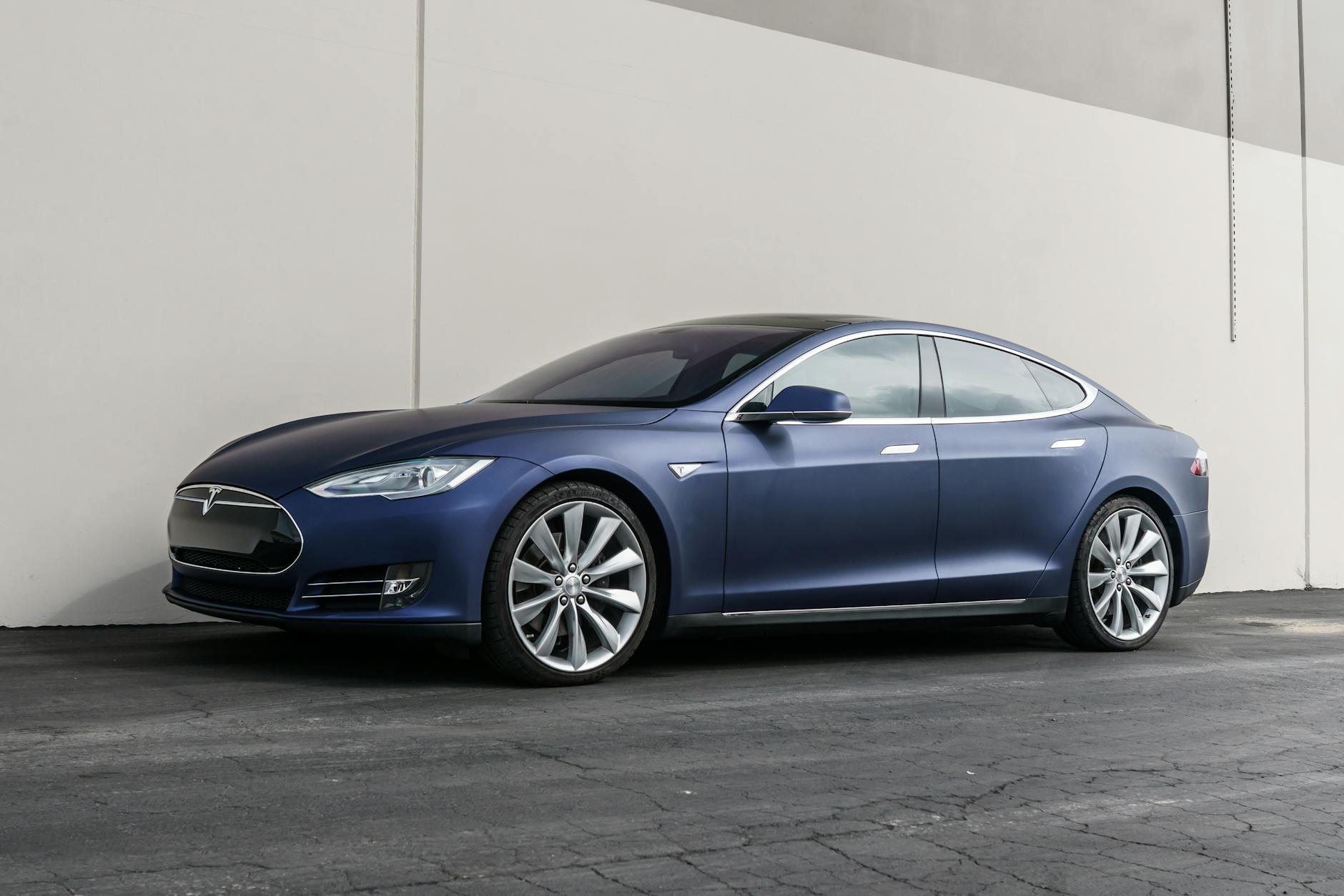
- Tesla closed at $374.43 on June 25, 2026
- SpaceX stock plunged 16.4% earlier in the week
- NHTSA investigating fatal crash involving Tesla
- Musk retains world's first trillionaire status
- Trading volume hit 19.5 million shares
Tesla stock lost ground on Thursday, June 25, 2026, closing at $374.43 as investors reacted to lingering concerns over a federal safety investigation.
The stock fell $7.19, a decline of 1.88%, reversing earlier gains and dragging the electric vehicle giant closer to its session low of $371.22.
Trading was heavy, with 19.5 million shares changing hands, signaling heightened anxiety among institutional and retail traders alike.
The drop comes despite generally positive sales momentum reported earlier in the week, proving that regulatory headlines currently outweigh fundamental performance for the automaker.
The stock had opened higher, touching a session peak of $379.12, but sellers stepped in aggressively during the afternoon session in New York.
By the market close at 11:30 pm IST, the damage was done, leaving Tesla with a market capitalization that remains under pressure.
investors are clearly focused on the risk profile of the company rather than its delivery numbers at this moment.
The volatility reflects a broader tension in the market where high-growth tech stocks are being punished for any whiff of negative news.
Tesla's specific woes are tied to a fatal crash investigation that has captured headlines and renewed debates about autonomous driving safety.
While the company continues to deliver vehicles at a record pace, the shadow of the National Highway Traffic Safety Administration (NHTSA) probe is darkening the outlook.
Market watchers noted that the stock's inability to hold onto early highs suggests a lack of conviction at current price levels.
The $374.43 close is a critical psychological level, and losing it in the coming sessions could trigger further technical selling.
For now, the bulls are on the defensive, forced to justify valuations in the face of potential legal and regulatory headwinds.
The intraday range of $7.90 highlights the choppiness, with buyers stepping in at the lows but failing to mount a sustained rally.
This price action is characteristic of a stock in transition, searching for a new equilibrium after a period of relative stability.
The 19.5 million shares traded is significantly higher than the average daily volume, indicating that today's move was driven by real money moving out of the name rather than just speculative noise.
As the closing bell rang, the sentiment on trading floors was decidedly cautious, with many analysts advising clients to wait for clarity on the investigation before adding to positions.
The market is a forward-looking mechanism, and right now it sees trouble on the horizon for Tesla.
The decline erases roughly $8 billion in market value in a single session, a painful hit for long-term holders.
Despite the drop, the stock is still well above its 52-week lows, but the momentum has clearly stalled.
The next few days will be crucial in determining if this is just a temporary pullback or the start of a deeper correction.
All eyes will be on the news wires for any update from Washington regarding the status of the crash probe.
Until then, volatility is likely to remain the dominant theme for Tesla shareholders.
- TSLA closed at $374.43, down $7.19 or 1.88%.
- Volume surged to 19,520,976 shares.
- Day range was $371.22 to $379.12.
Fatal Crash Probe Overshadows Strong Sales Momentum
The immediate catalyst for today's sell-off traces back to news reports from June 23 highlighting a fatal crash investigation involving a Tesla vehicle.
According to sources familiar with the matter, federal investigators have opened a formal inquiry into the circumstances surrounding the accident.
This development has overshadowed what was otherwise a promising narrative regarding the company's delivery numbers.
Reports from financial outlets indicated that Tesla was enjoying a period of robust sales momentum, driven by price cuts and new model incentives.
However, the market has chosen to ignore the positive revenue signals and focus almost exclusively on the negative publicity surrounding the crash.
This dichotomy between strong business fundamentals and reputational risk is creating a difficult environment for the stock.
Analysts pointed out that the investigation could lead to recalls or software updates, both of which carry significant costs and logistical headaches.
The fear is not just about the financial impact of a recall, but about the potential damage to the brand's image regarding safety.
Tesla has built its reputation on cutting-edge technology, and any suggestion that its systems are unsafe strikes at the core of its value proposition.
The timing is particularly unfortunate as the company was gaining traction in key international markets.
Instead of celebrating production milestones, executives are now likely preparing crisis management strategies and legal defenses.
Investors hate uncertainty, and a federal investigation introduces a massive variable into the earnings equation.
The duration of these probes can vary widely, but the overhang tends to suppress stock multiples for the duration.
Traders are unwilling to pay a premium for future growth when the present is clouded by regulatory threats.
The disconnect between the sales data and the stock price is stark.
Usually, strong delivery numbers would propel the stock higher, but the structural importance of the Autopilot and Full Self-Driving features means safety news is treated as an existential threat.
Sources confirmed that the specific details of the crash are still being verified, but the mere existence of the probe was enough to trigger the risk-off reaction seen today.
Legal experts suggest that if the investigation finds fault with Tesla's software, the liability could run into billions of dollars.
This potential liability is being priced into the stock in real-time, hence the sharp intraday decline.
The market is effectively saying that the risk of a worst-case scenario is too high to ignore.
While the company has weathered similar storms in the past, the increased scrutiny from regulators globally makes this instance feel more dangerous to shareholders.
The sales figures, while impressive, cannot instantly neutralize the fear of a regulatory crackdown.
It is a classic case of good news being drowned out by bad noise.
For the stock to recover, the company will need to demonstrate that the incident was an anomaly rather than a systemic failure.
Until that narrative takes hold, the pressure on the share price will likely persist.
The selling pressure observed today reflects a lack of patience among investors who are quick to reallocate capital to safer havens at the first sign of trouble.
- Federal probe opened into fatal crash.
- Sales momentum remains strong according to reports.
- Brand reputation faces renewed scrutiny.
SpaceX Plunge Drags Down Sentiment Across Musk Empire
The negative sentiment surrounding Tesla is not occurring in a vacuum; it is compounded by the dramatic collapse in SpaceX stock this week.
Shares of SpaceX, which recently went public in a record-breaking initial public offering, have been in freefall, shedding 16.4% of their value in a single session on Monday.
This catastrophic drop has left SpaceX trading 23% below the record highs it set just nine days ago on June 16.
The company, which bundles Elon Musk's spacecraft, artificial intelligence, and social media ambitions under one corporate roof, has seen its market valuation plummet from a peak of approximately $2.5 trillion to around $2.18 trillion.
This destruction of wealth is having a psychological spillover effect on Tesla investors.
When the crown jewel of the Musk empire stumbles this badly, confidence in his other ventures naturally wavers.
Market analysts described the SpaceX slide as a reality check for investors who may have bid up the IPO too aggressively.
The sharp correction in SpaceX suggests that the market is recalibrating its tolerance for risk across all of Musk's companies.
The sell-off in SpaceX was triggered by reports that the company's post-IPO bounce was unsustainable, with some commentators suggesting the hype had been exposed.
This narrative of a bluntness exposed quickly is painful for Tesla shareholders who are used to their stock also enjoying a hype premium.
The correlation between the two stocks has tightened, meaning that bad news for one is now bad news for the other.
Furthermore, reports emerged that SpaceX raised a staggering $25 billion in debt sales less than two weeks after its IPO.
This massive capital raise has raised eyebrows on Wall Street, with some analysts questioning why a company fresh off a record listing would need to take on so much debt so soon.
The move has been interpreted by some as a sign of cash flow needs or aggressive expansion plans that carry their own risks.
The debt load adds another layer of complexity to the financial picture of the Musk ecosystem.
As SpaceX shares return to earth, the gravity is pulling Tesla down with it.
Investors are looking at the combined volatility of the two holdings and deciding to reduce exposure to the Musk factor altogether.
The diversification benefits of holding separate Musk companies are proving illusory, as they move in lockstep during periods of market stress.
The $320 billion wiped off SpaceX's market cap is a staggering sum that dwarfs the entire market cap of most automakers.
It serves as a stark reminder of how quickly fortunes can turn in the high-tech sector.
For Tesla, the SpaceX situation is a distraction it does not need.
Management would prefer the focus to be on electric vehicles and energy storage, not on the financial acrobatics of its sister company.
However, in the court of public opinion and market sentiment, the two are inextricably linked.
The perception is that Musk is spread too thin, trying to run multiple trillion-dollar enterprises simultaneously.
The SpaceX slide validates the bears who argue that complexity creates risk.
As a result, Tesla is trading at a discount today simply because it is associated with a SpaceX in correction mode.
The contagion is real, and it is hurting the bottom line of Tesla investors right now.
- SpaceX stock down 23% from June 16 peak.
- Market cap fell to $2.18 trillion.
- Company raised $25 billion in debt post-IPO.
Tech Sector Bleeds as Alphabet Loses AI Talent to Anthropic
The pain in Tesla and SpaceX is part of a broader malaise affecting the technology sector, particularly in the artificial intelligence space.
In a significant development that has rattled investors, Alphabet has lost a Nobel Prize-winning AI scientist to rival Anthropic.
The departure of such a high-profile figure is a blow to Google's parent company and underscores the fierce war for talent in the AI arms race.
Alphabet acknowledged the departure in a statement, expressing appreciation for his contributions to its AI and science initiatives.
However, the loss sends a worrying signal to the market about Alphabet's ability to retain its top minds against nimble competitors.
Anthropic, seen as a frontrunner in AI safety and large language models, did not immediately comment on the hire, but the move speaks volumes.
This exit follows other recent high-profile departures from Google's AI division, including senior engineering leadership connected to its Gemini project.
The steady bleed of talent is causing investors to question the long-term dominance of the established tech giants.
As competition intensifies across major AI developers, the stability of leadership teams is becoming a key metric for valuation.
When top scientists leave, the pipeline of innovation is threatened, and stock prices react accordingly.
Alphabet stock has been under pressure as investors digest the implications of these defections.
The sentiment is spilling over into the broader tech market, contributing to the risk-off environment that hit Tesla today.
This uncertainty creates a vacuum where volatility thrives.
For Tesla, which relies heavily on its perception as a tech leader rather than just a carmaker, this sector-wide skepticism is damaging.
The company's valuation is predicated on its ability to lead in autonomy and robotics, fields that rely heavily on AI.
If the market is losing faith in AI leadership across the board, Tesla's premium multiple is at risk.
The connection between Alphabet's personnel issues and Tesla's stock price might seem indirect, but in the current market, all tech risk is correlated.
Investors are treating the sector as a basket of trades, reducing exposure when any component shows signs of weakness.
The AI trade, which had been driving market rallies for months, is showing signs of fatigue.
The departure of the Nobel laureate is a symbolic moment that suggests the easy money in AI has been made.
Future gains will have to be fought for with better products and better retention strategies.
Until the tech sector finds a new leadership narrative, stocks like Tesla will remain vulnerable to sell-offs.
The market is punishing complexity and rewarding stability, a shift that hurts high-growth, high-volatility names.
As the dust settles on the Alphabet news, investors are looking for the next shoe to drop.
This defensive posture is keeping a lid on any rally attempts in the Nasdaq and Composite indices.
The volatility indices are climbing, reflecting the heightened state of nervousness among portfolio managers.
In this climate, even a company with solid sales like Tesla cannot escape the gravitational pull of a sector-wide correction.
- Nobel AI scientist left Alphabet for Anthropic.
- Google's Gemini project lost senior leadership.
- AI sector faces increasing competition for talent.
Musk Holds Trillionaire Status Despite Market Turbulence
Despite the hammering his companies are taking in the stock market this week, Elon Musk retains his title as the world's first trillionaire.
This remarkable resilience in his net worth is a testament to the sheer scale of the empires he has built.
Even with Tesla down nearly 2% on the day and SpaceX off by double digits, the aggregate value of his holdings remains above the symbolic trillion-dollar threshold.
However, the gap is narrowing, and the volatility is a stark reminder of how concentrated his wealth is.
Musk's fortune is tied almost entirely to the stock prices of Tesla and SpaceX.
When they sneeze, his net worth catches a cold.
The recent slide in SpaceX, which wiped out hundreds of billions in valuation, likely cost him tens of billions in personal wealth on paper.
Yet, the diversified nature of the SpaceX entity, encompassing space, AI, and social media via X, provides some ballast.
The market is still valuing these future cash flows at an enormous rate, even if it is trimming the sails a bit.
The fluctuation in his net worth is watched closely by the media and serves as a barometer for the health of the tech sector.
When he is gaining, the market feels bullish; when he is losing, fear takes over.
Today's trading session puts him firmly in the losing column, but the magnitude of his wealth means he has a deep cushion to absorb the shocks.
Analysts noted that retaining the trillionaire status through this sell-off is actually a bullish signal for the long-term viability of his companies.
It suggests that the market still believes in the ultimate vision, even if it is unhappy with the current price action.
The psychological impact of being a trillionaire also plays a role in market dynamics.
It gives him access to capital and influence that few others can match, allowing him to steer his companies through turbulent waters.
However, it also puts a target on his back.
Short sellers and critics are constantly looking for cracks in the armor, hoping to engineer a unwind of the Musk trade.
The fatal crash investigation at Tesla and the debt raise at SpaceX are ammunition for these critics.
They argue that the companies are over-leveraged and under-regulated.
So far, the market has largely rejected this bearish thesis, keeping valuations high.
But the days of unchecked upward momentum appear to be over.
The market is demanding more rigor and more results.
For Musk, the challenge is to deliver operational excellence while managing the intense spotlight that comes with his financial status.
Every move he makes, every tweet he posts, and every product launch is scrutinized for its impact on his stock price.
Today's decline is just another day at the office for a man who has become synonymous with market volatility.
His ability to navigate these storms will determine if he finishes the year as a trillionaire or if the market forces a demotion.
For now, he stands alone at the top, even if the view is a bit shakier than it was a week ago.
The resilience of his personal balance sheet offers some comfort to Tesla investors, who know that as long as Musk has skin in the game, he will fight to protect the share price.
- Elon Musk remains the world's first trillionaire.
- Wealth concentrated in Tesla and SpaceX stakes.
- Market volatility testing limits of personal fortune.
Investor Focus Shifts to Safety and Fundamentals
Looking ahead, the path forward for Tesla stock depends heavily on how the company manages the current crisis and the broader market environment.
Investors are shifting their focus from growth at all costs to safety and sustainable profitability.
The fatal crash investigation is the immediate hurdle, and the market will be parsing every word from the NHTSA and Tesla for clues on the outcome.
A swift resolution that exonerates the company's technology could trigger a sharp relief rally.
Conversely, a finding of fault could lead to a prolonged period of underperformance.
Beyond the headline risks, the fundamentals of the business remain robust.
The sales momentum mentioned in earlier reports is real, and demand for electric vehicles continues to grow globally.
Tesla is still the dominant player in the space, with a brand that commands loyalty and a manufacturing footprint that is the envy of the industry.
The market is currently overlooking these strengths due to the noise, but they will reassert themselves over time.
Fund managers are looking at the current dip as a potential buying opportunity, provided they can get clarity on the regulatory front.
The valuation, while high, is supported by cash flows that are the envy of the automotive sector.
The challenge for CEO Elon Musk and his team is to communicate this stability without sounding tone-deaf to the safety concerns raised by the crash.
Balancing confidence with humility is a tightrope walk that will define the company's public relations strategy in the coming weeks.
On the technical side, support levels are being tested.
The $371.22 low hit today is a key line in the sand.
If the stock breaks below that on heavy volume, it could signal a move toward the $350 range.
Conversely, holding above this level would indicate that the sellers are exhausted and a base is being formed.
The options market is pricing in elevated volatility through the end of the month, suggesting that traders expect more big swings.
For long-term investors, the advice remains to tune out the daily noise and focus on the long-term trajectory of electric vehicle adoption.
The transition to clean energy is an unstoppable macro trend, and Tesla is well-positioned to benefit from it.
However, the road is bumpy, and days like today are the price of admission for riding the wave.
The market is a voting machine in the short run, weighing the latest news, but a weighing machine in the long run, assessing the actual cash generation of the business.
Today, the voting machine is saying sell.
The weighing machine will have its say later.
In the meantime, investors should brace for more headlines and more volatility as the story unfolds.
The intersection of technology, transportation, and regulation is a complex place to do business, and Tesla sits right in the middle of it.
The stock price reflects that complexity, offering both high risk and high reward.
As the clock ticks toward the next earnings report, all eyes will be on Dallas and Austin to see how the company responds to this latest challenge.
- NHTSA investigation outcome is critical for near-term price.
- Strong fundamentals support long-term valuation.
- Technical support being tested at $371 level.