Bitcoin Hits September Peak as Fed Policy Fears Grip Markets
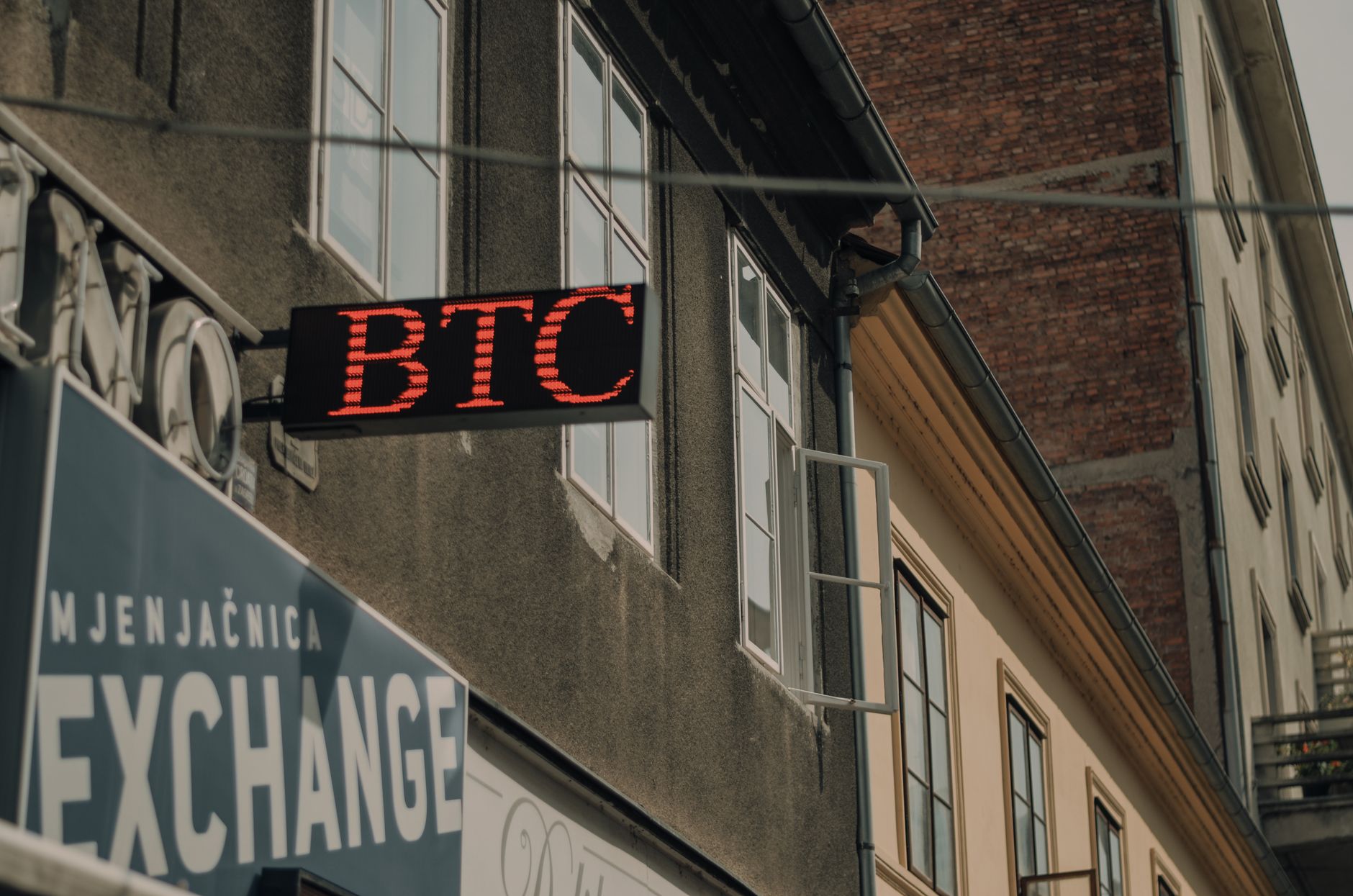
Bitcoin prices are testing investor resolve this Monday, September 14, 2026, as the digital asset navigates a volatile landscape defined by impending US Federal Reserve policy decisions and intense legislative scrutiny. While the late summer rally pushed valuations to recent highs, the market now faces a critical inflection point that could dictate the trajectory of crypto assets for the remainder of the year.
The current price action reflects a tug-of-war between bullish sentiment and the reality of rising interest rates, which historically dampen appetite for risk-heavy assets. Investors across India and global hubs are watching closely, as any deviation from expected rate paths could trigger significant shifts in liquidity.
- Bitcoin is currently attempting to hold its ground despite growing expectations of a hawkish Fed stance.
- Market data from September 14 shows a divergence where BTC continues to climb even as traditional tech stocks and precious metals like gold and silver face downward pressure.
- Institutional interest remains high, although trading volumes suggest a degree of caution ahead of the upcoming CLARITY vote.
For the average Indian investor, this means the familiar volatility of the crypto market is being amplified by macroeconomic forces originating thousands of miles away. The correlation between US monetary policy and digital asset performance has never been tighter, with every utterance from central bank officials causing ripples across Nifty and Sensex-linked portfolios that have exposure to global tech indices. Analysts noted that the current price stability is fragile, relying heavily on the market's ability to absorb potential rate hikes without triggering a mass sell-off.
Tokenized Stocks Transition From Crypto Experiments to Wall Street Infrastructure
A quiet revolution is unfolding in the plumbing of global finance as tokenized stocks move from niche crypto experiments to core Wall Street infrastructure. This shift marks a significant departure from the early days when digital assets were viewed primarily as speculative vehicles, disconnected from traditional equity markets. Industry reports indicate that major financial institutions are now integrating blockchain-based settlement systems to streamline the trading of traditional assets.
This integration allows for near-instantaneous settlement, a stark contrast to the T+1 or T+2 cycles that have dominated Indian and international stock exchanges for decades. By leveraging the same technology that powers Bitcoin and Ethereum, firms are reducing the capital requirements for clearing and settlement, effectively unlocking billions in trapped liquidity.
- Tokenized assets now represent a growing share of digital exchange portfolios.
- Traditional brokers are increasingly partnering with crypto-native firms to offer fractional ownership of global equities.
- The move toward tokenization is expected to reduce transaction costs by an estimated 15-20% over the next three years.
For the Indian market, this development is particularly relevant as the Securities and Exchange Board of India (SEBI) continues to monitor the intersection of digital assets and traditional securities. While direct exposure to tokenized foreign stocks remains restricted for retail investors, the underlying infrastructure is being built to support a more efficient, 24/7 global market. Sources confirmed that several cross-border platforms are already testing these systems, aiming to bridge the gap between legacy banking and the decentralized future.
Regulatory Hurdles and the CLARITY Vote Impact
The immediate future of the crypto market rests on the outcome of the impending CLARITY vote, a legislative milestone that could provide the regulatory framework many institutional investors have been demanding. Uncertainty surrounding the bill has created a 'wait-and-see' environment, with many large-scale traders holding back until the legislative path becomes clear. The bill aims to define the status of various digital assets, potentially categorizing them in a way that would bring them under the purview of established financial regulators.
This regulatory clarity is a double-edged sword. While it promises to reduce the risk of sudden crackdowns, it also threatens to impose stricter compliance burdens on exchanges operating in the space. Exchanges like KuCoin and others are preparing for a landscape where transparency and anti-money laundering (AML) protocols are non-negotiable. Officials said that the goal is not to stifle innovation but to align the digital asset sector with the rigorous standards of the traditional banking system.
- The CLARITY vote is expected to influence the classification of over 200 digital assets.
- Exchanges are currently updating their internal compliance systems to meet anticipated federal requirements.
- Market analysts warn that a negative outcome in the vote could lead to a short-term price correction of 8-10% across major tokens.
Despite the looming regulatory shadow, the underlying demand for Bitcoin remains resilient. Experts pointed out that the asset's decentralized nature makes it uniquely positioned to withstand localized regulatory shifts, even if the price experiences temporary turbulence. For Indian investors, the key takeaway is to prioritize platforms that demonstrate proactive compliance, as these are the entities most likely to survive the coming wave of global regulation.
BTC Price Resilience Amidst Declining Precious Metals and Tech Stocks
In a surprising turn of events this September, Bitcoin has demonstrated a decoupling from traditional risk assets, climbing in value even as gold, silver, and tech stocks face a downward trend. Traditionally, Bitcoin has tracked closely with the Nasdaq, but the current market environment shows a shift in investor behavior. Some market observers suggest that Bitcoin is increasingly being viewed as a 'digital hedge' against the unpredictability of fiat currency policies in the face of persistent inflation.
The decline in gold and silver prices this week, down approximately 1.2% and 1.8% respectively, has forced investors to re-evaluate their safe-haven strategies. While gold has historically been the go-to store of value, the ease of mobility and transparency provided by blockchain technology is attracting a younger demographic of investors. This demographic shift is evident in the trading patterns observed on major global exchanges, where inflow into BTC wallets has outpaced outflows from traditional commodity-backed funds.
- Gold prices fell to a two-week low on Monday, September 14, 2026.
- Tech stocks, particularly in the semiconductor sector, saw a 2.4% dip during early trading hours.
- Bitcoin volume on major exchanges has surged by 12% over the past 48 hours, signaling strong buying interest despite the broader market gloom.
This divergence highlights the maturing nature of the crypto market. It is no longer just a playground for retail speculators; it is becoming a legitimate component of diversified portfolios. However, experts cautioned that this decoupling might be temporary. If the Federal Reserve opts for a more aggressive rate hike than the market expects, the liquidity squeeze could eventually drag all asset classes, including Bitcoin, into a synchronized decline.
CME Futures Data and the Institutional Outlook for Q4
Institutional sentiment, as reflected in the CME Group Bitcoin futures data, remains cautiously optimistic for the final quarter of 2026. While the open interest in futures contracts has remained relatively flat over the past week, the premium on long-dated contracts suggests that institutional players are positioning for a recovery by the end of the year. This data is critical because it provides a window into the expectations of hedge funds, family offices, and large-scale asset managers who operate with a longer time horizon than retail traders.
The current futures market indicates that the 'smart money' is not anticipating a total collapse, but rather a period of consolidation. This aligns with the broader economic outlook, which suggests that the global economy is entering a phase of slow but steady growth. For investors in India, this institutional activity serves as a vital barometer. When large players are betting on long-term stability, it often provides a floor for prices, limiting the downside risk for smaller retail participants.
- CME Bitcoin futures open interest is currently hovering near its monthly average.
- The premium for December 2026 contracts suggests a bullish outlook for the year-end close.
- Institutional inflows into crypto-linked exchange-traded products have increased by 5% since the start of September.
The focus now shifts to the upcoming Fed meeting. If the central bank signals a pause in rate hikes, the futures market is likely to see a surge in activity, potentially pushing Bitcoin toward the next major resistance level. Conversely, a hawkish surprise would likely lead to a rapid unwinding of long positions, causing a sharp, albeit likely short-lived, price drop. Investors are advised to keep a close watch on the CME data as the week progresses, as it will likely provide the first clues to the market's post-Fed direction.