Understanding Kallakkadal: The Science Behind Sudden Ocean Swells
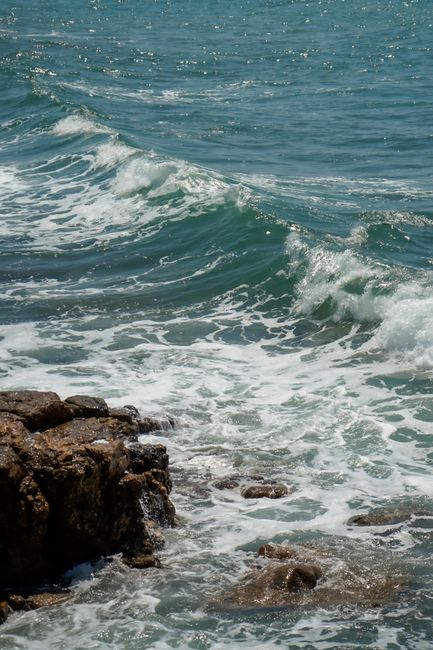
- Kallakkadal refers to sudden, high-energy swells that appear without local wind.
- AI models track energy patterns from the Southern Ocean to predict these events.
- Early warning systems provide a lead time of roughly 2 to 3 hours.
- Prediction models still struggle with hyper-local accuracy during complex weather.
What causes the Kallakkadal phenomenon?
Kallakkadal is a phenomenon where massive, high-energy waves strike the coast suddenly, often when local weather is calm. It translates to 'thief sea' because it arrives without the typical warning signs of a storm. AI tools now analyze deep-sea pressure sensors and satellite data to identify these swells hours before they reach the shoreline. These models track energy patterns originating thousands of miles away in the Southern Ocean. By processing this data, meteorologists can issue alerts that keep people safe from these unexpected surges. It is a shift from reactive monitoring to proactive prediction, using global climate data to solve a local safety problem.
How AI models predict sudden ocean surges
Predictive models function by processing massive datasets from ocean buoys. These buoys measure wave height and frequency, feeding that information into algorithms designed to recognize the signature of a growing swell. When the system detects a specific energy dispersion pattern, it flags a potential event. According to oceanographic research, these swells often travel across the Indian Ocean at speeds exceeding 40 miles per hour. The AI cross-references this movement with historical data to estimate arrival times. So, it acts as a digital early warning system that operates faster than human analysis ever could.
How to access real-time coastal safety alerts
The danger lies in the lack of local warning signs. Because these waves are generated by distant weather, the sun can be shining and the wind calm while the swell approaches. When the wave hits, it can surge inland by as much as 100 meters, catching beachgoers and fishing communities off guard. Data from local authorities indicates that these events are most common between April and May. Because they happen so fast, the window for moving equipment or people to higher ground is often less than three hours. This makes accurate, timely alerts essential for public safety.
Limitations of current ocean surge prediction technology
While AI has improved accuracy, it is not perfect. The primary trade-off is the difficulty of predicting the exact impact point on a complex coastline. Local geography, such as underwater shelves or harbor structures, can amplify or dampen the wave energy in ways that models might miss. Furthermore, false positives can occur when models misinterpret minor sea state changes as full-scale swells. Users should treat these alerts as probabilistic rather than absolute certainties. You should always prioritize local government warnings over automated digital notifications.
Reliable sources for tracking ocean wave alerts
You should rely on official channels for the most accurate information. The Indian National Centre for Ocean Information Services (INCOIS) provides the primary data feeds used by local safety agencies. Their mobile applications and web dashboards are the standard for tracking ocean conditions in the region. If you live in a coastal area, check for localized SMS alert programs managed by your district administration. Never rely solely on social media reports or unverified weather apps for safety updates. These official sources provide the most refined data available for your specific region.
Frequently asked questions
Kallakkadal is caused by swell waves originating from distant storms in the Southern Ocean. These waves travel thousands of kilometers and strike the coast unexpectedly even when local weather conditions are calm.
AI models analyze vast datasets including historical wave patterns, satellite imagery, and atmospheric pressure changes to identify the specific signatures that precede a Kallakkadal event.
No, Kallakkadal is distinct from a tsunami. While tsunamis are caused by underwater seismic activity or volcanic eruptions, Kallakkadal is a meteorological phenomenon driven by distant ocean swells.