Is Tigercat Forestry Equipment Worth the Premium Price?
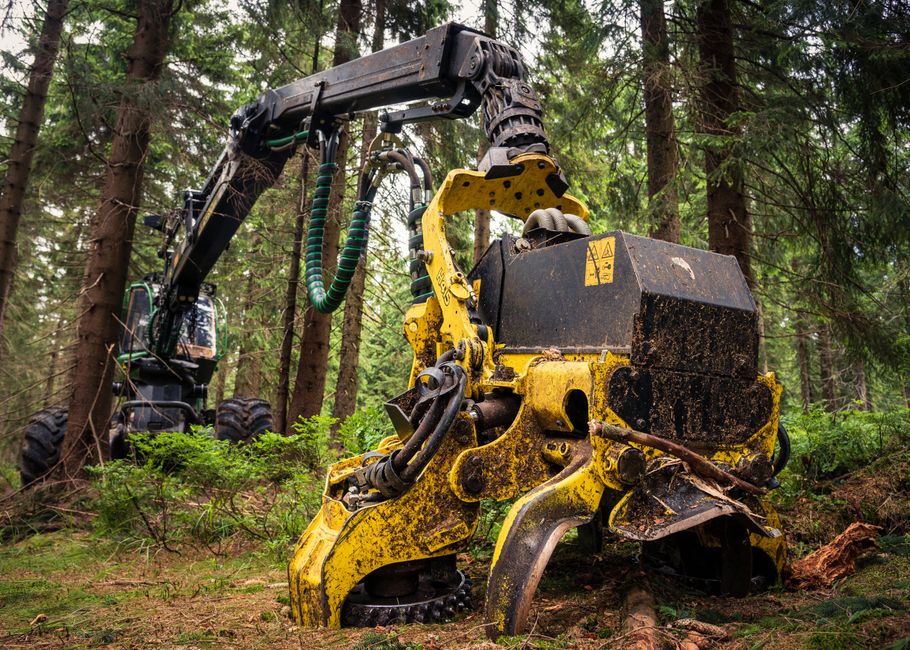
- Tigercat equipment typically costs 15% to 25% more than standard mass-market competitors.
- Higher initial costs are often offset by increased machine uptime and structural durability.
- Mainstream brands like John Deere and Caterpillar offer superior parts availability in remote regions.
- Choose Tigercat for high-production, heavy-duty cycles; choose competitors for easier service access.
Why Tigercat Forestry Equipment Commands a Premium Price
Tigercat equipment commands a premium price point, often exceeding standard competitors by 15% to 25%, but it delivers superior hydraulic efficiency and operator comfort. If your primary goal is maximizing daily production volume in harsh forestry environments, the investment pays for itself through reduced mechanical downtime. Most professional loggers find that while John Deere or Caterpillar machines offer easier access to parts through widespread dealer networks, Tigercat’s specialized engineering provides a distinct advantage in structural longevity. You are paying for a machine built to survive high-cycle operations where standard equipment might require major overhauls after 8,000 hours. Choose based on your specific terrain and your tolerance for unscheduled shop time.
Tigercat vs. Caterpillar: Which Offers Better Long-Term Value?
When you compare a Tigercat feller buncher or skidder to a mass-market alternative, the difference lies in the build philosophy. John Deere and Caterpillar focus on high-volume production for a broad range of sectors, meaning their supply chains are optimized for global part availability. You can find a service technician for a Caterpillar machine in almost any corner of the country. But Tigercat focuses exclusively on forestry, using heavier steel gauges and more efficient cooling systems. Their machines are over-engineered for the specific stresses of timber extraction. If you operate in a location with limited dealer support, a mainstream brand might be safer. If you operate in a high-production site where every hour of downtime costs thousands, the Tigercat design wins on pure mechanical output.
How Forestry Equipment Depreciation Impacts Your Bottom Line
The math behind the purchase is simple: it is a trade-off between capital expenditure and operating expenses. A Tigercat machine will show a higher depreciation cost on your balance sheet in year one. However, the total cost of ownership often narrows by year four. You must factor in the cost of a missed shift. If your crew is idle because a mass-market hydraulic pump failed, you lose revenue that the higher-cost Tigercat component might have avoided. Check your internal maintenance logs from the past two years to see how much time your current fleet spent in the shop. If that number exceeds 15% of your total working hours, the premium for a more durable machine is a rational financial move.
Is a Tigercat Feller Buncher Worth the Higher Upfront Cost?
There are clear scenarios where buying a market-leading, non-specialized brand makes more sense. If you are a smaller contractor with limited capital, the lower entry price of a John Deere or Komatsu machine keeps your debt service manageable. These machines are also easier to resell on the secondary market because the buyer pool is significantly larger. You should also stick to mainstream brands if you lack an in-house mechanic capable of handling specialized forestry repairs. Mainstream dealers offer deeper support tiers that can stabilize your operations. Don't overextend your balance sheet for a specialized machine if you don't have the volume to justify the extra overhead.
How to Calculate Heavy Machinery ROI for High-Cycle Operations
To determine your path, create a spreadsheet comparing the purchase price against projected maintenance hours. Estimate the cost of a single day of downtime for your specific operation, including labor, fuel, and missed delivery bonuses. If that daily cost is high, your tolerance for machine failure should be near zero. Tigercat’s engineering is designed to push that failure point further into the future. But remember, the best machine is the one you can actually get parts for during a breakdown. Call your local suppliers and ask about their specific lead times for major hydraulic components on both brands before you sign a purchase agreement.
Frequently asked questions
Tigercat commands a premium price due to its specialized engineering for high-cycle forestry applications, use of high-grade steel components, and focus on extreme durability in harsh logging environments.
Tigercat equipment typically maintains higher resale value than mass-market competitors because of its reputation for longevity and the specialized nature of its forestry-specific components.
Yes, Tigercat equipment is specifically designed for high-cycle, 24/7 logging operations. Its hydraulic systems and structural frames are built to reduce downtime compared to standard industrial machinery.