Soft Robotics: Underwater Feather Star Robot Improves Exploration
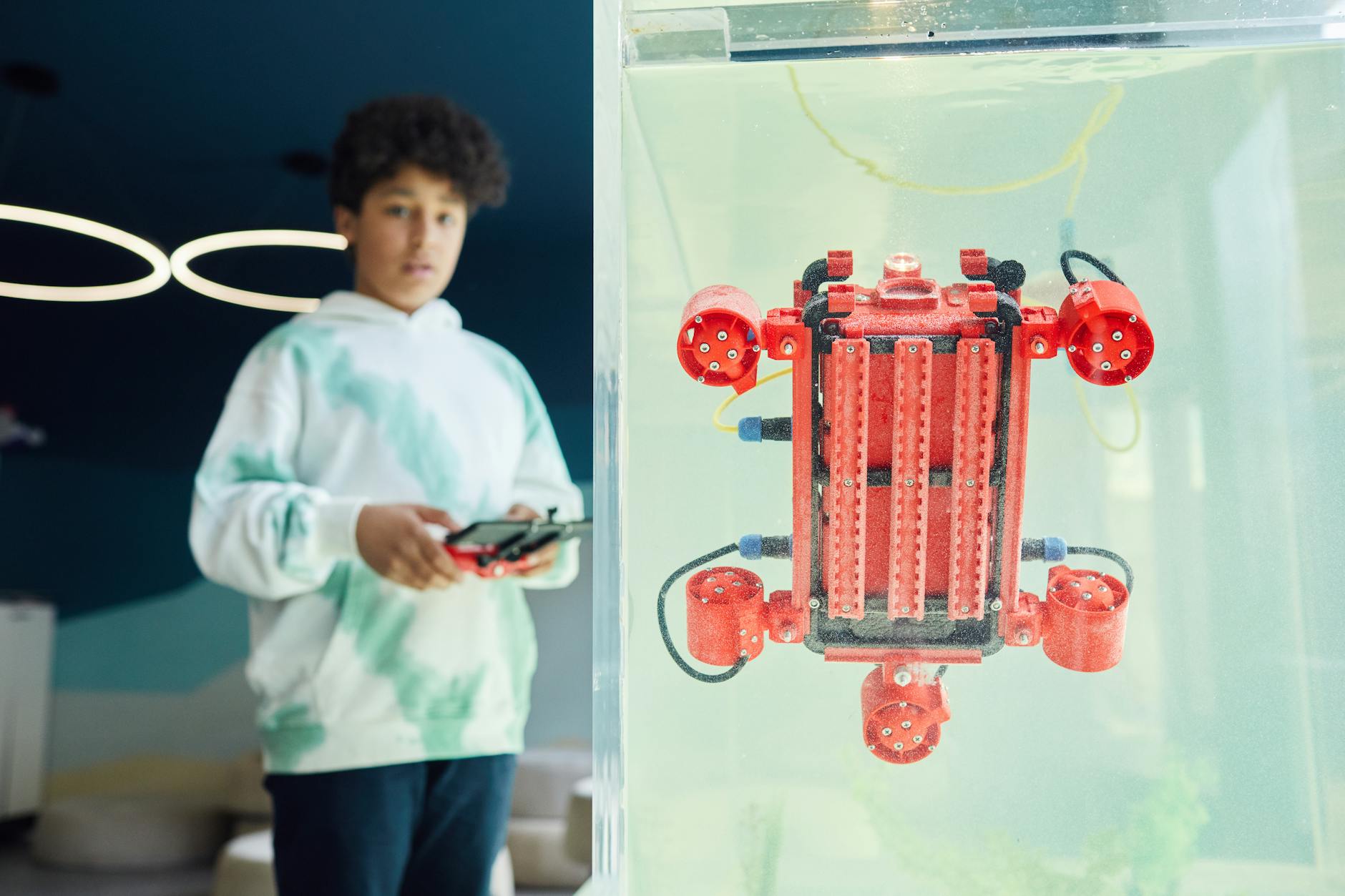
- Soft robot design mimics marine feather star locomotion.
- Full 3D movement is achieved with only two actuators.
- Simplified mechanics may improve future underwater exploration.
- The research is currently a preprint and not peer-reviewed.
How does biomimetic robotics improve aquatic efficiency?
Researchers have developed a soft underwater robot that mimics the movement of marine feather stars. This machine achieves complex, three-dimensional maneuverability using only two actuators. By simplifying the mechanical requirements, the design could lead to more efficient aquatic exploration tools. This finding comes from a report published on October 7, 2026, via TechXplore. Most existing underwater vehicles require a large number of motors to navigate in multiple directions. This new approach suggests that biological inspiration can drastically reduce hardware complexity. It is a significant shift for soft robotics, though the design remains in the early stages of development.
Why is soft actuator design changing underwater exploration?
Why use only two actuators? Traditional underwater robots often rely on rigid parts and multiple motors to control pitch, roll, and yaw. This creates heavy, bulky systems that are difficult to manage in tight spaces. By using a soft structure inspired by the feather star, the team created a system where a simple movement pattern produces complex results. The robot flexes and shifts in response to the two internal actuators, allowing it to navigate water currents with precision. It moves with a grace that mimics natural organisms rather than mechanical drones. So, the design avoids the need for complex internal gearing.
Why Feather Star-Inspired Movement Increases Robotic Efficiency
It is important to note that this study is a preprint and has not yet undergone peer review. This means the findings have not been verified by outside experts in the field of robotics. Furthermore, the current prototype is a lab-based model. It has not been tested in high-pressure deep-sea environments or turbulent open-ocean conditions. We do not know how the soft materials will hold up over long periods or how they will resist biofouling. These are common hurdles for any new soft robotics project. Readers should view these results as a proof-of-concept rather than a ready-to-use product.
How Biomimetic Design Shapes the Future of Marine Robotics
If this design proves effective, it could change how we build small-scale underwater probes. Current models are often expensive and difficult to repair due to their mechanical complexity. A robot with fewer moving parts is inherently less prone to certain types of mechanical failure. Because it is soft, it is also less likely to damage fragile coral reefs or other delicate marine environments. This makes it a promising candidate for monitoring underwater habitats without leaving a heavy footprint. It represents a shift toward more sustainable and cost-effective research tools.
Current Research Status of Feather Star Soft Robots
The study, titled "Minimal-Actuation Feather Star–Inspired Soft Swimmers for Multimodal 3D M," was released on October 7, 2026. As a preprint, the data and methods are currently open for community scrutiny. The authors emphasize the efficiency of their design compared to traditional, multi-actuator systems. But, as with all preprints, the findings are subject to change after the formal peer-review process concludes. Researchers typically use this phase to gather feedback before submitting to a journal for final publication.
Future Applications for Soft Underwater Robotics
The next phase for the team will likely involve scaling the design and testing it in more realistic conditions. They will need to determine if the two-actuator system can handle varying water densities and temperatures. If the design holds up, we may see it integrated into larger environmental monitoring systems. You should check the official project pages or subsequent journal publications for updates on these real-world trials. For now, the robot serves as a clever example of how nature can simplify engineering challenges.
- Feather star-inspired underwater robot gets 3D maneuverability from only two actuators — press, Oct 7, 2026
- Feather star-inspired underwater robot gets 3D maneuverability from only two actuators — TechXplore, Oct 7, 2026
Frequently asked questions
These robots mimic the rhythmic, undulating swimming patterns of natural crinoids (feather stars) using soft actuators, which allows them to navigate underwater environments with high energy efficiency.
Soft actuators provide greater flexibility and adaptability than rigid components, allowing robots to navigate complex marine environments without damaging delicate ecosystems or getting stuck in tight spaces.
Biomimetic robotics is the field of engineering that creates machines modeled after the structures, movements, and biological functions of living organisms to solve complex technical challenges.
Related reading

Selecting and Deploying Anti-Drone Systems for Perimeter Defense

Technology Adoption Strategy for Balancing Legacy and New Tools
How the Ohio Valley Business Technology Showcase Drives Local Growth