DreamTrue: Improving Robot World Models with Counterfactual Training
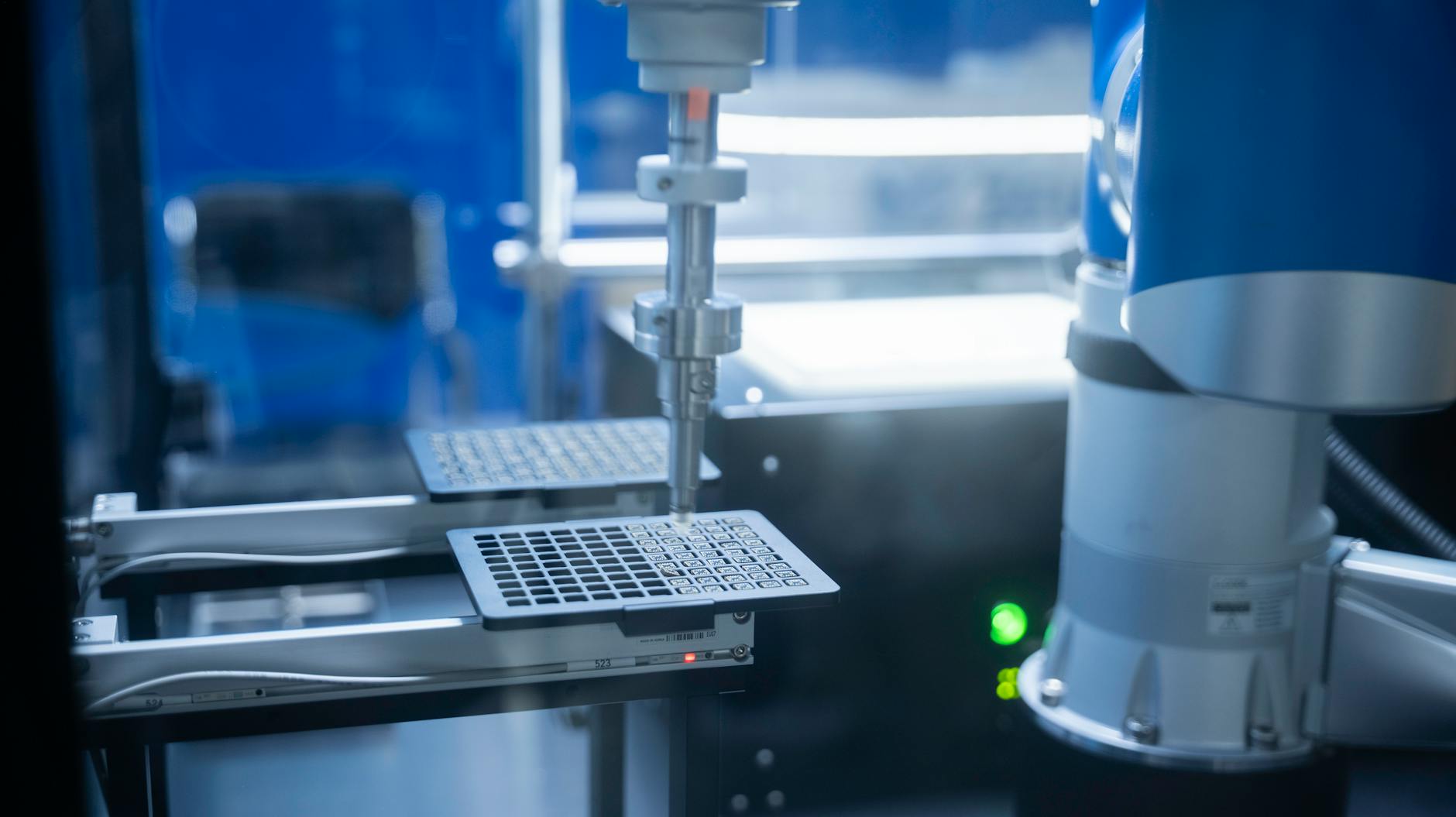
- DreamTrue uses counterfactual training to help robots predict action outcomes.
- The method forces models to analyze what would happen if different actions were taken.
- This research remains a preprint and has not yet undergone peer review.
- It aims to reduce errors by improving a robot's internal simulation of physics.
What is counterfactual post-training for robots?
DreamTrue is an approach to robot world models that fixes a common issue: robots often struggle to accurately predict how their physical movements will change the environment. Researchers from the study released on October 8, 2026, introduced a method called counterfactual post-training to solve this. It forces the system to consider how different actions might have led to different outcomes, rather than just guessing based on past data. This helps robots better anticipate the physical consequences of their choices. Because this study is a preprint and not yet peer-reviewed, the results should be viewed as preliminary findings rather than established fact.
How does DreamTrue enhance robot environment prediction?
World models act as a mental simulator for machines. They allow a robot to imagine the result of an action before it attempts the task in the real world. Many existing models fail because they do not capture the subtle relationship between a specific motor command and the resulting physical change. According to the research, DreamTrue addresses this by training the model on hypothetical scenarios. Instead of just learning from what happened, the system evaluates what would have happened if it had taken a different path. This forces the model to learn the actual mechanics of the environment instead of just memorizing patterns. It is a shift from passive observation to active reasoning about cause and effect.
Why do current AI physical simulations fail?
This study is a preprint, meaning it has not undergone the scrutiny of formal peer review. Correlation is not causation, and the researchers note that their model, like all simulations, is bounded by the quality of its training data. If the initial data contains errors or biases about how the world works, the counterfactual reasoning will likely inherit those same flaws. Additionally, real-world physics are notoriously difficult to predict perfectly. A model might be "action-faithful" in a controlled test but struggle with the messy, unpredictable nature of a home or office environment.
How DreamTrue Impacts the Future of Autonomous Robotics
For those watching the progress of robotics, this marks a transition toward more reliable machine behavior. If robots can accurately predict the consequences of their movements, they will be less likely to make mistakes that lead to broken items or stuck tasks. It essentially gives the machine a better sense of reality. You should not expect household robots to suddenly become perfect, but this research provides a technical path to reducing common robotic errors. It moves the needle from robots that blindly follow scripts to those that understand the results of their own movements.
- DreamTrue: Action-Faithful Robot World Model with Counterfactual Post-Training — arXiv, Oct 8, 2026
- DreamTrue: Action-Faithful Robot World Model with Counterfactual Post-Training — arXiv, Oct 8, 2026
Add NewsPulse Time as a preferred source on Google
Frequently asked questions
A robot world model is an internal representation that allows a machine to predict how its environment will react to its specific actions before and during task execution.
DreamTrue utilizes counterfactual post-training to refine predictive capabilities by simulating alternative outcomes of physical interactions, allowing the robot to learn from hypothetical scenarios.
Current AI simulations often fail because they lack the ability to generalize complex, real-world physical dynamics, leading to significant prediction errors when the robot encounters novel environments.
Related reading

FreeCast Named Best Streaming Technology Platform of 2026
Gelion Sulfur Battery Technology: Advancing High-Power EV Performance

The Evolution of Battery Technology and American Energy Innovation