How Physics-Based AI Agents Automate 3D Mechanical Modeling
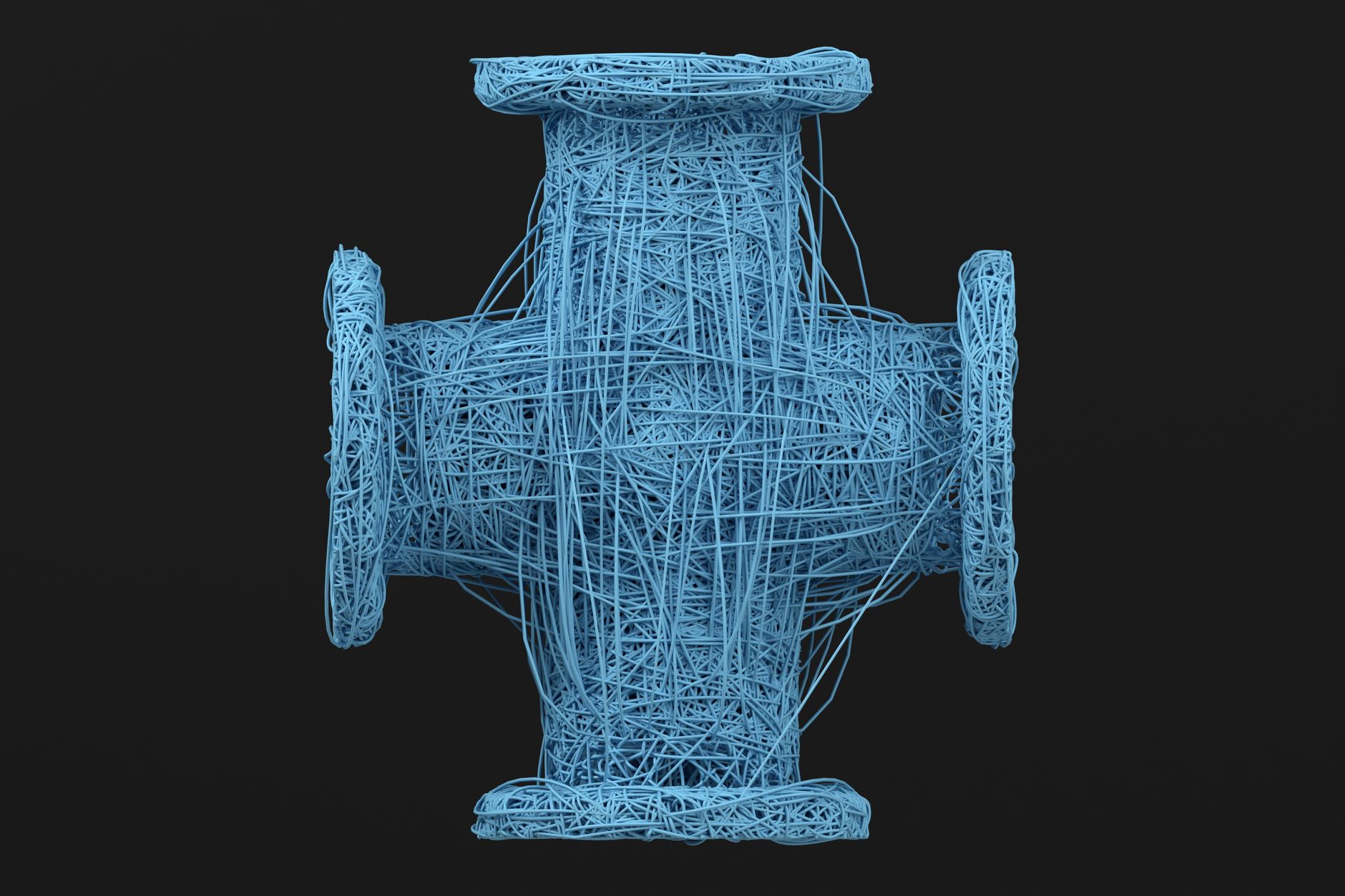
- A multi-agent system generates 3D objects that move and interact according to physical laws.
- The method aims to solve common issues with unrealistic 3D asset movement.
- The study provides a benchmark to measure how well digital objects obey physical constraints.
- This work is a preprint and has not undergone peer review.
How does AI agent 3D design improve mechanical accuracy?
Researchers released a method that uses multiple AI agents to create 3D assets that behave according to the laws of physics. The pipeline aims to build objects with realistic movement and mechanical parts, a common challenge in digital design. By coordinating different agents, the system automates parts of the creation process that previously required significant manual effort. This study appeared on arXiv on October 9, 2026. Because this work is a preprint, it has not yet passed the peer-review process.
What are the benefits of automated 3D asset creation?
The system functions by assigning specific tasks to different agents within a shared digital workspace. One agent might focus on the structural integrity of the 3D model, while another calculates how joints should move or rotate. This division of labor allows the system to build complex articulated objects more efficiently than traditional modeling tools. The authors also introduced a benchmark to test these assets against physical constraints. This allows developers to measure if an object moves like a real-world counterpart. The research includes specific metrics to track how well these assets handle forces like gravity or friction.
How does AI for mechanical 3D models function?
This project is a preprint, meaning it lacks the validation of peer review. Readers should treat the findings as preliminary research rather than finished technology. The system also relies on specific simulation environments which may not perfectly replicate every real-world condition. Correlation between the agents' output and physical reality does not prove the model is flawless in all scenarios. If you want to use these tools, check the original repository for updates on stability and compatibility with other software.
How does generative 3D physics simulation impact design?
Better 3D assets could change how developers build virtual environments for games or robotics training. If an object moves accurately without a designer manually setting every hinge or joint, it saves time. This approach could lead to more immersive simulations where interaction with objects feels natural. It moves the field closer to automated 3D modeling where the computer understands how an object should function. For now, the focus is on establishing the framework through this multi-agent approach.
- Towards Physically Grounded Articulated 3D Assets: A Multi-Agent Pipeline and Benchmark — arXiv, Oct 9, 2026
- Towards Physically Grounded Articulated 3D Assets: A Multi-Agent Pipeline and Benchmark — arXiv, Oct 9, 2026
Add NewsPulse Time as a preferred source on Google
Frequently asked questions
AI agents ensure mechanical accuracy by running iterative physics simulations during the generation process, validating that the geometry adheres to real-world constraints like gravity, friction, and structural integrity.
While generative AI significantly accelerates prototyping and asset generation, it currently functions best as a tool to augment human designers by handling repetitive mechanical validation tasks.
Industries such as mechanical engineering, robotics, game development, and medical device manufacturing benefit most, as they require high-fidelity assets that function correctly in simulated environments.



