Multimodal Wearable Biosensors: Continuous Physiological Monitoring
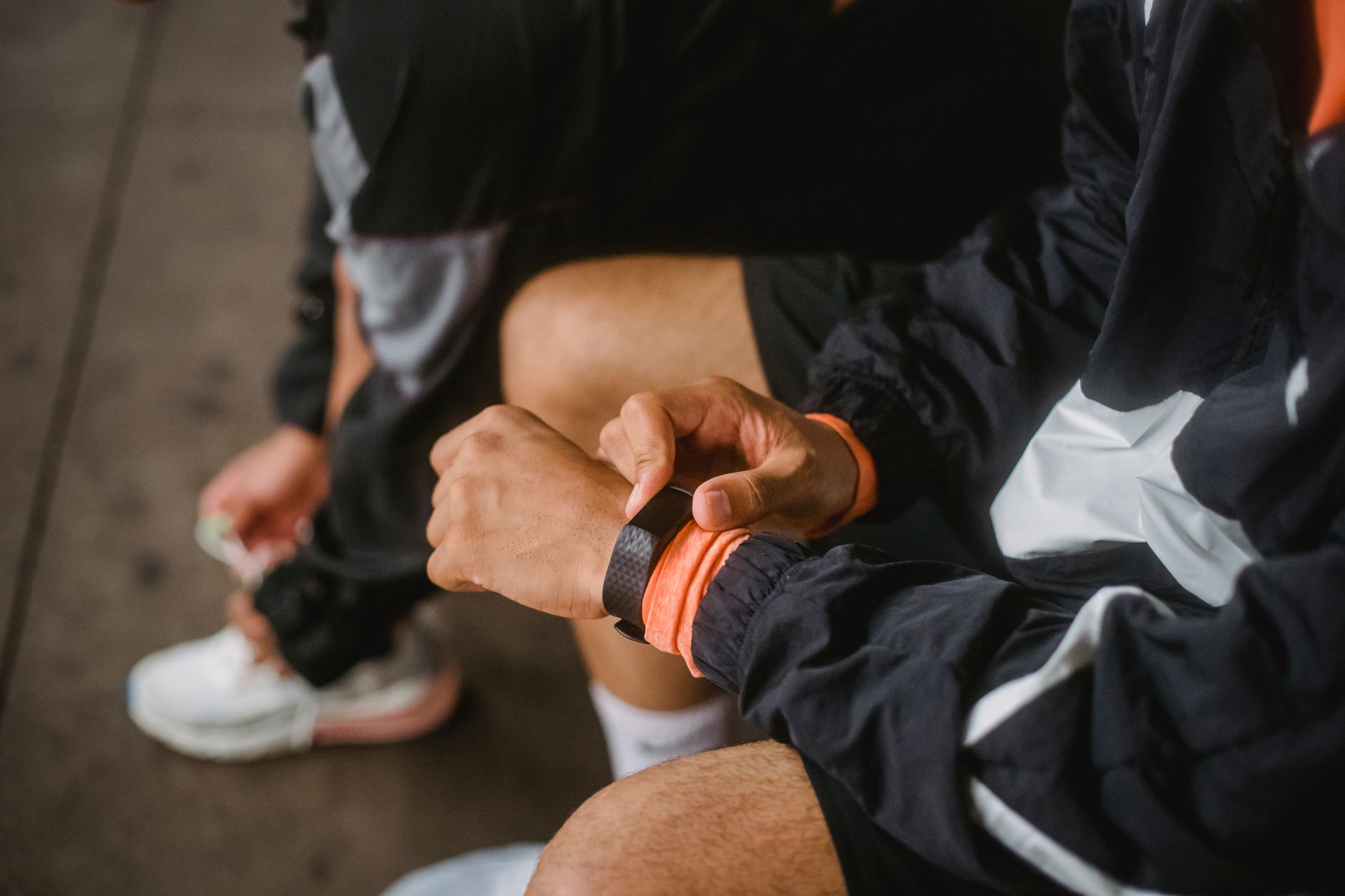
- Wearables are bridging the gap between clinical lab equipment and field monitoring.
- Integrated platforms now track biopotential, physical, and chemical metrics simultaneously.
- The wearable market is projected to reach $186.14 billion by 2030.
- Skin-electrode contact remains a primary challenge for signal accuracy.
Why flexible nanomaterials are essential for field sensors
Wearable biosensors are helping to close the gap between bulky laboratory equipment and real-world athletic monitoring by allowing for continuous, non-invasive field monitoring. These devices enable coaches and athletes to track physiological responses and biomechanical movements during training rather than in a clinical environment. Flexible nanomaterials ensure that these systems remain durable and sensitive while you move.
What types of data can these wearables track?
These platforms gather data by integrating three main types of sensors: biopotential, physical, and chemical. Biopotential sensors monitor cardiac, muscular, and neural activity through electrocardiography, electromyography, and electroencephalography. Physical sensors track environmental interactions, body posture, stress, and mechanical loads using tools like temperature, piezoelectric, and optical sensors. Chemical sensors monitor metabolic health, including glucose and sweat levels.
Burhan Adıgüzel and his team at Fatih Sultan Mehmet Vakıf University systematically study these sensor families. Background research notes that upconverting nanoparticles, which convert low-energy photons into higher-energy emissions, are also used in bio-sensing and medical imaging due to their efficient cellular uptake. Researchers like Leonardo Maggioni and Sara Del Chicca, both from the Politecnico di Milano, focus their work on sensorizing biomechanical systems and fiber-optic measurement.
How accurate are these new wearable systems?
New wearable systems approach the accuracy of research-grade equipment through specialized design. Shen and colleagues created a smart garment with 3D knitted silver electrodes that capture ECG signals with a signal-to-noise ratio of 6.95 dB, nearly matching clinical Ag/AgCl electrodes.
Valchinov and colleagues developed a wireless ECG system that uses dry electrodes to amplify signals through clothing with a differential gain of 56 dB, transmitting data via ANT+ technology. The Athos sEMG system, which uses electrodes embedded in compression garments, showed no significant differences in muscle activity or torque output when compared to lab-grade instrumentation during knee tasks.
What is the 'Achilles heel' of wearable monitoring?
The skin-electrode interface is the primary challenge for biopotential monitoring. Common issues include high contact resistance in dry electrodes, motion-induced artifacts, and the dehydration of hydrogels. To address this, Li and colleagues created a sweat-tolerant electrode using conical microporous Janus gold nanowires on nitrocellulose, which moves sweat away to maintain consistent contact and low impedance.
Case Study: How biosensors track elite ballet performance
Researchers have applied these technologies to monitor elite ballet, specifically using 3D-printed thermoplastic polyurethane smart insoles fitted with eight fiber Bragg grating sensors and a shin-mounted inertial measurement unit. This system tracks kinematics and plantar pressure to estimate internal forces, such as tibiofemoral and patellofemoral compression.
Tests with Stefania Ballone, a dancer at Teatro alla Scala, showed that incorrect technique during a grand-plié increased vertical ground reaction forces from 1.22 times body weight to 2.45 times. Data fusion indicates that technical errors can double knee joint loads, reaching up to 19 times body weight. The system also tracks center of pressure and contact time to identify instability, providing an objective tool for injury prevention and performance optimization. Omar de Bartolomeo, the official orthopedist for the Accademia del Teatro alla Scala, contributes medical expertise to these evaluations.
What is the market outlook for wearable technology?
The global market for wearable technology is expanding rapidly. It was valued at approximately $84.2 billion in 2024 and is expected to reach $186.14 billion by 2030, which represents a compound annual growth rate of 13.6 percent.
What challenges remain for the future of biosensing?
Despite progress, the field still faces hurdles in miniaturization, power efficiency, and maintaining data accuracy. Future development is shifting toward platforms that use artificial intelligence for personalized data analysis and more durable, flexible materials. Future directions for wearable biosensing focus on artificial intelligence-driven data analysis, flexible and durable materials, multi-modal integration, and fully personalized wearable platforms.
- Multimodal Wearable Biosensors Are Rewriting the Rules of Athletic Performance and Health — Google News, Oct 15, 2026
- Upconverting nanoparticles (Wikipedia — background) — Wikipedia
- Multimodal Wearable Biosensors Are Rewriting the Rules of Athletic — bioengineer.org, Oct 15, 2026
- Multimodal wearable biosensors in sports: integrating physical and chemical sensing for performance and health — frontiersin.org, Oct 14, 2026
- A multimodal wearable sensing approach combining FBG insole and IMU data for workloads and performance monitoring in classic dance — sciencedirect.com
Add NewsPulse Time as a preferred source on Google
Frequently asked questions
Yes, recent developments like 3D knitted silver electrodes and dry electrode systems have demonstrated signal fidelity approaching that of conventional clinical Ag/AgCl electrodes. These innovations allow for continuous, non-invasive monitoring during athletic activity, effectively closing the gap between bulky laboratory equipment and real-world field applications.