Intel Foundry Costs: Risks and Long-Term Outlook for Investors
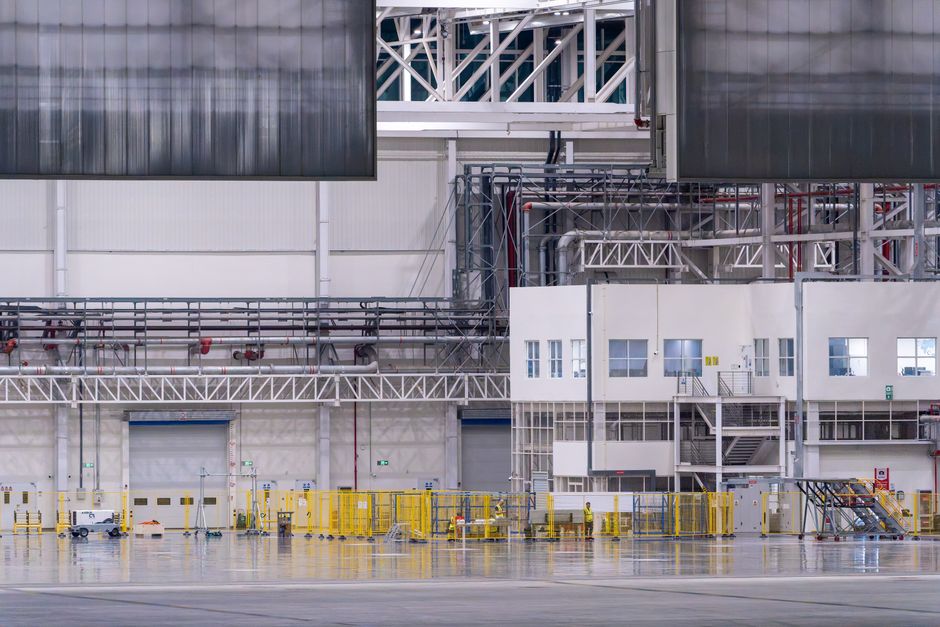
- Foundry transition requires massive, non-negotiable capital expenditure.
- R&D spending remains high regardless of current revenue fluctuations.
- Legacy infrastructure maintenance drains cash flow from modern growth.
- Talent competition in semiconductor engineering drives up payroll expenses.
Why is the Intel foundry business so expensive?
The actual cost of owning Intel stock isn't just the share price you see on your screen; it is the staggering, non-negotiable capital expenditure required to maintain its foundry business. While investors often focus on quarterly revenue, they frequently ignore the massive cash burn necessary to keep manufacturing competitive. Building and upgrading fabrication plants demands billions in upfront investment before a single chip is sold. This strategy forces the company to prioritize infrastructure over immediate shareholder returns. If you are looking for short-term gains, these heavy equipment costs will likely frustrate your expectations. But if you are holding for the long haul, you must account for this relentless spending as a permanent fixture of the balance sheet.
How do semiconductor manufacturing costs impact Intel's margins?
Manufacturing semiconductors at the leading edge is a game of diminishing returns where every incremental gain costs exponentially more than the last. Intel must pour capital into extreme ultraviolet lithography machines and specialized materials just to remain in the conversation with global competitors. These machines often cost hundreds of millions of dollars each. And they require specialized facilities that are expensive to run around the clock. Unlike software companies, Intel cannot simply scale by adding lines of code. It must build physical factories that take years to construct and calibrate. This physical reality means the company carries a high fixed-cost burden that does not go away when market demand slows down. You are essentially paying for the privilege of owning a massive, power-hungry industrial engine that requires constant, expensive maintenance to keep it from stalling out.
Analyzing Intel capital expenditure for long-term investors
Many investors cling to Intel for its history of dividend payments, but that history comes with a hidden cost in the form of potential dilution. When the company decides to fund massive expansion through debt or equity, the value of your existing shares often shrinks. You have to ask yourself if the yield is worth the trade-off of a shrinking piece of the total pie. The company often faces a choice between rewarding shareholders and funding the next generation of silicon. History shows that when the foundry business faces a crunch, the balance sheet takes the hit. So, check the most recent annual report for changes in share count and debt-to-equity ratios. If the debt load is climbing to fund dividends, you are essentially borrowing money to pay yourself, which is a dangerous long-term strategy for any business.
Is the long-term Intel stock outlook worth the wait?
The biggest risk nobody talks about is the cost of obsolescence. When Intel’s manufacturing process falls even one generation behind its competitors, the company loses its pricing power immediately. Customers switch to alternative foundries, and Intel is left with expensive, underutilized factories that bleed cash every single day. This is the ultimate hidden cost: the expense of wasted capacity. It is not just the lost revenue that hurts; it is the cost of paying for a facility that produces chips no one wants at the price point required. Investors often treat Intel as a stable utility, but it is actually a high-stakes manufacturing play. If you cannot tolerate the risk of a multi-billion dollar factory becoming a liability rather than an asset, this stock might not fit your portfolio.
How do high talent costs affect Intel's bottom line?
Silicon design is nothing without the engineers to build it, and the cost of talent has skyrocketed in recent years. Intel is locked in a fierce battle for top-tier chip architects and fabrication experts against well-funded rivals. These salaries are not just line items; they are a direct drain on the operating margin. You are paying for the most expensive human capital on the planet to solve problems that might not yield profits for years. Furthermore, the turnover rate in this sector is high. Replacing a lead engineer can cost the company months of development time and significant recruitment fees. When you look at the company's operating expenses, remember that a large portion is essentially paying to keep the smartest people from walking out the door to a competitor.
Who is responsible for Intel’s legacy debt?
Intel carries the weight of decades of legacy infrastructure, which acts as a drag on its agility. Maintaining older fabrication nodes for long-standing clients is a necessary but low-margin business that consumes valuable management focus and physical space. You are paying for the company to support its past while it tries to fund its future. This dual burden is rarely reflected in simple price-to-earnings ratios. It requires a deeper look at the breakdown of revenue by process node. If you want to understand the true cost of the stock, look at how much of the budget goes toward legacy support versus innovation. You might be surprised to find that a significant portion of your investment is effectively propping up the past rather than building the future.
Frequently asked questions
Intel's foundry division has faced significant operating losses due to high startup costs and the massive capital expenditure required to build and equip advanced semiconductor fabrication plants.
Intel is investing billions in new fabrication facilities and advanced lithography equipment to compete with TSMC and regain technical leadership in global semiconductor manufacturing.
Key risks include high debt levels, massive capital expenditure requirements, intense competition from TSMC and AMD, and the execution risk inherent in transitioning to a foundry-first business model.