How Do Helicopters Fly? The Physics of Rotor Lift Explained
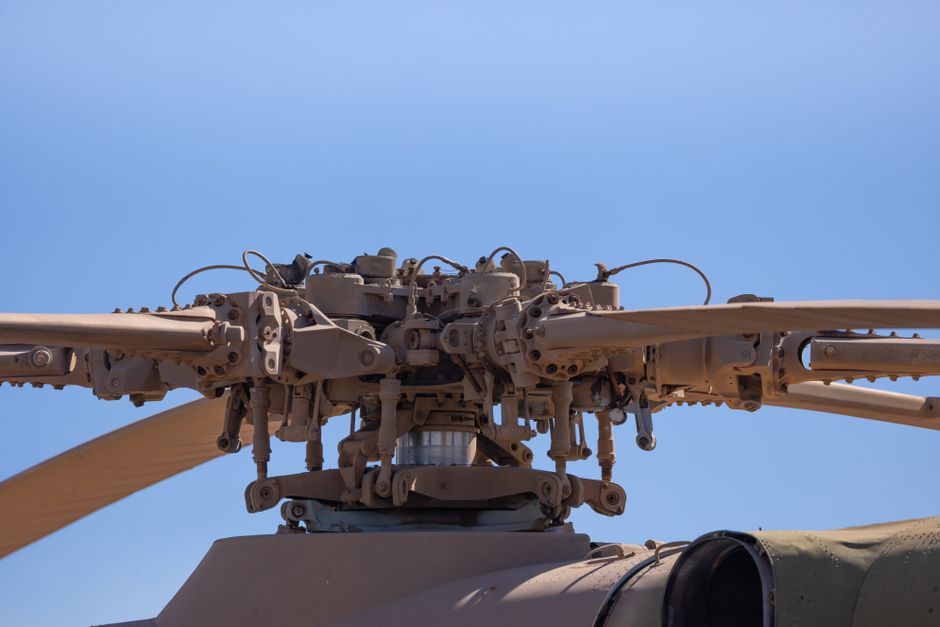
- Rotor blades function as rotating wings to create lift.
- The cyclic control tilts the rotor disk to change direction.
- The tail rotor prevents the aircraft from spinning uncontrollably.
- Helicopters require constant, active pilot input to maintain stability.
How Do Helicopter Rotor Blades Generate Lift?
A helicopter stays airborne by spinning rotor blades that act like rotating wings. When these blades turn, they create pressure differences that produce lift, pulling the aircraft upward. To move, the pilot tilts the rotor disk, directing that lift in a specific direction. It is a constant battle against gravity that requires precise control inputs. Unlike a plane, which needs forward speed to fly, a helicopter manipulates air directly beneath it. This allows for hovering, vertical takeoffs, and precise maneuvers in tight spaces. Understanding this process demystifies how a machine that looks like it should fall actually stays steady in the sky. It is all about managing airflow through physics. You are essentially balancing the machine on a cushion of moving air.
How Do Helicopters Maintain a Stable Hover?
First, the engine spins the main rotor mast. Each blade is shaped as an airfoil, meaning it has a curved top and a flat bottom. As air moves faster over the curved surface, it creates lower pressure, according to Bernoulli’s principle. This pressure difference lifts the helicopter off the ground. Pilots use the collective lever to change the angle of all blades at once. Increasing this angle, or pitch, increases the lift. You pull up on the collective to climb and push down to descend. It is the primary control for vertical movement. Without this, you are just sitting on the tarmac. Most modern systems are tuned so that engine speed remains steady while the blade pitch does the heavy lifting.
How Do Pilots Control Helicopter Flight Mechanics?
Once you are hovering, you need to move horizontally. You use the cyclic control, usually located between your legs. Moving the cyclic tilts the entire rotor disk in the direction you want to travel. If you push the cyclic forward, the rotor disk tilts forward, and the helicopter moves forward. It feels intuitive once you get the hang of it, but it requires subtle, constant corrections. Because the aircraft is naturally unstable, you cannot just set it and forget it. You are always working to keep the machine level. Small movements result in big changes, so patience is key. It is not like driving a car where you can relax on a straight road.
Why Is the Tail Rotor Essential for Flight?
The tail rotor is the unsung hero of the helicopter. Because the main rotor spins one way, Newton’s third law dictates that the body of the helicopter wants to spin the other way. Without a counter-force, you would just spin in circles. The tail rotor provides the necessary thrust to keep the nose pointed in one direction. You control this using two foot pedals. When you press the left pedal, the tail rotor pushes the tail to the right, swinging the nose left. It is a delicate balance of power that keeps the pilot from getting dizzy. If the tail rotor fails, the flight becomes dangerous almost immediately.
What Are the Primary Challenges of Helicopter Flight?
Helicopters are expensive and mechanically complex compared to fixed-wing aircraft. They have many moving parts that require frequent maintenance inspections. You will spend significantly more on fuel and parts per flight hour than a light airplane pilot. They are also loud and have limited range compared to planes of similar weight. If the engine dies, you must react instantly to enter autorotation. This process turns the rotors into a giant windmill as you descend, providing enough lift to touch down safely. It is a life-saving skill that every pilot must practice regularly. It is not for the faint of heart, but the maneuverability is unmatched.
Frequently asked questions
A helicopter stays in the air by spinning its rotor blades to create lift. By adjusting the angle of the blades, the pilot can control the amount of lift produced to climb, descend, or maintain altitude.
The tail rotor is necessary to counteract the torque produced by the main rotor. Without it, the helicopter's body would spin in the opposite direction of the main rotor blades.
Yes, through a process called autorotation. If the engine fails, the pilot can disengage the rotor from the engine, allowing the airflow through the blades to keep them spinning and provide enough lift for a controlled descent.