Is Government Digital Infrastructure Worth Your Tax Dollars?

- Digital infrastructure has improved service speed but not necessarily quality.
- Bureaucracy remains the biggest hidden cost for every citizen.
- Centralized systems often sacrifice local accountability for national scale.
- Tax-to-service ratio is currently skewed toward overhead rather than delivery.
How Digital Public Infrastructure Reduces Government Bureaucracy
The Central Government isn't a single product you can measure with a simple ROI calculator, but it often fails to justify its overhead for the average citizen. While digital public infrastructure has improved access to basic services, the friction caused by layers of legacy bureaucracy frequently cancels out those gains. If you weigh the taxes paid against the quality of infrastructure and social security, the current value proposition leans toward mediocre. You get speed in digital filings, but a glacial pace in actual dispute resolution. It's not a total failure, but it is far from the efficient machine it promises to be. Ultimately, you are paying a premium for a system that still struggles with fundamental service delivery.
Are Government Services Meeting Modern Taxpayer Expectations?
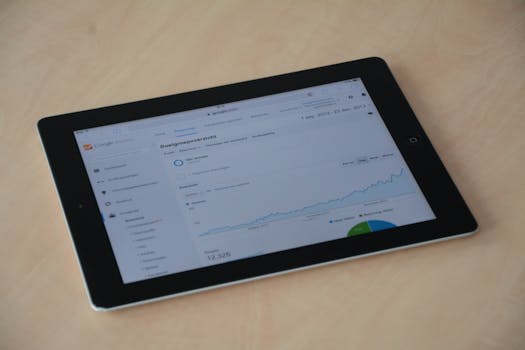
Digital portals have shifted the experience of interacting with the state. Instead of standing in physical lines, you now navigate websites that often crash during peak traffic. According to recent public metrics, portal uptime remains high, but user experience scores lag significantly behind private sector tech. So, you get convenience at the cost of clarity. The move toward digitizing records is a net positive, yet the data silos between departments remain a massive hurdle. You'll find that your information often needs to be re-entered across different platforms, which negates the promise of a unified digital experience.
Why Bureaucracy and Technology Often Create Friction
Tracking the budget reveals where priorities lie. A large portion goes to interest payments on debt and defense, leaving a thinner slice for direct social outcomes. For instance, in the latest fiscal cycle, interest payments consumed roughly 20% of total revenue. And that is money that isn't building roads or improving schools. Subsidies are also a major line item, acting as a buffer for the economy but masking underlying structural issues. It is a balancing act that leaves the middle-class taxpayer feeling like their contribution is mostly keeping the lights on rather than building new capacity.
How to Evaluate the Taxpayer Value of State Systems
The hidden cost of the Central Government is the time you spend navigating red tape. Even with digital tools, complex compliance requirements for businesses and individuals create a massive productivity drain. You aren't just paying taxes; you are paying with hours of your life spent on forms and verification processes. This inefficiency acts as an invisible tax on your time. While the government claims to simplify rules, the reality on the ground often involves adding new layers of verification rather than removing old ones. It is a cycle of complexity that keeps the administrative machine running at the expense of your productivity.
Is the Centralized Government Model Sustainable?
Centralization offers uniformity, but it lacks the flexibility to solve local problems. When a single agency manages millions of users, it tends to create one-size-fits-all policies that rarely fit anyone perfectly. But there is a trade-off here. Smaller, localized governance might be more responsive, yet it lacks the scale to manage national crises or large infrastructure projects. We are currently stuck in a middle ground where the center is too distant to be agile, but too big to be efficient. Unless there is a shift toward decentralizing authority, expect the same friction to continue for years.
How to Effectively Navigate Government Systems
You should treat the government like a slow-moving utility. Don't expect immediate results or high-touch service, and verify everything through multiple channels if you encounter a discrepancy. Use the digital tools for routine tasks, but maintain a paper trail for anything involving money or legal rights. And always keep your expectations grounded in reality. The system is designed for stability rather than speed, so plan your interactions well in advance. By treating it as a utility rather than a partner, you will save yourself significant frustration.
Frequently asked questions
Digital public infrastructure (DPI) refers to the foundational technology systems—such as digital identity, payment rails, and data exchange layers—that enable governments to deliver public services more efficiently.
Bureaucracy often creates friction by requiring manual, paper-based processes and siloed data, which slows down service delivery and increases the administrative cost for taxpayers.
While technology can streamline processes and reduce costs, it requires significant organizational reform to be effective; without changing outdated workflows, digital tools often just digitize existing inefficiencies.