How to Use Roster Depth to Win College Football Bets
- Georgia maintains a significant talent advantage through top-tier recruiting.
- WKU operates in a different conference, making direct record comparisons misleading.
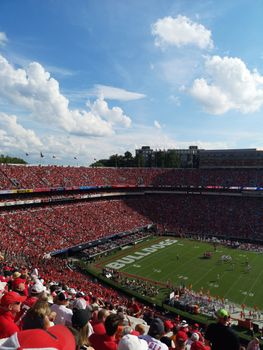
- The environment at Sanford Stadium often overwhelms visiting teams.
- Bettors frequently underestimate how roster depth impacts late-game scoring.
Why is roster depth analysis critical for betting?
Georgia is a perennial national contender, while WKU consistently competes for Conference USA titles. The single biggest mistake observers make is assuming parity between these two programs based on their win-loss records. Georgia operates with an SEC-sized budget and a recruiting pipeline that creates a massive physical mismatch. If you are analyzing this matchup, look at roster depth and scholarship counts rather than just team performance. WKU utilizes a high-tempo offensive scheme, but they rarely encounter the defensive speed found in Athens. You must weigh the raw talent gap against the specific schemes each coach runs on game day. Treat them as two different classes of football programs.
How to identify a football talent gap?
Georgia consistently ranks in the top five of national recruiting databases. WKU recruits solid players, but they lack the sheer volume of four and five-star athletes across their full depth chart. This disparity means the favorite can rotate players throughout the game without seeing a drop in production. When you watch the game, pay attention to the second and third-string units during the second half. If the score stays close, it is usually because the favorite is playing conservatively, not because the teams are equal. Acknowledge that depth is the primary driver of late-game separation.
What is the best sports betting strategy for mismatches?
Playing in Athens is notoriously difficult for visiting teams. Sanford Stadium holds over 92,000 fans, creating a noise level that disrupts communication for opposing offenses. For a team like WKU, which plays in much smaller venues, this environment often leads to early-game errors like false starts or missed line calls. Do not assume a neutral-field performance will translate to a hostile road game in the SEC. The environment matters just as much as the talent on the field. Always check the stadium capacity and historical home-field win rates.
How to evaluate team performance beyond the box score?
Bettors frequently look at a large point spread and assume the underdog will cover simply because the number looks too high. However, the gap between top-tier programs and mid-major teams often grows as the game progresses. Fatigue sets in for the smaller team, while the larger program keeps fresh legs on the field. Don't chase the points without considering the physical toll of a four-quarter game. Look for injury reports and roster availability rather than relying on past performance alone.
Is there a realistic path for an upset?
Upsets happen when the underdog plays a perfect game and the favorite suffers from turnovers or complacency. WKU’s passing attack could theoretically cause problems if they force Georgia to play out of its comfort zone. However, the statistical probability of this remains low according to historical game data. You should expect the favorite to control the clock and wear down the opposition through the trenches. It is a classic matchup of speed versus grit, and speed usually wins over the long haul.
Frequently asked questions
Roster depth indicates a team's ability to maintain performance despite injuries or fatigue, which is a critical factor for late-season games and covering point spreads.
Win-loss records often reflect past strength of schedule rather than current team capability. Talent gap analysis provides a more accurate, forward-looking prediction of team performance.
The most important factor is comparing the talent level of the starting units and depth charts, as this reveals whether a team can sustain its offensive or defensive efficiency throughout the game.