How AI Satellite Imagery Speeds Up Disaster Damage Assessment
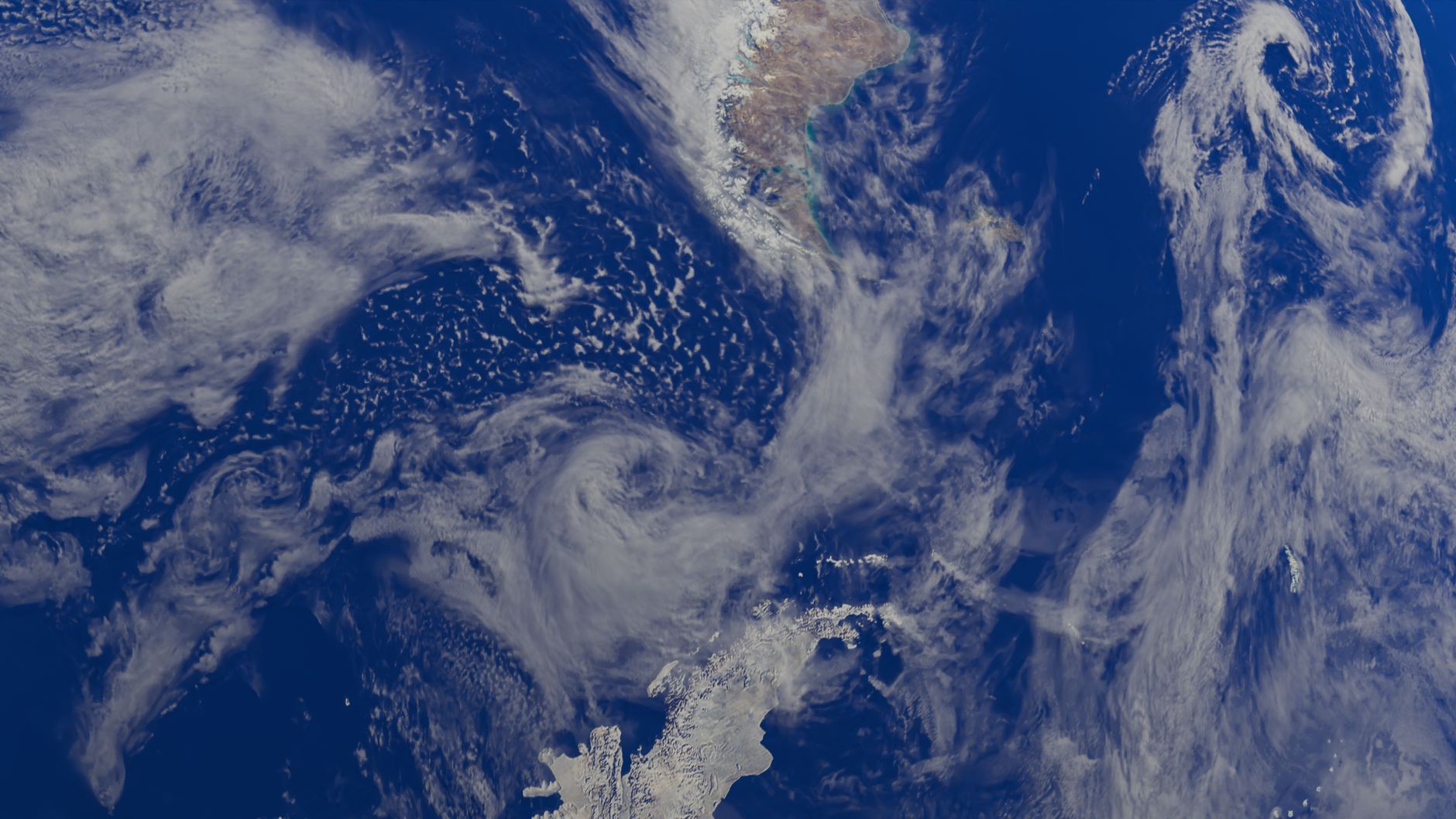
- AI can map damage despite missing image data
- Built on engineering principles, not just raw pixels
- Still a preprint – not yet peer‑reviewed
- Speed comes with accuracy trade‑offs
- Future work will test it against real‑world surveys
How does AI satellite imagery analysis work?
A new AI system can predict structural damage across an entire city even when clouds or smoke hide large parts of the satellite view, according to a preprint released on Oct 7, 2026. The researchers combined engineering knowledge with deep‑learning to fill in the gaps and output a damage map within minutes of a disaster. "We can now map damage even when clouds hide the view," says the lead author. This rapid estimate could give emergency managers a head start before crews reach the ground. The study is still early and has not undergone peer review, so the results should be viewed as promising but provisional.
Why is predicting structural damage critical for safety?
The team trained a neural network on simulated disaster scenarios where they deliberately obscured sections of satellite imagery. By feeding the model engineering constraints—like building material strength and typical collapse patterns—it learned to infer likely damage behind the clouds. The preprint describes the approach as a hybrid of physics‑based reasoning and data‑driven prediction, rather than a pure black‑box classifier. No exact sample size is given, but the authors mention testing on several hundred synthetic city blocks. They evaluated performance by comparing the AI’s output to the known damage in the simulated data, reporting a noticeable drop in error compared to a baseline that ignored engineering cues.
How AI Improves Emergency Management Response Times
Because the work is a preprint, it has not been vetted by independent reviewers, and the authors have not yet validated the model on real disaster imagery with ground‑truth surveys. The method also relies on the assumption that engineering rules used in training apply to every locale, which may not hold in regions with unconventional building practices. Cloud cover is just one type of missing data; heavy smoke, night‑time images, or low‑resolution feeds could pose additional challenges. So while the AI shows promise, it does not yet guarantee accurate damage estimates in every emergency scenario.
What Are the Limitations of Current Disaster Response Technology?
If the technique lives up to its early results, agencies could receive a city‑wide damage snapshot within an hour of an earthquake, flood, or wildfire, instead of waiting days for manual mapping. That speed could help prioritize rescue routes, allocate resources, and issue public warnings more efficiently. However, responders should treat the AI output as a preliminary guide, not a definitive assessment, until field verification confirms its reliability. The trade‑off is clear: faster insight comes with a margin of error that could mislead if taken as absolute truth.
Future Trends in AI-Driven Disaster Assessment
The authors plan to submit the work to a peer‑reviewed journal and to test the model on real satellite images from recent disasters, comparing its predictions against on‑the‑ground damage reports. They also aim to extend the approach to other missing‑data problems, such as nighttime or low‑resolution imagery. Key questions remain about how the system handles diverse building codes, how it scales to megacities, and whether it can integrate other data sources like drone footage. Until those studies are published, the community should watch for follow‑up papers and independent replications.
How to Stay Updated on AI Disaster Response Developments
The preprint is hosted on an open‑access server, so you can revisit the link to see version changes. Sign up for alerts from the authors' institution or follow relevant AI‑for‑disaster‑response mailing lists. When the paper undergoes peer review, journals will typically issue a DOI that you can use to locate the final version. Watching for conference presentations on AI and emergency management can also clue you in to new benchmarks or real‑world deployments of the technique.
- New AI method uses engineering knowledge to estimate disaster damage from incomplete satellite imagery — press, Oct 7, 2026
- New AI method uses engineering knowledge to estimate disaster damage from incomplete satellite imagery — TechXplore, Oct 7, 2026
Frequently asked questions
AI models use computer vision and deep learning algorithms to compare pre- and post-disaster satellite images, automatically identifying structural changes such as collapsed roofs, debris, or blocked roads.
Yes, by utilizing Synthetic Aperture Radar (SAR) imagery, which uses radio waves to penetrate clouds, smoke, and darkness, AI can map damage regardless of adverse weather conditions.
AI can process vast amounts of satellite data in minutes, whereas manual analysis by human teams can take days, allowing emergency responders to prioritize resource allocation much faster.