Train Passed Red Signal at 76 mph Before Fatal Crash
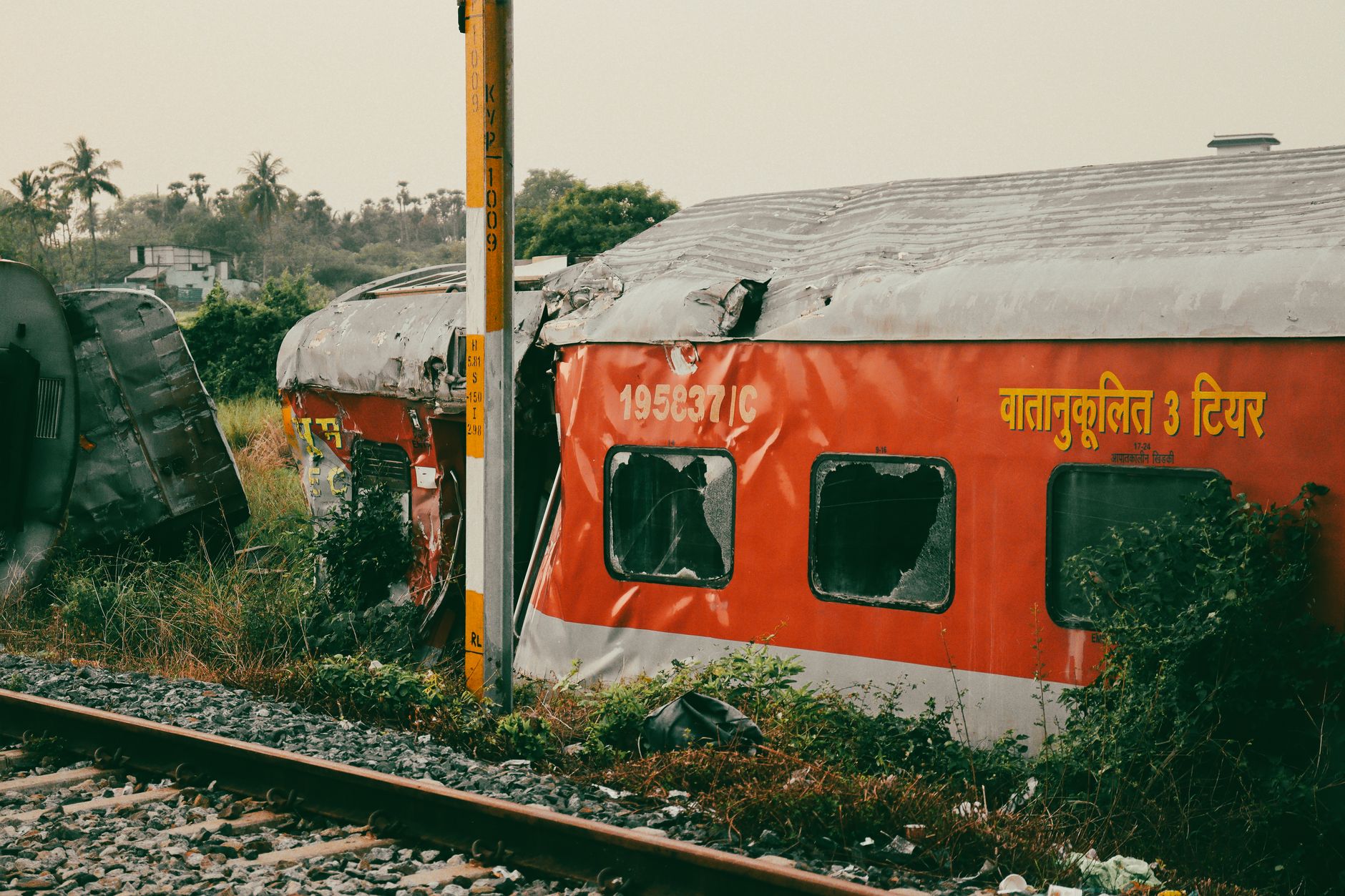
- Driver passed red signal at 76 mph
- Shaun Burton, 60, died in the collision
- 100 people injured in the crash
- Stationary train had AWS fault
- Impact speed reduced to 49 mph
A train driver killed in a catastrophic crash in Bedfordshire passed a red signal at high speed just moments before the collision, investigators confirmed on Wednesday.
Shaun Burton, 60, died and approximately 100 people were injured when a London-bound service crashed into the back of another stationary train last Friday.
The Rail Accident Investigation Branch (RAIB) released an interim report detailing the frantic final seconds before impact, revealing that Burton's train proceeded past a red signal near the scene of the crash in Elstow, near Bedford.
The collision occurred at 17:15 BST, closing the line and causing severe disruption to the network during the evening rush hour.
Investigators have determined that the stationary train, which was struck from behind, had come to a halt unexpectedly due to a technical fault with its Automatic Warning System (AWS) equipment.
This fault created a hazardous situation that the following train, traveling from Corby, failed to navigate in time.
Data recovered from the train's data recorders suggests the signal immediately behind the stationary train was displaying red, a command that requires an immediate stop.
Despite this, the train Burton was driving continued past the signal at approximately 76 mph.
The RAIB's preliminary findings paint a picture of a sudden and devastating impact on the railway network, raising immediate questions about signal visibility and the effectiveness of current safety systems.
- The crash occurred at 17:15 BST on Friday near Elstow.
- Shaun Burton, 60, was the driver killed in the collision.
- Approximately 100 people were reported injured.
- The train passed the signal at 76 mph.
The financial implications for the rail operator are likely to be significant, considering the potential costs of compensation, infrastructure repairs, and the inevitable regulatory scrutiny that follows such incidents.
Investors in the broader transport sector will be watching closely as the investigation unfolds, looking for any signs of systemic failure that could affect safety budgets and operational protocols across the network.
The incident has already sparked a debate about the balance between automation and human control in managing complex railway signaling systems.
Automatic Warning System Fault Triggered Emergency Stop
The sequence of events leading to the fatal crash began with a technical glitch in the lead train's safety equipment, officials said.
The RAIB has found that the stationary train, which was waiting in the signal section, had come to a stop unexpectedly because of a fault with its Automatic Warning System (AWS) equipment.
The AWS is a critical safety feature designed to alert drivers to upcoming signals and automatically apply the brakes if they fail to acknowledge a warning.
In this instance, the malfunction caused the train to halt where it was not expected to be, fundamentally changing the safety parameters of that section of the track.
This unexpected stop likely contributed to the confusion or the difficulty faced by the driver of the following train.
Normally, a train stopping at a red signal is a standard occurrence, but an unscheduled halt due to equipment failure can create anomalies that drivers may not anticipate.
The fault in the AWS equipment meant the train stopped without the standard procedural flow, potentially leaving it in a position where the signal behind it turned red to protect it.
Investigators are now focusing on why the following train failed to stop in time, despite the signal protection.
The interplay between the faulty AWS on the first train and the signaling for the second train is a central focus of the inquiry.
- The stationary train stopped due to an AWS fault.
- AWS faults can cause unexpected halts.
- The signal behind the stationary train was red.
- The lead train's position was irregular.
For the business of rail operations, reliability of the AWS is paramount.
Frequent technical faults can erode driver confidence and lead to 'alert fatigue,' where drivers become desensitized to warnings because false positives occur too often.
If the investigation reveals that the AWS fault was a known issue with this particular rolling stock or fleet, the manufacturer and the leasing companies could face substantial liability.
Maintenance records and the service history of the specific safety system will be scrutinized by forensic accountants and engineers alike to determine if cost-cutting measures contributed to the failure.
The cost of upgrading aging signaling systems across the UK network runs into billions, a figure that often deters immediate modernization in favor of incremental maintenance.
Nine Seconds of Braking Before Impact
The timeline of the collision reveals a desperate attempt to avoid the disaster in the final seconds.
According to the RAIB, the train that had started its journey at Corby passed the red signal and its brakes were activated for approximately nine seconds before the collision.
During those nine seconds, the train's speed reduced significantly, but not enough to prevent the tragedy.
At the moment the train passed the signal, it was traveling at about 76 mph.
By the time of the impact, the braking efforts had brought the speed down to 49 mph.
The difference in speed, while substantial, still generated enough kinetic energy to cause a fatal crash and injure roughly 100 passengers.
The nine-second window suggests the driver or the train's safety systems recognized the danger relatively late in the approach.
This raises critical questions about sighting distances and the visibility of the signal.
If the signal was obscured or if the driver was distracted, the reaction time of nine seconds aligns with emergency braking protocols.
However, if the signal was clear, the failure to stop earlier points to a potential human error or a deeper issue with the driver's alertness.
- Brakes were active for nine seconds.
- Speed dropped from 76 mph to 49 mph.
- Impact occurred despite braking effort.
- Kinetic energy at 49 mph caused fatalities.
The physics of the crash are brutal.
A train weighing hundreds of tons, even at 49 mph, possesses immense destructive power.
The deceleration from 76 mph to 49 mph indicates a high rate of braking, suggesting the emergency brakes were fully applied.
This data point will be crucial for reconstructing the exact dynamics of the accident.
From a market perspective, the braking performance data will be analyzed by safety regulators to determine if the braking distance was adequate for the speed limit on that section of track.
If the braking distance was insufficient given the geometry of the line, infrastructure operators may be forced to impose lower speed limits, affecting the commercial viability of the service by extending journey times.
Slower journeys reduce the attractiveness of rail travel compared to road or air, potentially impacting revenue streams for operators already struggling with post-pandemic passenger numbers.
Economic Impact of SPADs on Rail Operations
Signals Passed At Danger (SPADs) are the single biggest risk to railway safety and carry a heavy economic burden for the industry.
This incident is now being categorized as a SPAD, a term that sends shivers down the spines of rail executives.
Each year, SPADs cost the rail industry millions in delays, investigations, and safety retrofits.
While most SPADs are minor or stopped before an incident occurs, those that result in collisions can lead to catastrophic financial losses.
The RAIB said its full investigation would consider the actions of those involved and any factors that may have influenced them.
This includes looking at the economic pressures on drivers, rostering patterns, and the overall safety culture within the operating company.
Fatigue is a major commercial consideration in rail operations.
Maximizing asset utilization often leads to tighter schedules and more efficient shift patterns, which can inadvertently increase driver fatigue.
If fatigue is found to be a contributing factor in this case, the regulatory backlash could be severe, leading to mandated minimum rest periods that increase operational costs.
- SPADs are a major financial and safety risk.
- Investigations cost millions and disrupt services.
- Driver fatigue is a potential factor in SPADs.
- Safety culture is under scrutiny.
The immediate market reaction often involves a dip in the share price of associated infrastructure and rolling stock companies.
Investors fear the costs of lawsuits and the imposition of new, expensive safety technologies.
Furthermore, the closure of the line for investigation results in lost ticket revenue and compensation payouts to stranded passengers.
The line between Elstow and Bedford is a crucial artery for commuters, and its disruption has a ripple effect on the local economy.
Businesses relying on the transport of goods and workers face delays, adding to the indirect economic cost of the crash.
Insurance premiums for the entire sector are likely to rise as underwriters reassess the risk profile of UK rail operations following this high-profile event.
RAIB Investigation to Scrutinize Human and Technical Factors
The Rail Accident Investigation Branch has made it clear that its work is far from over.
While the interim report establishes the factual sequence of events—the red signal passed, the speed, the braking—the full investigation will delve much deeper.
The RAIB said its full investigation would consider the actions of those involved and any factors that may have influenced them.
This holistic approach is standard for modern rail inquiries but means the final report could be months away.
Investigators will examine the medical history of the driver, looking for any evidence of sudden incapacitation.
They will analyze the ergonomics of the cab, the lighting conditions at 17:15 BST, and the maintenance history of the signals.
The human factors element is particularly complex.
It involves understanding why an experienced driver, aged 60, would miss a danger signal.
Was there a distraction in the cab?
Was the driver complacent due to a history of clear signals on that stretch of track?
Or was there a technical failure in the train's own warning system that failed to alert the driver to the red signal?
- The full report is months away.
- Driver medical history will be reviewed.
- Cab ergonomics and signal maintenance are key.
- Complacency vs. technical failure is being weighed.
The outcome of this investigation will likely lead to new recommendations for the Office of Rail and Road.
These recommendations often translate into mandatory upgrades or changes in operating procedures.
For the companies involved, this represents a future capital expenditure risk.
If the investigation recommends the installation of more advanced Train Protection & Warning Systems (TPWS) or the European Rail Traffic Management System (ERTMS) earlier than planned, the capital outlay will be significant.
Shareholders will be keenly aware that safety upgrades, while necessary for saving lives, often come at the expense of dividends and short-term profits.
The RAIB's findings will also be scrutinized by legal teams preparing for civil suits from the injured passengers and the family of the deceased driver.
Future of Rail Safety Tech Under the Microscope
This tragic crash is set to reignite the debate over the pace of technological modernization on the UK's railways.
The Automatic Warning System (AWS), which was involved in the initial fault, is a legacy technology.
While it has saved countless lives since its introduction, it is considered inferior to modern digital systems like ERTMS.
ERTMS provides continuous communication between the train and the control center, virtually eliminating the risk of a driver passing a red signal because the train is automatically slowed or stopped by the system.
However, the rollout of ERTMS has been slow and expensive, hampered by budget constraints and the complexity of retrofitting old infrastructure.
The crash in Elstow may serve as a catalyst for accelerating this rollout, despite the high costs.
The argument from safety advocates is that the cost of inaction—measured in lives lost and the economic disruption of crashes like this one—far outweighs the investment in digital signaling.
- Legacy AWS tech is under scrutiny.
- ERTMS offers superior protection.
- Rollout has been slow due to costs.
- Crash may accelerate modernization plans.
For the market, this signals a potential boom for signaling contractors and technology providers.
Companies specializing in digital rail infrastructure could see a surge in orders if the government and Network Rail decide to fast-track upgrades in response to the public outcry.
Conversely, operators may face higher track access charges to fund these improvements, squeezing their profit margins.
The tragedy also highlights the limitations of relying on human vigilance in high-speed environments.
As trains get faster and schedules get tighter, the margin for error shrinks to zero.
The industry is at a crossroads where it must decide whether to continue patching up legacy systems or commit to the full digitization of the network.
The decision made in the wake of Shaun Burton's death will shape the safety and economics of the UK railway for decades to come.