Siemens, Vanderbilt Launch $87M Care Pact
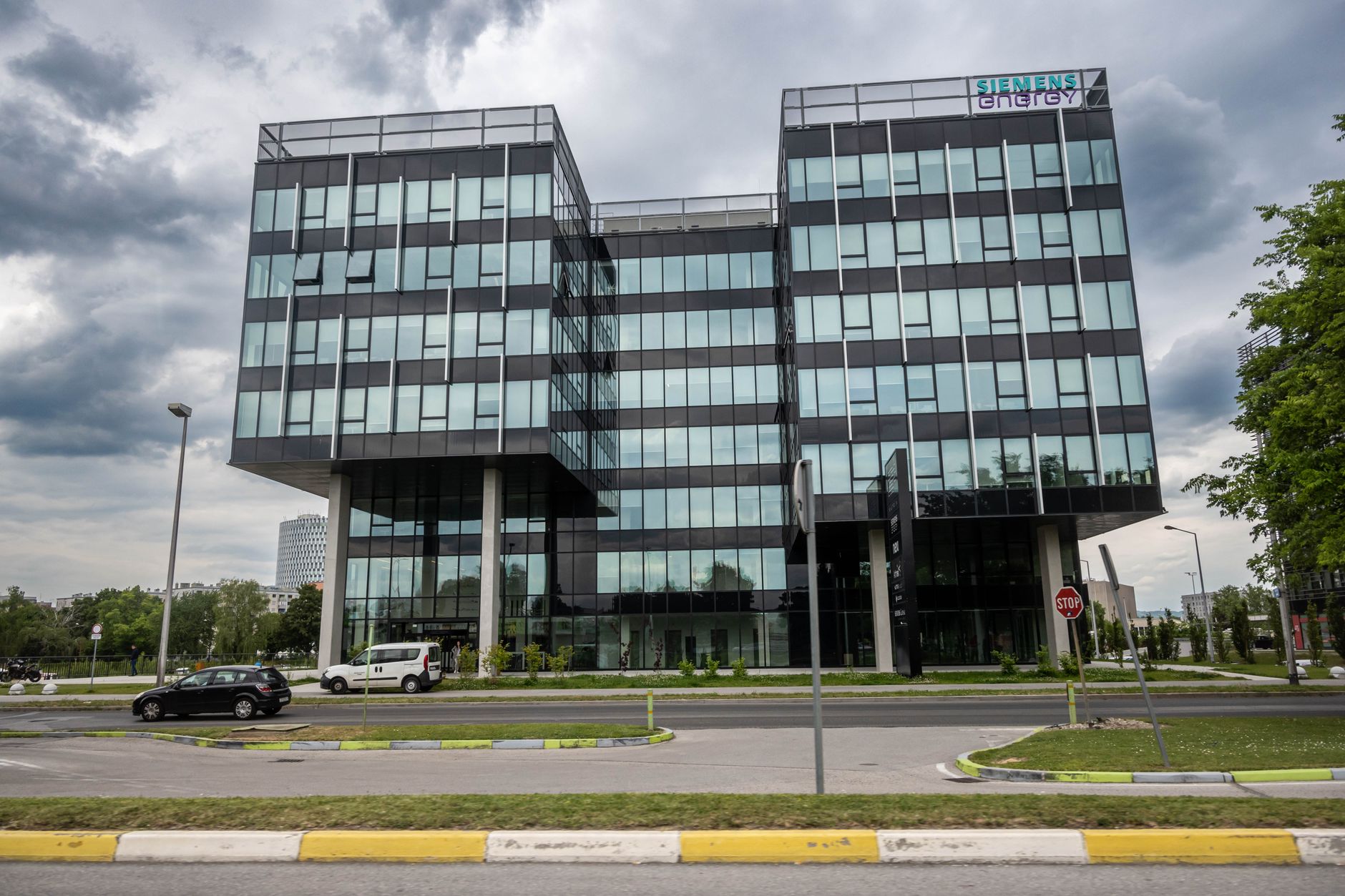
- Partnership valued at $87 million (€80m)
- Focus on advanced medical technology integration
- Aims to elevate patient care standards
- Announced on Monday, 27 July 2026
- Strategic alliance for long-term innovation
Vanderbilt Health and Siemens Healthineers have officially launched a strategic $87 million (€80 million) Value Partnership, a landmark agreement announced on Monday, July 27, 2026. This deal aims to deliver advanced technology and substantially elevate patient care standards at the Nashville-based academic medical centre. Officials emphasized that the agreement focuses on integrating state-of-the-art medical equipment with sophisticated digital health solutions to streamline clinical operations and enhance diagnostic precision. This collaboration marks a significant investment in the infrastructure of one of the United States' leading hospital systems, signaling a decisive move away from fragmented equipment purchases toward a unified ecosystem of care.
- Deal value: $87 million (€80m)
- Focus: Advanced tech and patient care
- Partners: Vanderbilt Health and Siemens Healthineers
The partnership is structured not merely as a procurement transaction but as a long-term alliance designed to foster innovation in diagnostic imaging and laboratory medicine. Industry reports indicate that the scale of the agreement reflects a growing trend among top-tier hospitals to seek deeper integration with their technology suppliers to combat rising operational complexity. By pooling resources and aligning incentives, both organisations intend to address pressing challenges in modern healthcare, including soaring operational costs, labor shortages, and the critical need for faster, more accurate diagnostics. The agreement will run for several years, ensuring Vanderbilt has continuous access to the latest updates in Siemens' extensive portfolio, thereby obsolescing the risk of owning outdated technology. Sources confirmed that the financials involve a complex mix of equipment leasing, software subscriptions, and comprehensive service agreements. This structure allows Vanderbilt to spread capital expenditure while maintaining cutting-edge capabilities, a crucial advantage in an economic climate where liquidity is paramount. For Siemens, the deal secures a flagship customer in the competitive US market, validating their strategic shift towards value-based care models over traditional 'box-moving' sales. The announcement comes at a time when the healthcare sector is increasingly relying on technology to drive efficiency and improve patient outcomes, making this alliance a template for future industry-wide collaborations.
Inside the Value Partnership Model
The core of this announcement lies in the specific structure of the agreement, known as a Value Partnership. Unlike traditional transactional sales where a hospital buys a scanner and pays for repairs as needed, this model aligns the financial incentives of the manufacturer and the provider in a novel way. Experts explained that Siemens effectively becomes a partner in Vanderbilt's success, sharing the risks and rewards associated with patient care delivery. Under the terms, Vanderbilt will likely gain access to Siemens' entire spectrum of diagnostic technologies, including MRI, CT, and ultrasound systems, without the heavy upfront burden of purchasing assets outright.
- Model: Risk-sharing and outcome-based
- Scope: Equipment, software, service
- Benefit: Predictable costs for hospital
This approach allows the hospital to optimise its budget by converting large capital expenses into more manageable operational costs, improving EBITDA margins and freeing up cash for other strategic initiatives. Analysts pointed out that this is particularly relevant for academic medical centres like Vanderbilt, which face unique financial pressures alongside their tripartite mission to teach, research, and provide clinical care. The partnership also includes provisions for extensive staff training and education, ensuring that clinicians can maximise the potential of new technologies from day one. Officials said that the agreement would facilitate the adoption of artificial intelligence tools that can automate routine tasks and assist in diagnosis, effectively acting as a force multiplier for staff. By embedding AI into the workflow, the partners hope to reduce the time patients spend waiting for results and free up radiologists to focus on complex cases, thereby addressing the growing issue of clinician burnout. The Value Partnership concept has been a cornerstone of Siemens Healthineers' strategy in recent years, helping them differentiate from competitors who still rely on a transactional sales approach. This deal represents one of the larger implementations of the model in the US this year. It signals a maturity in the market where providers are comfortable trading ownership for flexibility and guaranteed performance, trusting that the vendor will maintain uptime and innovation standards. The financial commitment of $87 million suggests a comprehensive overhaul of Vanderbilt's imaging fleet and potentially their laboratory diagnostics infrastructure as well, moving beyond simple replacement to total system optimization.
Vanderbilt's Tech Overhaul Strategy
Vanderbilt Health operates one of the largest academic medical campuses in the southeastern United States, serving as a critical referral center for the region. The decision to enter a $87 million partnership indicates a strategic priority to modernise its technological backbone, which had become a patchwork of aging systems. Sources familiar with the hospital's operations suggested that much of Vanderbilt's existing installed base may be nearing the end of its lifecycle, necessitating a significant refresh to maintain diagnostic leadership. By choosing Siemens as their partner, Vanderbilt is betting on the German engineering giant's reputation for reliability and innovation, particularly in high-field magnetic resonance and computed tomography.
- Goal: Modernise imaging infrastructure
- Target: End-of-life equipment replacement
- Focus: Workflow efficiency
The integration will likely include Siemens' latest MRI scanners, such as the Magnetom Sola or Vida series, which are renowned for their high magnetic field strengths and BioMatrix technology that adapts to patient biovariability. For a level-one trauma centre like Vanderbilt, having immediate access to high-resolution CT scans, such as those provided by the Somatom family, is critical for emergency care, particularly in stroke and trauma protocols where minutes save brain and muscle tissue. The partnership is expected to upgrade these capabilities, ensuring that the hospital remains at the forefront of trauma and stroke care. Beyond hardware, the deal emphasises software connectivity. Vanderbilt aims to create a seamless digital environment where patient data flows effortlessly between different departments, breaking down the traditional walls between radiology, oncology, and cardiology. This interoperability is often a bottleneck in large hospital systems, leading to delays and lost information that can compromise care. Officials stated that a key objective of the partnership is to break down these data silos by implementing a unified IT platform, allowing clinicians to have a holistic view of a patient's history, enabling more informed decision-making. The modernisation strategy also encompasses sustainability. Newer medical equipment typically consumes less energy and has a smaller carbon footprint, aligning with broader environmental goals and reducing utility costs. Government figures show that healthcare contributes significantly to carbon emissions, making efficient technology a growing priority for hospital administrators who are facing increasing pressure to meet corporate social responsibility targets. This deal allows Vanderbilt to upgrade its tech stack while addressing its green initiatives, proving that financial and environmental stewardship can go hand-in-hand.
Siemens' US Market Offensive
For Siemens Healthineers, this partnership is a major victory in its home market away from home—the United States. Although headquartered in Erlangen, Germany, the US represents the single largest market for the company's diagnostic equipment, accounting for a substantial portion of its global revenue. Securing a contract of this magnitude with a prestigious institution like Vanderbilt serves as a powerful endorsement of their technology and business model in the most competitive healthcare market in the world. Market analysts observed that the deal helps Siemens consolidate its position against fierce rivals, particularly GE HealthCare and Philips, who are also vying for dominance in the high-end academic sector.
- Market: US is largest for Siemens
- Strategy: Value-based partnerships
- Rivals: GE HealthCare, Philips
The US healthcare landscape is notoriously complex and expensive, but it also offers the highest returns for successful medical technologies that can demonstrate improved outcomes. By locking in a long-term partnership, Siemens secures recurring revenue streams that are more stable and predictable than one-off sales, a metric highly valued by investors seeking resilience in uncertain economic climates. The agreement also provides Siemens with a valuable testbed for new innovations. As a research-heavy institution, Vanderbilt will likely collaborate with Siemens on the development of next-generation imaging protocols and AI algorithms, providing real-world feedback that is impossible to replicate in a lab. This feedback loop is invaluable for a company trying to stay ahead of the rapid pace of technological change. Experts noted that such collaborations often lead to intellectual property and clinical insights that can be leveraged in sales pitches to other hospitals, effectively using Vanderbilt as a 'lighthouse' customer to demonstrate the efficacy of new technologies. Furthermore, this deal reinforces Siemens' commitment to the 'Americas' region, which has been a primary growth engine for the company. Despite geopolitical tensions and trade fluctuations, the demand for advanced healthcare in the US remains robust due to an aging population and chronic disease prevalence. Siemens has consistently invested in its US manufacturing and service capabilities to support this demand. The Vanderbilt partnership is a tangible result of that long-term investment strategy. It demonstrates that European manufacturers can still thrive and lead in the highly competitive American market through strategic differentiation and a willingness to share risk with their customers.
AI and the Future of Diagnostics
A critical component of the $87 million agreement is the emphasis on artificial intelligence, which serves as the connective tissue between the hardware and the clinical workflow. The press release specifically mentioned the delivery of 'advanced technology,' which in industry terms refers heavily to AI-driven software solutions designed to augment human intelligence. Modern medical scanners generate vast amounts of data—sometimes thousands of images per exam—that far exceed human processing capacity. AI tools are essential for sifting through this data to identify anomalies, measure organ volumes, and prioritise urgent cases, ensuring that critical findings are not lost in the noise.
- Tech focus: AI integration
- Benefit: Faster diagnosis, prioritisation
- Goal: Augment clinical intelligence
Siemens has been aggressive in integrating AI into its MRI and CT machines under its 'AI-Rad' and 'teamPlay' digital ecosystems. Through this partnership, Vanderbilt will gain access to these tools, which can significantly reduce the time a radiologist spends on each image by automating tedious tasks like image segmentation and measurement. For example, AI can automatically draft preliminary reports or highlight potential brain bleeds on a CT scan within seconds, flagging them for immediate radiologist review. This speed is vital in time-sensitive conditions like stroke or trauma, where every minute counts toward patient survival and recovery. Additionally, AI algorithms in MRI can reconstruct images faster, allowing for shorter scan times. This improves patient comfort by reducing time spent in the claustrophobic bore and increases department throughput by allowing more patients to be scanned per day. However, officials stressed that the technology is designed to assist, not replace, human clinicians. The goal is to reduce burnout among medical staff by removing repetitive tasks from their workload, allowing them to focus on the complex cognitive aspects of diagnosis and patient care. By integrating AI into the core of the partnership, Siemens and Vanderbilt are building a diagnostic infrastructure that is not only faster and more accurate today but is also capable of learning and adapting to new clinical challenges in the future.
Economic Implications of the 'OpEx' Shift
A deeper analysis of the Siemens-Vanderbilt deal reveals a significant macroeconomic trend within the hospital sector: the aggressive shift from Capital Expenditure (CapEx) to Operational Expenditure (OpEx). Historically, hospitals relied on bond measures and cash reserves to purchase expensive imaging assets, owning them for 10 to 15 years. However, the rapid pace of technological obsolescence renders this model increasingly inefficient. By 2026, the depreciation schedule of a CT scanner often outpaces its clinical utility long before the asset is fully amortized. The $87 million partnership allows Vanderbilt to treat diagnostic technology as a service, similar to how they manage electricity or software licenses.
- Trend: CapEx to OpEx conversion
- Driver: Technological obsolescence
- Impact: Improved liquidity
This financial engineering is crucial for large academic centers facing liquidity constraints. By moving these costs to the operating budget, Vanderbilt can preserve its capital for facility expansion and urgent research needs. Furthermore, this model transfers the risk of asset failure to Siemens. If a critical MRI system requires an unexpected expensive repair, the cost is borne by the manufacturer, not the hospital. This risk mitigation is increasingly valuable as supply chain disruptions make parts harder to source and repairs more costly. Financial analysts suggest that this 'as-a-service' model creates a sticky ecosystem for vendors. Once a hospital is locked into a digital workflow and hardware ecosystem provided by one vendor, the switching costs become prohibitively high. For Siemens, this ensures customer retention for a decade or more. For Vanderbilt, it guarantees budget predictability in an era of volatile reimbursement rates and inflationary pressure. The deal effectively insulates the health system from the sticker shock of sudden equipment failures, smoothing out financial planning and allowing for more agile responses to market changes.
Implementation Roadmap and Stakeholder Impact
While the strategic and financial implications are significant, the success of the partnership ultimately hinges on the complex operational rollout scheduled over the coming years. Replacing an enterprise-wide imaging fleet is not a simple plug-and-play exercise; it requires meticulous logistical planning and change management. The implementation roadmap for the Siemens-Vanderbilt pact will likely occur in phases, prioritizing high-acuity areas like the emergency department and neurosurgery first.
- Phase 1: Critical care upgrades
- Phase 2: Enterprise-wide software integration
- Focus: Minimizing downtime
A critical challenge will be managing downtime during installation. Vanderbilt cannot afford to shut down its trauma capabilities for weeks. The partners will likely utilize mobile scanner units and temporary swing