Stillness Is a Survival Response, Not Calm
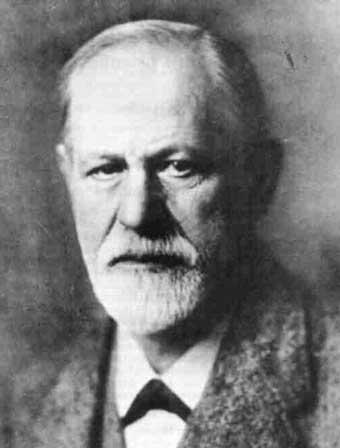
- Stillness is often a survival response to trauma
- Childhood environments shape adult emotional reactions
- Gen Z workers are 12 times more likely to feel disconnected
- Hot yoga study shows movement reduces depression symptoms
Years ago, in a kitchen I part-owned, I watched a chef come apart at a line cook during a Friday rush. It was a visceral explosion of anger, the kind that makes customers freeze and cutlery rattle. Amidst the shouting and clattering pans, one staff member stood absolutely motionless. They did not fidget, did not shift their weight, and did not blink. To a casual observer, or perhaps to an angry manager looking for engagement, this person looked indifferent. Cold, even. But psychology says this interpretation is dangerously wrong. According to new data emerging from behavioral studies, people who go very still when they are upset are not calm or indifferent. They are often the ones for whom stillness became the only safe response to something overwhelming. This stillness is a biological freeze response, a deeply ingrained survival mechanism usually learned in childhood environments where expressing emotions was unsafe. Experts suggest this behavior is misfiled by society as aloofness or passivity, leading to damaging misunderstandings in relationships, workplaces, and families.
The phenomenon observed in that kitchen is not an isolated incident but a window into a fundamental human survival strategy. When the nervous system detects a threat that it cannot fight or flee from, it defaults to a dorsal vagal shutdown—a state of immobilization designed to conserve energy and feign death to avoid detection. In the animal kingdom, a mouse caught in the jaws of a hawk goes limp; in the modern workplace, an employee berated by a superior goes still. The physiological reality is that the still person gets misfiled. They are labeled cold, aloof, passive, or unbothered. People say things like, "You clearly don't even care." But beneath that surface of absolute quiet, a nervous system is likely working overtime to manage a threat that is not visible to the naked eye. Their heart rate may have dropped, their perception of time may have distorted, and their ability to access language may have temporarily severed. This distinction matters because how we interpret these signals dictates how we treat the people exhibiting them. If we see indifference, we withdraw or attack. If we see a survival strategy, we can offer safety. The implications of this misreading are vast, stretching from domestic dynamics to the highest levels of corporate management, where silence is frequently punished as a lack of engagement rather than recognized as a protective shield.
Turning Violence Inward: The Klein Paradox
The roots of this paralyzing stillness often trace back to complex childhood dynamics where the child is forced to manage contradictory impulses. In a recent interview discussing the work of psychoanalyst Melanie Klein, experts highlighted a specific mechanism that forces stillness upon a developing mind. Klein's theory posits that guilt appears when a child discovers they love and attack the same object, a psychological ambivalence that is constitutive of psychic development. However, in situations of abuse or profound neglect, this ambivalence is no longer a fantasy produced by the child's mind; it is produced by reality. A child truly loves the one who does violence to them because they depend on that person to live. It is this reality that is overwhelming. The child cannot resolve the paradox of needing the person who is hurting them. So, very often, they turn the violence back against themselves.
This inward turn manifests as a physical freezing. Movement implies action, and action implies risk. To stay still is to remain invisible, to reduce the target of one's existence in the hope that the danger will pass. Coline Berry, discussing the psychological impact of incest, noted that the child never felt guilty for having ambivalent feelings, but rather for existing in a space where love and pain were inextricably linked. This psychological backdrop is essential for understanding why an adult might shut down during a minor argument or a stressful meeting. Their nervous system is not reacting to the present moment with the appropriate level of intensity; it is reacting to a ghost from the past. The body remembers what the mind has tried to forget. When the chef in the kitchen began to shout, the still staff member was not choosing to be passive; their body was executing a defense protocol written years ago. This protocol dictates that in the face of overwhelming force, the only winning move is not to play. The tragedy is that while this response keeps the individual safe in the moment, it often invites further rejection from a world that values assertiveness and visible engagement. The person who freezes is often punished for the very mechanism that once kept them alive. This creates a cycle of shame, where the individual learns to hate their own protective instinct, further entrenching the freeze response.
Queer Communities and the Politics of Survival
While mainstream psychology is only recently catching up to the nuances of the freeze response, marginalized communities have been living this knowledge for decades. According to a somatic movement teacher and community organizer, queer and trans people have been spreading the nervous system regulation gospel long before it became a wellness industrial complex trend. For these communities, the body has always been political. Ball culture, AIDS caregiving networks, queer bars, and other social spaces were all created in response to trauma and oppression. Kevin Nadal, a professor of psychology at the City University of New York (CUNY) and author of "Queer Psychology: An Introduction", explains that these structures were not just social clubs but survival mechanisms designed to regulate collective nervous systems under threat. When the external world is hostile, the community must construct an internal environment that signals safety, allowing the nervous system to downshift from a state of hypervigilance.
The work being done in these circles focuses on reclaiming the body from the freeze response. When a person exists in a society that constantly invalidates their identity, the natural impulse is to shrink, to hide, to become still. Somatic movement seeks to reverse that process, teaching the body that it is safe to take up space. This historical context provides a crucial blueprint for understanding the broader implications of the stillness phenomenon. It demonstrates that the freeze response is not just an individual psychological quirk but a sociological issue. It is a rational response to an irrational environment. If the environment signals danger, the body will prioritize safety over connection. The rise of somatic practices in mainstream wellness is a testament to how widespread this dysregulation has become. However, experts warn that without understanding the political and historical roots of these responses, treatments remain superficial. You cannot simply tell a frozen person to "calm down" any more than you can tell a drowning person to "just swim". The water must be drained, or a lifeline thrown, before the body can possibly relax. The commodification of these practices often strips them of their radical context, turning tools of survival into mere products for relaxation, thereby missing the point that for many, stillness was never a choice—it was a necessity.
Gen Z, Anxiety, and the Corporate Freeze
The dynamics of stillness and disconnection are now playing out on a massive scale in the modern workplace, particularly among younger generations. Esther Perel, the renowned psychotherapist, has issued a warning to executives: the workforce is suffering from social atrophy, and the rise of remote work and AI is making it worse. According to a recent report from Workday, Gen Z employees are the least connected among all generations in the workplace. The data is stark; they are 12 times more likely than their Gen X colleagues to feel completely disconnected from their co-workers. Perel compares the moment facing today's executives to a parent with a frightened child. "You don't say 'everything's okay.' You don't do pep talks," Perel advises. "What you need to do is create a container for the anxiety, because if you don't, people start to disconnect."
This disconnection is a form of collective stillness. When employees feel unsafe or unseen, they withdraw. They stop contributing ideas, stop engaging in banter, and essentially become motionless parts of the machine. Leaders who interpret this as laziness or "quiet quitting" are missing the mark; they are witnessing a collective dorsal vagal shutdown. The modern workplace, with its constant surveillance algorithms, ambiguous communication channels, and looming threat of economic instability, creates a perfect storm for the freeze response. The digital interface acts as a shield, allowing employees to remain physically still and emotionally distant while technically remaining "online." This is not a lack of ambition; it is a lack of safety. To reverse this trend, organizations must move beyond perks and ping-pong tables and address the fundamental biological needs of their staff. Psychological safety is not a buzzword; it is the prerequisite for engagement. Without it, the workforce will remain frozen, locked in a state of preservation that precludes innovation and connection.
The Neurobiology of Safety: A Polyvagal Perspective
To truly understand why stillness is misidentified as calm, one must look to the Polyvagal Theory developed by Dr. Stephen Porges. This revolutionary framework maps the autonomic nervous system and explains how our physiology dictates our behavior. The theory posits a hierarchy of response: the newest part of the vagus nerve, the ventral vagal complex, governs social engagement and connection. When we feel safe, this system is active, allowing us to communicate, listen, and regulate our emotions. However, when the nervous system detects a threat, it shifts down to the sympathetic nervous system—the fight or flight response. If that threat is overwhelming and escape is impossible, the system drops to the oldest evolutionary pathway, the dorsal vagal complex. This is the zone of immobilization, the freeze response.
Crucially, the dorsal vagal state shares physiological markers with a state of deep relaxation, such as a lowered heart rate and reduced movement. This biological overlap is why society so frequently misreads freeze as calm. However, the internal experience is vastly different. In a state of calm ventral vagal engagement, the body is open and receptive. In a state of dorsal shutdown, the body is closed off and dissociated. This distinction is vital for therapists, educators, and managers. Attempting to reason with someone in a dorsal shutdown state is often futile because the neural pathways required for complex cognition and language are essentially offline. The implication is that we cannot "talk" our way out of a freeze response. We must create the conditions for the nervous system to climb back up the hierarchy. This requires bottom-up processing—using the body to regulate the brain—rather than top-down processing, which attempts to use the mind to control the body. Understanding this hierarchy shifts the focus from "what is wrong with this person?" to "what is their nervous system perceiving right now?"
Pathways to Thawing: Reclaiming Agency
If stillness is a survival response, how do we help someone—or ourselves—transition out of it? The answer lies in the concept of "titration" and the gradual re-establishment of safety. You cannot force a thaw; trying to drag someone out of a freeze often triggers a panic response, pushing them deeper into shutdown. Instead, the process involves small, manageable steps that signal to the nervous system that danger has passed. Somatic Experiencing, a therapeutic approach developed by Dr. Peter Levine, focuses on releasing the trapped survival energy that fuels the freeze state. This might involve gentle movements, tracking sensations in the body, or simply orienting to the physical environment—looking around the room and identifying objects that are safe.
For individuals, recognizing the onset of a freeze response is the first step toward agency. It might manifest as a feeling of heaviness in the limbs, a sense of dissociation, or an inability to speak. In these moments, the goal is not to immediately engage but to ground oneself. Feeling the feet on the floor, drinking a glass of water, or taking a single conscious breath can serve as a lifeline, gently nudging the nervous system back toward a ventral vagal state. For leaders and partners, the role is that of a co-regulator. By remaining calm, grounded, and predictable, an external person can lend their nervous system stability to the dysregulated individual. This is the essence of creating a "container" for anxiety. As we move forward, integrating these biological truths into our social structures is paramount. By recognizing stillness not as a character flaw but as a biological cry for safety, we can begin to build environments—homes, workplaces, and communities—where the freeze response is no longer necessary, and where true calm, rather than forced stillness, is possible.