Kerala High Court stays FIR against Pinarayi Vijayan and family
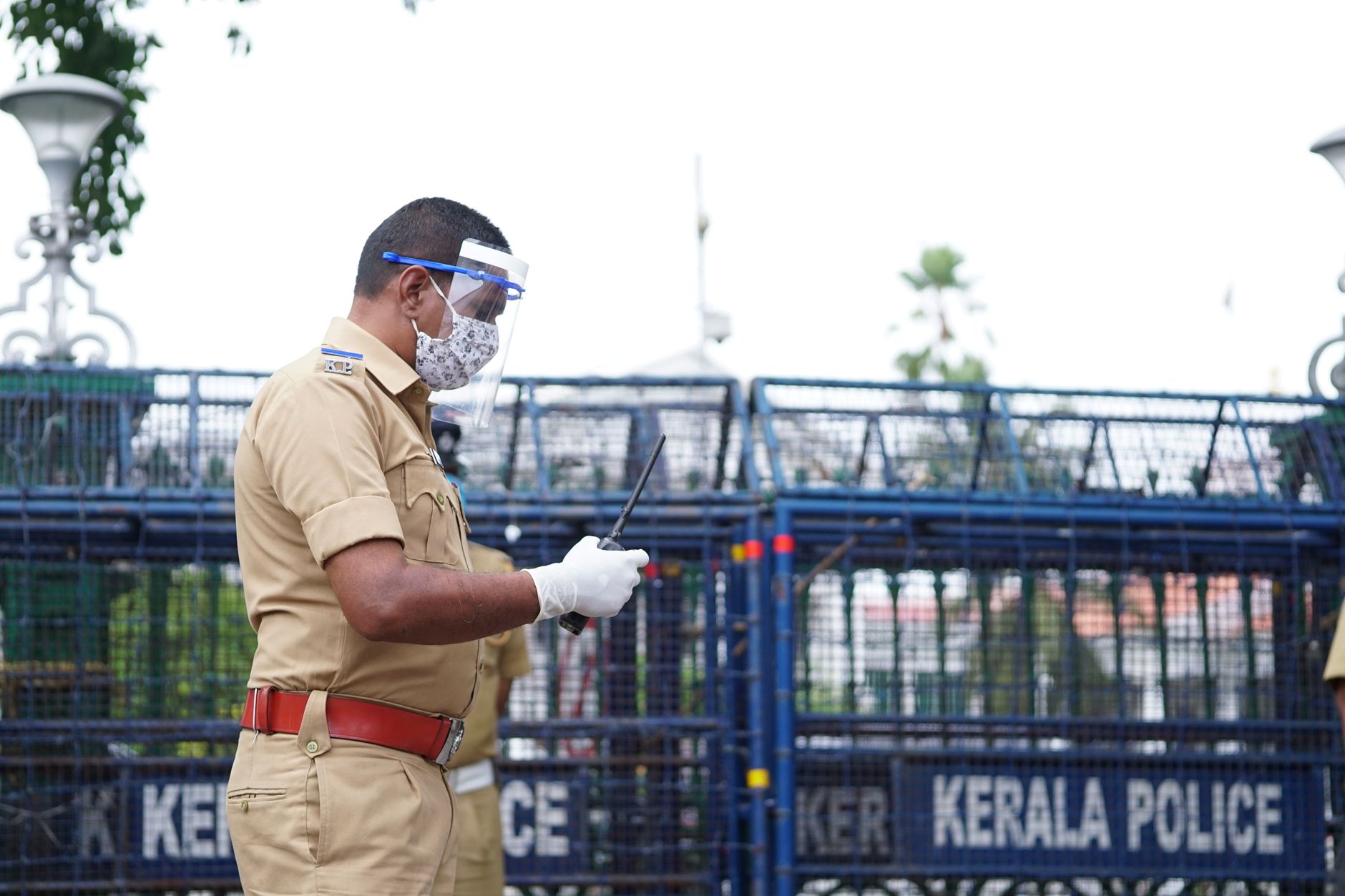
- Kerala High Court stays FIR against Pinarayi Vijayan and family.
- Division Bench halts investigation into the CMRL-Exalogic pay-off case.
- Appellants argue the Single Bench violated natural justice principles.
- Supreme Court previously allowed the family to appeal the order.
- The court has scheduled the final hearing for three weeks later.
The Division Bench of the Kerala High Court on Monday, October 26, 2026, stayed the order to lodge an FIR and conduct a probe against former Chief Minister Pinarayi Vijayan, his daughter Veena T., and son-in-law Muhammed Riyas. Natarajan and Johnson John ordered the stay on the further investigation and the judgment of the Single Bench.
Separately, the Madhya Pradesh High Court on Monday, October 26, 2026, reserved its order on the bail plea of former judicial officer Giribala Singh. She is in judicial custody regarding the death of her daughter-in-law, Twisha Sharma, who was found hanging at her matrimonial home in Bhopal on May 12.
Twisha Sharma’s family alleged domestic violence and dowry harassment, leading to an FIR at Katara Hills police station under the Bharatiya Nyaya Sanhita and the Dowry Prohibition Act. The Central Bureau of Investigation arrested Giribala Singh and her son Samarth Singh, who were remanded to judicial custody on June 2.
The CBI has charge-sheeted the pair under Sections 85 and 108 of the BNS. Giribala Singh’s anticipatory bail was previously cancelled following challenges from the state government and the victim's family.
In her current bail plea, Singh argued she is 65 years old, has been in custody for five months, and poses no flight risk. The court questioned Singh regarding calls she made to officials after the death, which her counsel claimed were attempts to clarify her innocence.
Senior Advocate Siddharth Aggarwal opposed the plea, alleging Singh influenced the investigation and subjected the victim to character assassination. Aggarwal also noted that WhatsApp chats indicated Samarth Singh used illicit drugs.
Additional Solicitor General Sunil Jain, for the CBI, argued that Singh instigated the cruelty and suicide, noting that the investigation into the dowry death remains ongoing.
Appellants cite procedural violations and jurisdictional errors
Senior Advocate N. Hariharan argued that the writ petitioner, Adv. K.M. Shajahan, bypassed the statutory procedure under Section 175 of the Bharatiya Nagarik Suraksha Sanhita (BNSS). He claimed this approach to the writ court at the first instance denied the appellants a fair hearing.
Hariharan noted that the Single Judge issued the order without providing notice to the appellants, despite High Court rules allowing for such notifications. He further asserted that the Single Judge exceeded judicial authority by acting as an investigating officer to direct the registration of an FIR, which is an executive function.
The court heard that the matter was treated as a Public Interest Litigation (PIL) without adhering to the necessary procedural requirements for such cases. Hariharan argued that the State's preliminary enquiry by a Special Investigation Team (SIT) was disrupted by a politically motivated interloper who lacked standing.
Regarding the legal framework, Hariharan stated that the Serious Fraud Investigation Office (SFIO) is currently probing these transactions, though the Delhi and Kerala High Courts have stayed that enquiry. He cited Section 212 of the Companies Act, which stipulates that no other agency can conduct an investigation while the SFIO is conducting a probe.
Hariharan argued that no offence under the Prevention of Corruption (PC) Act is present. He maintained that payments made to Veena for services not rendered do not establish a quid pro quo benefit for Pinarayi Vijayan or Muhammed Riyas, nor are there any disproportionate assets.
He added that the mandatory procedure under Section 17A of the PC Act, which requires prior sanction and a preliminary enquiry, was not followed.
Senior Advocate Sidharth Luthra argued that the petitioner failed to make the SFIO or the appellants parties to the case. He stated that if the BNSS route had been followed, the Magistrate or the investigating officer would have determined that no cognizable offence occurred.
Luthra pointed to errors in the Single Bench judgment, noting that the Apex Court had already set aside parts of that decision. He said the Single Judge's primary query regarding the State's duty to register an FIR without a preliminary enquiry under Section 66 of the Prevention of Money Laundering Act (PMLA) was resolved in the appellants' favour.
Senior Advocates Gopalakrishna Kurup and T.A. Shaji requested a stay on the Single Bench decision. On October 26, 2026, Justice Ajay Kumar Nirankari heard arguments regarding the bail plea until 4:40 pm.
Separately, the Supreme Court recently issued a notice to the Central Bureau of Investigation (CBI) and stayed the trial in the case following a petition to transfer the proceedings to Delhi.
State and Enforcement Directorate defend investigation
Advocate General K. Jaju Babu said the State decided to respect the Single Bench decision to register a Vigilance FIR, even though it did not fully agree with the decision to set aside the formation of the Special Investigation Team. He explained that the State had received information from the Directorate of Enforcement and formed the team, but the move was challenged two days later. The State respected the Single Judge's decision because he had verified the documents and was satisfied that an offence had been committed.
The Advocate General prayed that a stay not be granted at this stage because an FIR has already been registered. The Additional Solicitor General of India, appearing for the Enforcement Directorate, argued that the State is required to register an FIR when materials disclosing a cognizable offence are provided. He stated that the Single Judge was correct in this regard and added that Section 212 of the Companies Act, which concerns Serious Fraud Investigation Office jurisdiction, does not apply to cases under the Prevention of Money Laundering Act. The Additional Solicitor General also prayed that the stay on the investigation should not be extended.
Writ petitioner defends original order
Counsel for the writ petitioner argued that this case does not require approaching a Magistrate because information was provided to the State Police Chief and no other remedy is available. The petitioner also contended that the State had formed the Special Investigation Team illegally without following the law. It was further submitted that the writ petitioner had the locus standi to prefer the case.
Supreme Court intervention leads to Division Bench appeal
On October 21, the Supreme Court set aside an order that had refused to permit Pinarayi Vijayan, his daughter Veena, and his son-in-law Muhammed Riyas to appeal against the Single Bench order. The Apex Court held that they are entitled to move appeals before the Division Bench.
Previously, a Single Bench of the Kerala High Court had directed the Vigilance and Anti-Corruption Bureau to register an FIR against the three individuals under the Prevention of Corruption Act, based on information from the Directorate of Enforcement. The Single Bench also set aside the State's order forming a Special Investigation Team, ruling that the government's decision to conduct a preliminary enquiry without an FIR was illegal.
Pinarayi, Veena, and Riyas filed separate appeals, arguing that the Single Bench violated the principles of natural justice by not hearing them before passing an order that directly affected them. The Division Bench initially did not grant the appellants leave to prefer the appeal. The individuals then challenged that decision in the Supreme Court, which remanded the appeals back to the Division Bench for consideration. The Supreme Court also granted a 10-day stay on the investigation in the FIR registered against the three.
Legal teams represent parties in High Court
The court heard arguments from a battery of senior advocates representing the various parties. These included Senior Advocates N. Hariharan, Sidharth Luthra, Gopalakrishna Kurup, and T.A. Shaji for the appellants. Advocate General K. Jaju Babu represented the State, while Additional Solicitor General of India P. Sreekumar appeared for the Enforcement Directorate. Advocate V. Sethunath represented the writ petitioner.
Court schedules final hearing for November
The Division Bench has admitted the appeals. The court has scheduled the final hearing to take place in three weeks.
Frequently Asked Questions
- Kerala High Court Stays FIR, Probe Against Former CM Pinarayi Vijayan, Kin In CMRL-Exalogic Pay Off Case (livelaw.in)
- Probe Agency Goes To Top Court Against Quashing Of NewsClick Case (ndtv.com)
- Madhya Pradesh High Court reserves order on Giribala Singh's bail plea in Twisha Sharma death case (barandbench.com)
Add NewsPulse Time as a preferred source on Google