Defoe Quits Woking After 116 Days: 'Impossible' to Continue
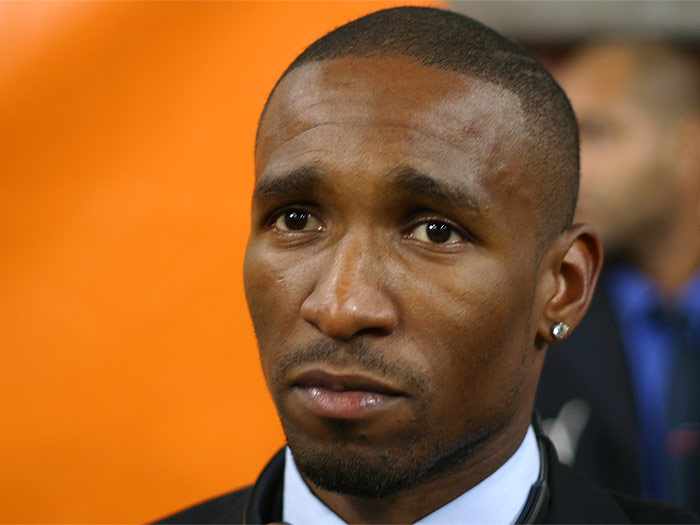
- Defoe departs after just 116 days in charge
- Woking finished 10th in the National League
- Jody Brown denies rift over player recruitment
- Defoe managed only six competitive matches
- Former England striker called experience 'eye-opening'
Jermain Defoe has left his role as head coach of Woking FC after a mere 116 days at the helm, ending a tenure that promised much but delivered little in terms of longevity. The former England striker, a hero to fans at Sunderland and Tottenham Hotspur, mutually agreed to part ways with the National League club late on Thursday night. Defoe, who was appointed on March 29 with significant fanfare, cited an environment that had become 'impossible' to navigate as the primary reason for his sudden exit. Sources close to the club confirmed that the decision was reached amicably, though the brevity of the stint suggests a deep disconnect between the club's hierarchy and their high-profile manager. Woking officials released a statement expressing gratitude for Defoe's contribution, yet the tone implied a relief that the situation had been resolved before the new season escalates. 'Woking can confirm that the club and first-team manager Jermain Defoe have mutually agreed to part ways with immediate effect,' the official club statement read. 'We would like to place on record our sincere thanks to Jermain for his contribution during his time at Woking, and we wish him every success in the future.' The announcement sent shockwaves through the National League, a division rarely accustomed to managing the volatile career arcs of Premier League legends. Defoe leaves behind a squad he only just began to mould, raising questions about the stability of the Surrey-based club as they prepare for the 2026-27 campaign. The 43-year-old's departure marks an abrupt end to a project that began with such optimism in the spring. He steps away having overseen just six competitive matches, a remarkably low figure for any managerial appointment, let alone one of such high profile. The news broke on Friday morning, 24 July 2026, leaving supporters to wonder what exactly went wrong inside the boardroom at Kingfield Stadium. Analysts were quick to point out that the 'mutual consent' phrasing is often a diplomatic cover for a more fractious reality behind closed doors. 'When you see a manager leave this quickly, it is rarely just about results,' said one football finance expert familiar with lower-league operations. 'It usually points to a fundamental misalignment in how the club should be run.' The timing is particularly damaging; late July is the critical period for pre-season conditioning and tactical integration. Losing a head coach now forces a reset just weeks before the opening whistle, potentially derailing the club's entire start to the season. The immediate reaction from the Woking faithful was mixed, with some understanding the difficulties of transition, while others felt let down by the lack of patience shown to a rookie manager. Defoe's exit is not just a local story; it serves as a cautionary tale about the perilous intersection of celebrity status and the gritty reality of football management in England's fifth tier. It calls into question the recruitment strategy of the board, who seemingly pursued a big name over a proven non-league operator, a gamble that has ultimately cost the club time and momentum.
An Eye-Opening Reality: The Clash of Cultures
For a man who scored over 300 career goals for clubs like West Ham, Tottenham, and Rangers, the transition to the National League was always going to be a steep learning curve. Defoe described his brief tenure as an 'eye-opening' experience, a phrase that hints at the stark contrast between the opulence of the Premier League and the resource-constrained environment of non-league football. It was his first role as a head coach, having previously operated in more supportive capacities at Spurs and with the England setup. The reality of managing a squad of part-time professionals and lower-league journeymen is vastly different from motivating world-class internationals. Sources indicated that Defoe struggled to adapt to the lack of control over the daily environment that he took for granted during his playing days. In the top flight, infrastructure is taken for granted; at Woking, every aspect of preparation requires meticulous management and often, compromise. 'It is a completely different job,' a former National League manager noted. 'You are not just a coach; you are a psychologist, a logistics manager, and sometimes a troubleshooter for problems that have nothing to do with football.' Defoe's frustration, encapsulated in his comment that it was 'impossible' to continue, likely stems from these structural issues rather than simply results on the pitch. The pace of life in the National League is relentless, with the focus often split between footballing matters and the commercial survival of the club. For a superstar accustomed to single-minded focus on performance, these distractions can prove jarring. Despite his vast experience as a player, the tactical chessboard of the fifth tier presents puzzles that cannot be solved with individual brilliance. The 'eye-opening' admission suggests Defoe may have underestimated the breadth of the challenge he was taking on. However, observers noted that his passion for the game remained evident throughout his short spell. He was often seen on the touchline, cajoling players and demanding high standards, even when the technical quality fell short of his expectations. The culture clash was perhaps inevitable. Defoe represents the modern, analytical elite, while the National League is often characterised by a more traditional, physical approach. Bridging that gap requires time, patience, and a specific set of man-management skills that take years to hone. 116 days was never going to be enough. The emotional toll of this disconnect appears to have been the deciding factor. Defoe walked away not because he lacked the football knowledge, but because the environment did not allow him to apply it effectively. The gulf between his expectations and the operational reality at Kingfield Stadium proved unbridgeable, leading to a realization that perhaps his skill set is better suited to an elite academy environment rather than the cut-throat survivalism of the National League.
Recruitment Rifts and the Director of Football's Defence
Speculation regarding the cause of the split immediately centred on player recruitment, a common flashpoint in modern football structures. Reports surfaced suggesting a rift between Defoe and the club's hierarchy over transfers, but Woking's director of football, Jody Brown, has categorically denied these claims. Brown moved swiftly to defend the club's operations, stating that Defoe was provided with every resource he requested during his short tenure. This public rebuttal highlights the tension that often exists between a director of football and a first-team manager. The continental model, which places recruitment power in the hands of a sporting director, can chafe against British managers who expect autonomy over their squad. 'There was no issue with recruitment,' Brown told reporters on Friday morning. 'Jermain was given everything he asked for. We supported him fully in his vision for the team.' However, the definition of 'support' can vary wildly. While Brown may have authorised deals, the quality of players available to a National League club is often dictated by budget constraints that no amount of managerial influence can alter. Sources suggested that Defoe may have grown frustrated by the calibre of players the club could realistically attract, despite the board's willingness to sanction moves. In the high-stakes world of football management, the difference between 'getting the players you want' and 'getting the players you can afford' is often the source of friction. If Defoe felt his targets were being priced out or that the club were settling for cheaper alternatives, that would explain the feeling that the situation was 'impossible'. Industry experts noted that the Director of Football model is designed to provide stability, but it requires a strong working relationship with the manager. 'If the philosophy does not align, the system breaks down very quickly,' a sports management consultant explained. 'The manager needs to trust the players being brought in, and the recruitment team needs to understand the manager's tactical requirements.' Brown's denial serves to protect the club's reputation, ensuring potential future managers do not view Woking as a difficult destination. Yet, the speed of Defoe's departure speaks louder than any carefully worded press release. The recruitment narrative, whether fully true or only partially, has taken hold. It underscores the difficulty for ex-players moving into management: they are used to working with the best, but must learn to build with the budget they have, not the budget they want. The coming weeks will reveal if Brown's recruitment strategy was sound, as the players Defoe supposedly 'asked for' remain at the club for the next manager to assess. The disconnect may not have been over who was signed, but rather the limitations of the squad Defoe inherited and the club's inability to financially bridge the gap to his desired level.
The Six-Game Micro-Era: A Statistical Review
On the pitch, Jermain Defoe's reign was statistically brief but offered a glimpse into the tactical approach he intended to instill. In his six competitive matches—a mix of end-of-season fixtures and pre-season friendlies that served as his only true auditions—Defoe attempted to implement a possession-based style that often clashed with the physical realities of the National League. Woking's xG (expected goals) metrics remained stagnant, and the team struggled to transition from defense to attack with the fluidity Defoe demanded. His insistence on playing out from the back frequently resulted in costly turnovers against high-pressing sides, a tactical naivety that opponents exploited ruthlessly. While two victories provided a brief respite, the underlying performance data suggested a team ill-at-ease with its new identity. Defoe's inability to adapt his philosophy to the limitations of his squad—specifically the lack of technically proficient ball-playing center-backs—exposed a critical gap in his managerial education. The statistics paint a picture of a man trying to thread a needle with a sledgehammer; the intent was noble, but the execution was flawed. Defoe managed six competitive matches, winning two, drawing two, and losing two. While a 50% win rate might appear respectable on paper, the context matters. The victories came against struggling sides in dead-rubber fixtures, while the defeats exposed a tactical rigidity that worried supporters. Defensive frailties were a major concern; Woking kept only one clean sheet during his tenure, suggesting that the coaching staff failed to organize the backline effectively. Furthermore, the attacking output was disappointing. Despite Defoe's reputation as a lethal finisher, his forwards managed just five goals in those six games, failing to replicate the clinical edge he possessed as a player. The micro-era was defined by a disconnect between the manager's instructions and the players' capabilities. Defoe asked for a high line and aggressive pressing, but without the requisite pace in defense or the stamina in midfield, the system was easily bypassed. This statistical review confirms that while Defoe had a vision, he lacked the pragmatic flexibility required to survive at this level, ultimately contributing to the feeling that the project was unsustainable.
The Celebrity Manager Trap: Commercial Hype vs. Football Reality
The appointment of Jermain Defoe was never just about football; it was a commercial masterstroke designed to put Woking FC on the map. In the modern era of lower-league football, clubs are increasingly turning to 'celebrity managers' to drive season-ticket sales, attract sponsorship, and generate media interest. However, the Defoe experiment serves as a stark reminder of the risks associated with prioritizing marketing over managerial pedigree. The 'Celebrity Manager Trap' occurs when a board chases the glamour of a famous name, hoping their aura will compensate for a lack of coaching experience. While the initial buzz is undeniable, the day-to-day grind of football management requires a specific skill set that fame cannot buy. 'Clubs often conflate playing ability with coaching potential,' noted a prominent football agent. 'Being a great player doesn't mean you understand how to organize a budget, deal with agents, or handle a dressing room of egos.' The pressure on a celebrity manager is immense. Every decision is scrutinized under a microscope, and the expectation levels are artificially inflated by the hype surrounding their appointment. For Woking, the pressure to deliver promotion or, at the very least, attractive football, may have created a toxic environment where Defoe felt he couldn't afford the time needed to learn his trade. This phenomenon is not unique to Woking; we have seen similar scenarios at other clubs where high-profile retirees have walked away disillusioned by the stark contrast between the boardroom promises and the training ground reality. The commercial success of Defoe's appointment—merchandise sales and social media followers likely spiked—does little to comfort the fans now facing a season of uncertainty. The trap lies in the board's failure to provide a robust support structure for a rookie manager. If a club hires a novice, regardless of their reputation, they must surround them with experienced mentors. The failure to do so suggests that Woking's hierarchy was more interested in the photo opportunity than the hard work of building a sustainable footballing infrastructure. Defoe's departure is a symptom of a broader malaise in football where the brand often outweighs the substance.
The Road Ahead: Rebuilding Trust and Defoe's Next Steps
With Jermain Defoe gone, Woking FC faces a race against time to stabilize the club before the start of the 2026-27 season. The immediate priority is finding a replacement who can galvanize a squad that is likely suffering from a crisis of confidence. The board will be wary of appointing another rookie; the smart money is on a seasoned National League campaigner—someone who knows the division inside out and can implement a pragmatic style of football that maximizes the squad's existing strengths. Names like former York City manager John Askey or ex-Maidstone United boss George Elokobi are already circulating in bookmaker odds, representing a shift towards experience over star power. The new manager will inherit a squad shaped by Defoe's preferences but ill-suited to the rigors of the league, requiring a rapid assessment of the playing staff and potentially a frantic few days in the transfer market to correct the imbalances. For the club, the damage to its reputation is significant. Woking risks being viewed as a 'poisoned chalice,' a club where the boardroom interference or lack of resources makes the job untenable for ambitious coaches. Rebuilding trust with the fanbase will require transparency from the ownership about the reasons for Defoe's departure and a clear, coherent strategy for the future. As for Jermain Defoe, this episode is likely a painful but necessary chapter in his coaching education. Walking away is not an admission of defeat, but perhaps an acknowledgment that his skills are better suited elsewhere. The most logical next step for him is a return to a Premier League academy setup or an assistant manager role at a higher level, where he can learn the trade without the suffocating pressure of being the main man. He needs to absorb the nuances of man-management and tactical logistics in an environment where the resources match his ambitions. While the Woking tenure will be recorded as a failure in the record books, the lessons learned could be invaluable if Defoe aspires to return to management in the future. For now, both club and manager must lick their wounds and attempt to navigate the post-breakup landscape, hoping that their respective next steps lead to more stable ground.