Jacqueline Fernandez Launches AI Avatar on Google Vids
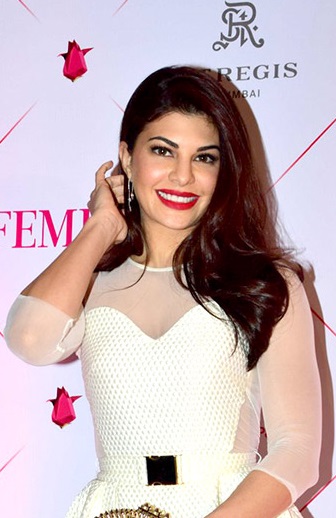
- Jacqueline Fernandez's AI avatar goes live on Google Vids on 18 July 2026
- Avatar creation required a single selfie and a 30‑second voice clip
- Feature restricted to users 18+ in supported regions
- Google Vids embeds an invisible SynthID watermark in every AI‑generated video
- Industry analysts forecast a 12% rise in celebrity‑driven AI content revenue this year
Saturday, 18 July 2026, marked a watershed moment in the convergence of Bollywood and generative artificial intelligence. Jacqueline Fernandez, the Sri Lankan-born actress known for her high-energy dance numbers and massive social media following, unveiled her own official AI avatar on Google Vids. This launch represents the tech giant's most aggressive foray into the 'personal avatars' space to date, transforming passive fandom into active co-creation. The initiative allows millions of fans to generate short, realistic videos featuring Fernandez without the actress needing to be physically present, effectively cloning her digital likeness for consumer use.
The mechanics of the creation process are deceptively simple, belying the complex technology operating beneath the surface. Sources close to the project confirmed that the avatar was synthesized after Fernandez submitted a single high-resolution selfie and a concise 30-second voice recording to Google's secure, biometric-grade data portal. This data was then processed to train a model that captures not just her physical features but also the unique cadence and timbre of her voice. The feature is currently rolling out to users aged 18 and above in supported regions, a decision likely influenced by the evolving landscape of digital consent laws. Crucially, every piece of content generated by the system carries an invisible SynthID watermark, a cryptographic signature that distinguishes authentic AI creations from unauthorized deepfakes. The avatar is strictly tethered to the creator's Google account, ensuring that the digital asset remains within a controlled ecosystem.
The launch was announced during a high-profile virtual press briefing held in Mumbai, where Fernandez articulated her vision for the project. "I wanted to give my fans a new way to interact with me, something that feels personal yet futuristic," she explained, noting that the technology bridges the geographical gap that often separates stars from their global audience. Google officials outlined a phased rollout strategy, prioritizing India, the United Kingdom, the United States, Canada, and Australia—markets that represent the core of Fernandez's diaspora and demographic reach. This debut arrives during a period of rapid digital transformation for Bollywood, where stars are increasingly seeking to monetize their digital personas through NFT collectibles, metaverse performances, and now, generative video. The move signals a shift from merely *curating* an online image to *licensing* a functional digital twin for public use.
Google's Personal Avatars Feature Powers the Launch
Underpinning this celebrity partnership is Google Vids' 'personal avatars' infrastructure, a feature unveiled earlier this year that represents a leap forward in generative video capabilities. Unlike traditional CGI or manual animation, Google's approach utilizes advanced generative AI models to synthesize photorealistic video of a user's likeness speaking any supplied text in real-time. According to a Google spokesperson, the technology achieves this by blending a proprietary diffusion model—trained on vast datasets of human expression—with a state-of-the-art voice-synthesis engine. This combination ensures lip-sync accuracy down to the millisecond, a critical benchmark for maintaining the suspension of disbelief in short-form video content.
Beyond the visual fidelity, the system incorporates a sophisticated safety layer that acts as a gatekeeper for content generation. Before a video is rendered, the text input is analyzed against a set of safety protocols designed to filter out hate speech, harassment, and sexually explicit content. "The personal avatars platform was built to give creators control while maintaining strict privacy standards," the spokesperson stated, though they refrained from disclosing the financial specifics of the partnership with Fernandez. Industry speculation suggests a revenue-sharing model where the actress receives a licensing fee for videos generated, potentially setting a precedent for future talent contracts.
From a technical standpoint, the avatar is designed for accessibility. It resides within the user's Google account ecosystem, accessible via the Vids app on Android, iOS, and web browsers. Sources indicate that the avatar's visual model is stored as a lightweight 3D mesh, a design choice that minimizes computational load. This allows the rendering process to run on most standard smartphones without significant battery drain, a crucial factor for markets like India where high-end flagship devices are less prevalent than mid-range Androids. Industry analyst Rohan Mehta, senior analyst at MediaInsights, observed, "Google's decision to partner with a Bollywood A-list name signals a strategic push into the South Asian market, where mobile video consumption outpaces the West by a wide margin. By optimizing for mid-range hardware, they are democratizing access to high-end AI tools."
The integration also supports a robust suite of creative tools designed to enhance user engagement. Features include automated subtitle generation in multiple languages and the ability to overlay custom backgrounds. This functionality empowers fans to place Fernandez in diverse scenarios, from a bustling Mumbai street market to a futuristic space station, effectively turning users into directors of their own micro-movies starring the celebrity.
The Competitive Landscape: Google Vids vs. The Metaverse
While Fernandez's launch is a headline-grabbing moment, it occurs within a fiercely competitive landscape of AI avatar technology. Google Vids is entering a field already contested by platforms like Meta's 'AI Studio' and independent startups such as HeyGen and D-ID. However, Google's strategy differs significantly through its deep integration with the existing Android ecosystem and its emphasis on 'walled garden' security via Google account linkage. Unlike open-source deepfake tools that have raised alarms due to their lack of oversight, Google Vids is positioning itself as the 'safe,' corporate-sanctioned alternative for celebrity licensing.
This launch also highlights a divergence from the 'Metaverse' hype cycles of previous years. While Meta focused on fully immersive, 3D social environments requiring expensive VR headsets, Google Vids targets the ubiquitous 2D smartphone screen. Analysts suggest this pragmatic approach may yield higher adoption rates. "The Metaverse asked users to change their behavior and buy new hardware. Google Vids meets users where they already are: on Instagram and WhatsApp, sharing short clips," notes tech strategist Anjali Verma. By leveraging the format popularized by TikTok and Instagram Reels, Google is effectively bypassing the friction of virtual reality to deliver a shareable, instantly consumable product.
Furthermore, the partnership with Fernandez provides a stress test for the scalability of the technology. If the platform can handle the surge in traffic generated by a star of her magnitude without latency issues or degradation in video quality, it will serve as a powerful proof-of-concept for enterprise clients. Google is likely using this celebrity partnership as a Trojan horse to eventually market the same technology to corporate communications—imagine a CEO's avatar able to send personalized video updates to thousands of employees simultaneously. The Fernandez launch is not just a fan service; it is a live demonstration of enterprise-grade infrastructure disguised as entertainment.
Fans React: From Excitement to Ethical Concerns
The public reaction to the launch was immediate and voluminous, illustrating the polarizing nature of synthetic media. Within hours of the announcement, social media platforms were inundated with responses. On X (formerly Twitter), the hashtag #JacquelineAI trended at number three in India, accumulating over 1.2 million tweets by midnight. The content of these posts ranged from gleeful experimentation to existential dread. Fans posted screenshots of themselves dancing beside the avatar or sharing videos where the AI Fernandez wished them a happy birthday, captioning posts with phrases like "My new Bollywood BFF!" and "The future of fandom is here."
However, the technological leap was not met with universal acclaim. Digital rights activist Priya Sharma, founder of SafeAI, issued a stark warning regarding the potential for misuse. "While the technology is impressive, we must be vigilant about consent and the potential for deep-fake misuse, especially when the avatar can be placed in any context the user imagines," Sharma argued. She pointed out that while the official Google tool has guardrails, the existence of a high-quality digital model of a public figure increases the risk of that data being leaked or reverse-engineered for malicious purposes on the dark web.
A poll conducted by the entertainment portal BollywoodPulse provided a statistical snapshot of this divide. The survey revealed that 68% of respondents were excited to try the feature, drawn by the novelty of personal interaction. Conversely, 22% expressed significant concerns regarding the avatar's potential use in defamatory or non-consensual scenarios. The platform's age-gate, which requires users to verify they are over 18 via Google's account verification system, attempts to mitigate some risks, but critics argue that digital age verification is rarely foolproof. Despite the concerns, the enthusiasm among younger demographics was palpable. Arjun Patel, a 19-year-old student from Delhi, captured the sentiment of many Gen Z users: "It feels like I'm making my own movie with Jacqueline – she's literally talking to me in my own room. It's weird but amazing."
This dichotomy highlights the central tension of the AI era: the tension between the democratization of creativity and the erosion of objective reality. For now, the novelty factor is winning, but the long-term acceptance of such technology will likely depend on how well Google can police the ecosystem against bad actors.
Industry Analysts Predict a New Revenue Stream for Bollywood
The commercial implications of this technology extend far beyond fan engagement, potentially reshaping the economic foundations of the Indian entertainment industry. Bollywood, like many global film sectors, is actively seeking fresh monetization avenues as traditional box office returns face volatility and streaming deals saturate. According to a comprehensive report by the Confederation of Indian Industry (CII), digital revenue derived from AI-driven celebrity content could inject up to ₹1,200 crore ($14 million) into the sector by 2028. While this figure may seem modest against the backdrop of a multi-billion dollar industry, it represents a high-margin revenue stream with negligible marginal cost.
Experts view Jacqueline Fernandez's avatar as a potential template for a standardized 'Digital Talent Market.' In this envisioned marketplace, brands would commission bespoke AI videos for advertising campaigns at a fraction of the cost of a physical shoot. "We are already seeing early negotiations for brand integrations that would have Fernandez's avatar endorsing a new skincare line in a personalized video for each consumer," said Rohan Mehta. This level of micro-targeting—where a celebrity endorses a product specifically to *you*—was previously impossible due to logistical constraints.
Advertising agencies are particularly salivating over the scalability of the technology. Scheduling conflicts, which are the bane of celebrity endorsements, become irrelevant when the talent is digital. Moreover, the technology unlocks the potential for flawless regional language customisation. A single base avatar can be manipulated to speak Hindi, Tamil, Telugu, and Punjabi with perfect accents, allowing a star to penetrate markets across India's diverse linguistic landscape without learning the languages themselves. Trade insiders predict a ripple effect; by the end of 2027, at least 15 major Bollywood actors will likely have licensed their own AI avatars. This could lead to the creation of a new asset class: 'digital royalties,' where stars earn passive income every time a fan generates a clip using their likeness.
Legal and Ethical Safeguards: SynthID Watermark and Age Checks
As the boundary between real and synthetic blurs, the onus is on technology providers to implement robust safeguards. Google has responded to this challenge by embedding an invisible SynthID watermark in every AI-generated video produced by the Vids platform. This digital signature is designed to be imperceptible to the human eye but easily detectable by specialized software, allowing platforms and fact-checkers to flag content as synthetic instantly. Officials confirmed that this watermark is cryptographically signed, meaning it cannot be easily removed or altered without corrupting the video file data itself. This measure is critical for maintaining the chain of custody regarding digital content.
In addition to watermarking, the architecture of the personal avatars system relies on strict account binding. The avatar is not a downloadable file or an open API; it is a service accessed exclusively through the creator's authenticated Google account. This design choice prevents the avatar from being exported and used in third-party applications that might lack safety filters. "These safeguards are essential to prevent deep-fake abuse and protect both the celebrity's image and the public," a Google engineer explained, speaking on condition of anonymity. The architecture effectively creates a 'sandboxed' environment where the celebrity's digital likeness is safe from external manipulation.
The age verification process leverages Google's existing vast repository of user data, prompting users to confirm their birthdate before unlocking the avatar feature. While this system complies with current regulations in India and the United Kingdom, legal experts caution that digital verification is not impervious to bypassing via VPNs or fake accounts. Priya Sharma added, "If the watermark is stripped or the video is re-uploaded on platforms without detection capabilities, the risk of malicious manipulation rises. We need cross-platform cooperation for this to truly work." Despite these challenges, the combination of cryptographic watermarking, account-binding, and age gates represents one of the most proactive and comprehensive approaches to AI safety in the consumer market to date.
The Psychology of Digital Intimacy
Beyond the technology and economics, the launch of Fernandez's avatar raises profound questions about the psychology of parasocial relationships—the one-sided bonds fans form with celebrities. By enabling fans to generate personalized videos where the star speaks directly to them, Google Vids is supercharging this dynamic. Traditionally, a fan might feel a connection because they see the star in interviews or movies; now, the star appears to exist in the fan's immediate context, acknowledging their presence and speaking their words.
Psychologists warn that this could create a 'hyper-intimacy' that blurs the line between fantasy and reality. Dr. Aravind Gupta, a sociologist specializing in digital media, notes, "When an AI avatar mimics intimacy, it triggers the same dopamine rewards in the brain as real social interaction. For lonely or isolated individuals, this can be deeply seductive, but it risks replacing genuine human connection with a simulacrum that is ultimately hollow."
However, proponents argue that this is simply the evolution of the autograph. Just as fans once treasured a signed photo, they may now treasure a personalized video message. The key difference is the agency of the fan; they are now the scriptwriters of their interaction with the idol. This shift from passive observer to active participant fundamentally alters the power dynamic of celebrity culture. It grants the fan a sense of ownership over the star's image that is unprecedented, potentially leading to deeper loyalty but also higher expectations. As this technology matures, society will need to adapt to the nuances of 'synthetic intimacy,' understanding the emotional weight these digital interactions carry despite their artificial origins.
What This Means for the Future of Celebrity Content
Jacqueline Fernandez's AI avatar serves as a harbinger of a new era in entertainment, a future where stars exist as digital personas as readily as they do on the silver screen. The immediate benefit is the ability for celebrities to maintain a ubiquitous presence even when physical schedules are packed with film shoots, offering fans a sense of availability that traditional media struggles to deliver. But the trajectory points toward something far more immersive.
Analysts predict that the current model of text-to-video will rapidly evolve into fully interactive, real-time conversational agents. "Imagine a fan asking Jacqueline for fashion advice and receiving a personalized video response generated on the fly, not just reciting a script, but engaging in dialogue," Mehta projected. This evolution would likely be powered by the next generation of Large Language Models (LLMs) integrated directly into the avatar's 'brain.' Such capabilities could reshape fan engagement, merchandising, and even the economics of film promotion, where an AI avatar could conduct thousands of simultaneous 'press junket' interviews with influencers across the globe.
Furthermore, this technology hints at the concept of 'digital immortality' for actors. A star could license their digital likeness to appear in films long after they retire or pass away, much in the way the estates of deceased musicians license their voices for new songs. While this opens creative possibilities, it also necessitates a re-evaluation of labor rights and union protections in the digital age. The industry must navigate the fine line between innovation and exploitation, ensuring that the digital likeness remains under the star's control and that they are fairly compensated for their digital labor.
Regulatory bodies are already taking notice. Governments in the UK and India are expected to draft clearer guidelines on 'digital persona rights' within the next two years, addressing issues of copyright, consent, and the moral rights of public figures. For now, Fernandez's avatar stands as a bold experiment, a glittering digital debut that invites both admiration and scrutiny. As Bollywood steps into this AI-driven future, the question is no longer *if* stars will become digital, but how humanity will adapt to a world where the line between the person and the projection is irrevocably blurred.