Flock Safety Updates Privacy Rules Amid US Scrutiny
- Flock Safety announced privacy updates on Thursday, August 13, 2026
- Law enforcement agencies across the U.S. use the car-tracking tech
- Critics say the new measures leave key concerns unanswered
- The company faces increasing scrutiny over surveillance capabilities
- Privacy protections aim to balance safety with civil liberties
Flock Safety announced several sweeping updates on Thursday that the company said would fundamentally improve privacy protections for its car-tracking technology, marking a pivotal moment in the ongoing national debate over surveillance. The Atlanta-based company, facing increasing scrutiny from civil liberties groups, lawmakers, and privacy advocates, detailed the changes in a bid to address escalating concerns over mass surveillance and data security. Law enforcement agencies across the U.S. rely heavily on Flock's automated license plate readers (ALPRs) to track vehicle movements and solve crimes, creating a ubiquitous network that covers thousands of communities. However, the rapid, often unchecked expansion of this network has sparked a fierce debate about the boundaries of public safety versus individual privacy in the digital age. The announcement comes as the company attempts to navigate a complex regulatory landscape that has struggled to keep pace with advancements in surveillance hardware and data analytics. Critics argue that while the updates are a step in the right direction, they do not go far enough to protect ordinary Americans from unwarranted monitoring and potential abuse. The tension between catching criminals and preserving civil liberties remains at the heart of this technological conflict, forcing a reckoning with how surveillance is conducted in democratic societies. Flock Safety officials framed the updates as a proactive measure to build trust with the communities they serve, emphasizing that the changes were designed to enhance transparency and accountability in how data is collected, stored, and accessed. They highlighted the inclusion of new audit trails for police searches and stricter limitations on data sharing as key components of the new protocol. Despite these assurances, the announcement has done little to quell the unease of those who fear the normalization of constant surveillance. • The updates were announced on Thursday, August 13, 2026. • Flock Safety's technology is used by police departments nationwide. • Critics claim the measures leave significant gaps in privacy protection.
How Flock's Cameras Scan American Streets
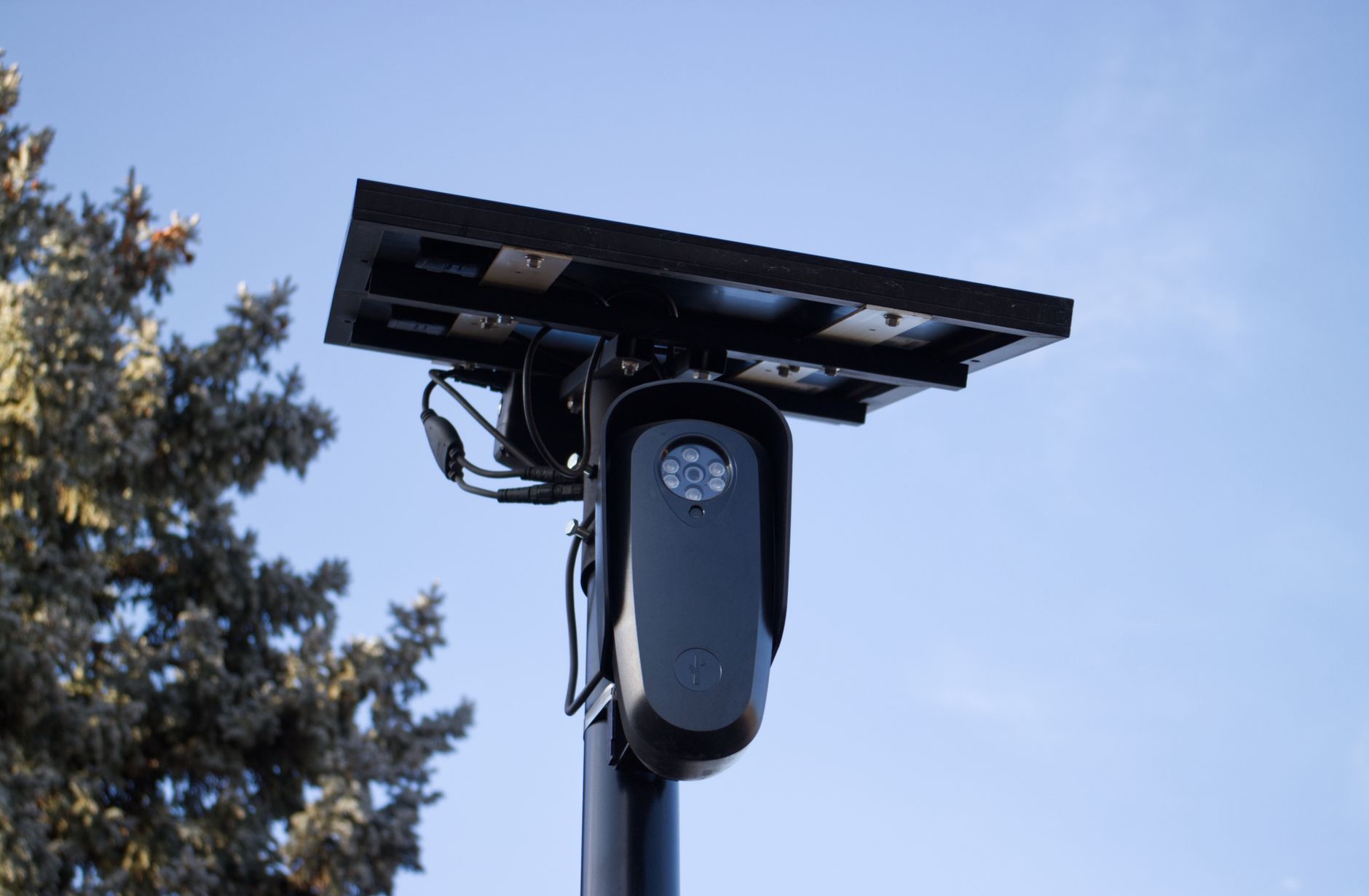
The technology powering Flock Safety has fundamentally changed how police monitor communities, shifting from manual observation to automated, data-driven policing. Unlike traditional traffic cameras, which often record continuous video streams that require human review, Flock's system captures high-resolution still images of license plates and vehicle makes. These cameras are typically mounted on utility poles or streetlights in residential neighborhoods and at major intersections, blending into the urban environment. When a car passes a sensor, the system snaps a photo, reads the license plate using advanced optical character recognition (OCR), and instantly uploads the metadata to the cloud. This process happens in seconds, creating a vast, searchable digital repository of vehicle movements that functions as a historical map of public life. Police can access this database to search for specific vehicles or track travel patterns over time, turning the physical movement of cars into queryable data points. The system flags vehicles associated with crimes, missing persons, or Amber Alerts immediately, providing real-time intelligence to officers on the ground. This capability has made the technology a favorite tool for detectives investigating property crimes and car thefts, where the only lead is often a partial description of a getaway car. Industry analysts noted that the efficiency of these systems is unmatched by manual policing methods, allowing departments to process leads that would previously require hundreds of man-hours. However, the sheer volume of data collected is what worries privacy advocates. A single camera can capture thousands of plates every day. Across thousands of cities, this amounts to billions of data points annually, creating a detailed portrait of daily life for millions of citizens. Officials said the data helps solve up to 10 times more cases than traditional methods, pointing to the technology's role in reducing the backlog of unsolved crimes. Yet, the permanence of this digital trail creates what experts call a chilling effect on free movement and association. The cameras do not just catch criminals; they record the movements of every driver who passes by. This includes people attending political protests, visiting medical clinics, or going to religious services—activities that are legal but deeply private. The potential for misuse of this location data, whether through hacking, unauthorized access, or mission creep, is the core of the controversy surrounding the company. • Cameras capture still images of license plates, not video. • Data is uploaded to the cloud for police access. • The system flags vehicles linked to crimes instantly.
Law Enforcement Defends Critical Crime-Fighting Tool
Police departments across the country have rushed to defend the use of Flock Safety's technology, arguing that it is an essential component of modern public safety strategy. For many law enforcement leaders, the cameras are an indispensable tool in an era of limited resources and rising crime rates in certain categories. Small towns and major cities alike have adopted the system to combat spikes in auto theft, burglary, and violent crime. Officers said the ability to track a suspect's vehicle in real-time or reconstruct its path after a crime is invaluable, often providing the 'smoking gun' that breaks a case wide open. In many jurisdictions, the return on investment is measured in solved cases that would otherwise go cold, freeing up detectives to focus on active investigations. A stolen car that might have disappeared into the night can now be tracked across state lines, facilitating inter-agency cooperation that was previously difficult to coordinate. Officials pointed to specific success stories where violent offenders were apprehended quickly thanks to a license plate hit, preventing further harm to the community. The technology acts as a force multiplier, allowing a handful of officers to monitor an entire city effectively, compensating for staffing shortages that plague many departments. Law enforcement sources confirmed that the data has exonerated innocent suspects as often as it has implicated guilty ones, serving as an objective witness in disputes about vehicle location. They argue that the privacy concerns are theoretical, while the safety benefits are tangible, proven, and immediate. Police chiefs emphasized that they follow strict policies regarding data access and retention, often going beyond what the law requires to ensure civil liberties are respected. They view the new privacy updates as a validation of their commitment to responsible use and a framework for standardizing operations across different jurisdictions. However, the reliance on private companies for public surveillance infrastructure raises its own set of questions about the privatization of law enforcement. Contracts between Flock and police departments are often not subject to public bidding processes, leading to a lack of transparency regarding costs and capabilities. This lack of transparency has fueled suspicion about how the technology is deployed and who profits from the collection of public data. Supporters of the technology maintain that public safety should take precedence over abstract privacy fears, believing that law-abiding citizens have nothing to hide from cameras that operate in public spaces where there is no reasonable expectation of privacy. • Police credit the tech with solving thousands of car thefts. • The system acts as a force multiplier for understaffed departments. • Data access is governed by internal police policies.
Civil Liberties Groups Question the New Safeguards
Critics say the measures leave fundamental issues unresolved despite the company's assurances, arguing that self-regulation is an oxymoron in the surveillance industry. Privacy advocates and civil liberties organizations have been vocal in their skepticism of Thursday's announcement, suggesting that it is largely a public relations maneuver designed to stave off government regulation. They argue that voluntary policy changes by a private company are no substitute for strong federal legislation that binds all actors in the space. The primary concern remains the retention of data on innocent people. While Flock may have shortened the time data is stored, critics argue it should be deleted immediately if no crime is linked to it, preventing the creation of historical databases of innocent movement. They point out that aggregated location data can reveal intimate details about a person's life, associations, and habits, effectively stripping away anonymity in public spaces. Experts in surveillance law noted that current regulations are woefully outdated for this type of technology, often relying on statutes written before the advent of the internet and cloud computing. The Fourth Amendment protections against unreasonable searches have not kept pace with digital tracking capabilities, creating a gray area where police can access vast amounts of data without a warrant. Critics fear that without strict legal limits, the network could be used for dragnet surveillance of political dissent or minority communities, replicating patterns of abuse seen in other surveillance eras. They highlighted instances where similar technologies have been used to track attendees of gun shows, political rallies, or immigration enforcement targets, raising the specter of authoritarian control. The lack of a warrant requirement for accessing this historical data is a major point of contention; privacy groups want to see a system where judges must sign off on database searches, just as they do for phone taps or physical searches of a home. They also raised concerns about data security and the potential for breaches, noting that a centralized database of billions of location records is a tempting target for hackers or malicious insiders. Critics said the updates fail to address the 'mission creep' of surveillance technology—the tendency for tools designed for narrow purposes to expand into broader monitoring systems. What starts as a tool for finding stolen cars can easily evolve into a system for monitoring everyone, all the time. They called for an independent audit of Flock's data practices to verify that the new protections are actually being implemented and that data is not being siphoned off for secondary uses. • Critics argue voluntary changes are not enough. • Data retention periods are still too long for privacy advocates. • There is no warrant requirement for searching the database.
The Economics of Ubiquitous Surveillance
The rapid expansion of Flock Safety is not just a technological phenomenon but an economic one, driven by a business model that makes surveillance accessible to even the smallest municipalities. Unlike expensive, proprietary systems of the past that required massive upfront capital investment, Flock operates on a subscription basis, often charging a modest annual fee per camera. This 'Surveillance as a Service' model has lowered the barrier to entry dramatically, allowing rural towns and suburban counties with limited budgets to deploy the same technology used by major metropolitan police forces. The result is a patchwork quilt of coverage that is rapidly becoming a seamless national grid. Economists point out that this creates a 'network effect,' where the value of the system increases exponentially as more cameras are added, incentivizing the company to sell as many units as possible. However, this economic incentive raises questions about the saturation of public spaces with monitoring equipment. Because the company profits from the volume of data collected and the number of contracts signed, there is an inherent drive to expand the network's reach, often into areas with low crime rates where the necessity of such surveillance is debatable. Furthermore, the data collected has value beyond immediate law enforcement; aggregated vehicle movement data is a commodity that can be analyzed for traffic patterns, urban planning, and commercial insights. While Flock maintains it does not sell data to third parties, the potential for monetization creates a tension between privacy motives and profit motives. This dynamic has led to concerns about the 'vendor-lock-in' effect, where police departments become dependent on a single private company for critical infrastructure, giving that corporation immense influence over public safety operations. The financial relationships between these companies and local governments are often opaque, with contracts that may include clauses limiting the city's ability to regulate the use of the technology. As the market for surveillance tech heats up, competition is driving further innovation, including features that push the boundaries of current privacy norms, such as AI-powered analytics that can infer driver behavior or detect 'anomalous' vehicles. This economic engine ensures that the spread of these cameras will likely continue, regardless of the privacy concerns raised by advocates. • Flock uses a subscription model, making tech accessible to small towns. • The 'network effect' drives rapid expansion. • Data aggregation creates potential commercial value beyond policing.
The Growing Debate Over Private Surveillance Networks
The situation unfolding with Flock Safety is part of a larger, alarming trend in American policing: the outsourcing of surveillance capabilities to private tech firms. Local governments are increasingly turning to the private sector to build and maintain the digital infrastructure of law enforcement, a shift that allows police to bypass some public procurement processes and budgetary constraints. It also creates a gray area regarding accountability and oversight, blurring the lines between state action and corporate activity. If a private company breaks the rules or violates privacy norms, it is not always clear who is responsible for punishing them or what recourse citizens have. The city that buys the service often claims the vendor is at fault, while the vendor claims they followed the city's instructions, leaving victims of surveillance abuses with little legal recourse. Analysts predict that the friction between tech innovation and privacy rights will only intensify in the coming years as these networks become more entrenched. As cameras become cheaper and artificial intelligence becomes more powerful, the scope of surveillance will expand, potentially encompassing biometric data and gait analysis. Future iterations of the technology may include facial recognition capabilities or the ability to identify drivers by their physical features, transforming the system from a license plate reader into a general-purpose biometric collector. This prospect makes the current debate over license plates seem like just the tip of the iceberg, setting the stage for a much larger conflict over the right to anonymity in public spaces. Lawmakers in several states have already begun drafting bills to restrict the use of ALPR technology, proposing limits on data retention and mandates for warrant access. However, the industry lobby is powerful, and many bills have stalled in committee under pressure from law enforcement unions and tech advocates. The announcement by Flock Safety on Thursday appears to be an attempt to pre-empt stricter regulation by self-policing, a strategy common in the tech industry known as 'regulatory capture' or 'soft law.' It is a calculated risk designed to show that the industry can regulate itself without government intervention, preserving its operational flexibility. Whether this strategy will succeed remains to be seen, but history suggests that voluntary measures are rarely sufficient to curb the excesses of profit-driven data collection. The coming months will likely see intensified pressure on Congress to set clear national standards for surveillance data, establishing a baseline of privacy that applies across all states. Until then, the rules of the road for digital privacy are being written largely by the companies selling the technology, with little input from the public being watched. • Private firms are increasingly handling public surveillance. • Future tech may include facial recognition capabilities. • Lawmakers are drafting bills to restrict ALPR use.
What Comes Next: Legislative and Technological Horizons
Looking ahead, the future of automated license plate readers hangs in the balance between legislative action and technological advancement. Privacy advocates are increasingly optimistic about the prospects for federal intervention, pointing to growing bipartisan concern about Big Tech and surveillance in Congress. Potential legislation could include a federal data privacy law that specifically addresses location data, setting strict limits on how long companies can retain information and who they can share it with. Such a law would fundamentally alter Flock's business model and the utility of the technology for police, requiring warrants for most searches and mandating rapid deletion of non-criminal data. On the technological front, Flock and its competitors are unlikely to stand still. The next generation of cameras is expected to feature on-board edge computing, allowing the devices to process data locally and only upload relevant 'hits' to the cloud. This could address some privacy concerns by reducing the amount of raw data flowing into central servers, but it would also concentrate more decision-making power in the hands of algorithms that may be biased or opaque. Furthermore, the integration of ALPR data with other surveillance streams, such as gunshot detection systems and smart city sensors, could create a comprehensive 'real-time awareness' grid that monitors urban activity with unprecedented granularity. This convergence poses significant challenges for democratic oversight, as it creates a surveillance architecture that is difficult to audit or regulate piecemeal. Courts are also likely to play a role, as cases involving ALPR data make their way through the judicial system. A landmark ruling on the constitutionality of prolonged location tracking could establish new Fourth Amendment protections, forcing police departments to radically alter their procedures. In the meantime, communities across the country are engaging in heated debates about whether to adopt or reject these systems. Some cities have already moved to ban the technology entirely, citing civil liberties concerns, while others are doubling down and expanding their networks. The divergence in local approaches creates a patchwork legal landscape that is confusing for drivers and difficult for companies to navigate. Ultimately, the resolution of this conflict will depend on whether the public views the trade-off between privacy and security as acceptable. As the technology becomes more visible and its implications more widely understood, the demand for accountability is likely to grow, shaping the evolution of surveillance in America for years to come. • Federal legislation on data privacy is a possibility. • Next-gen tech may feature edge computing to reduce cloud data. • Court rulings could redefine Fourth Amendment protections for digital tracking.
Frequently Asked Questions
Add NewsPulse Time as a preferred source on Google