Cairns Centre's Risky Bet Pays $1.67 Billion Dividend
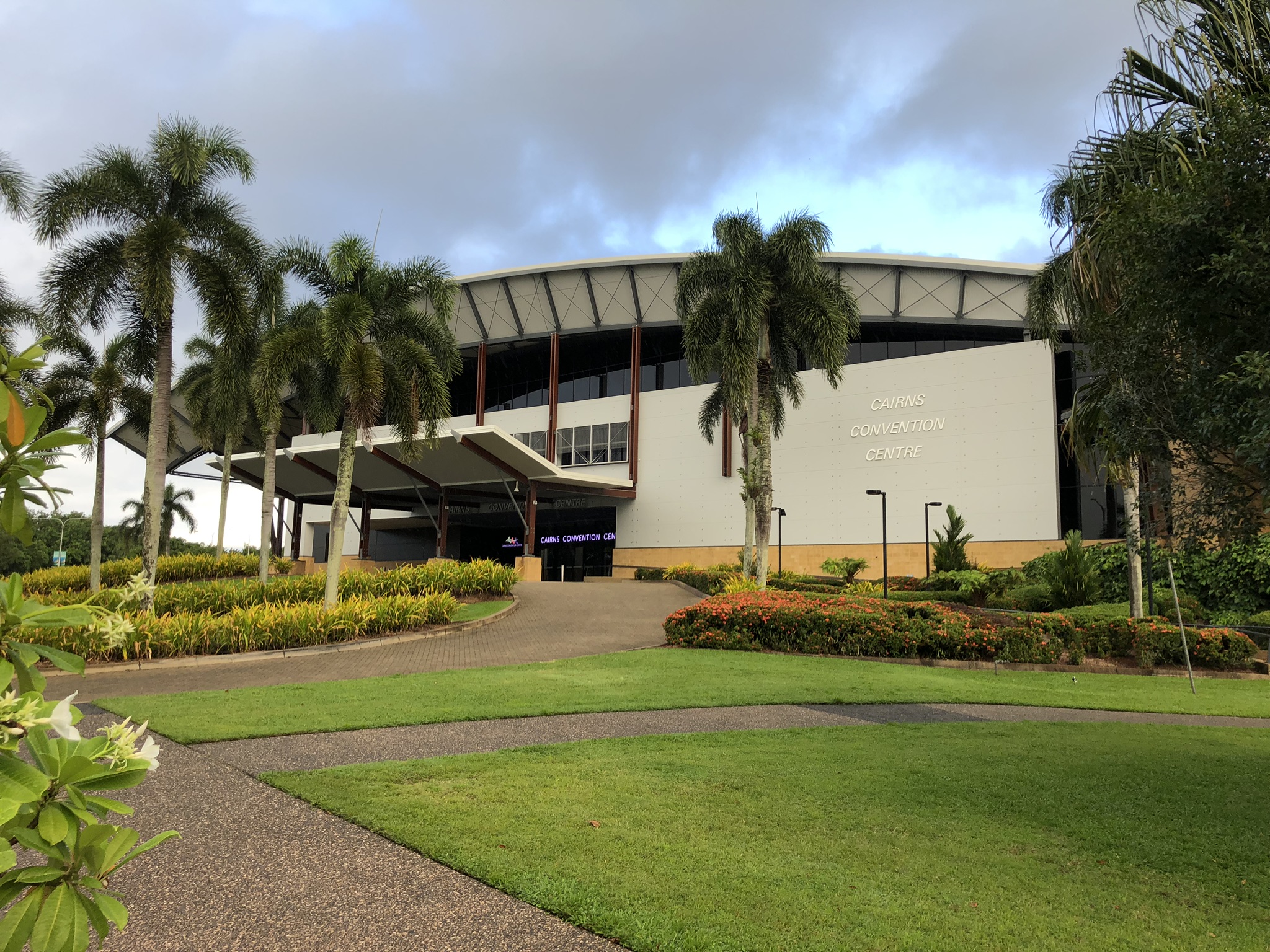
- $1.67 billion contributed to business events economy
- Initial investment labeled a 'bold gamble' by critics
- Cairns outperforms larger metro competitors
- Delegates spend 3-4 times more than leisure tourists
- Regional infrastructure sees major upgrades
A single building in tropical North Queensland has just rewritten the economic rulebook.
The Cairns Convention Centre has officially fueled a $1.67 billion business events economy, a staggering figure that validates a once-controversial infrastructure play.
This isn't just a win for the local tourism board; it is a definitive case study in how regional cities can outpace major metros by targeting high-yield corporate travelers.
The numbers, released today, confirm that the venue has far exceeded its initial revenue projections, cementing its status as a financial powerhouse for the region.
Officials said the centre has transformed the city from a seasonal holiday spot into a year-round business destination.
The $1.67 billion figure represents the total economic contribution generated since the venue's major operations ramped up, capturing direct spending and the wider flow of money through local supply chains.
- The venue contributes significantly to the region's annual GDP.
- Business events now rival leisure tourism in revenue generation.
- Local businesses report sustained growth outside peak holiday seasons.
This financial milestone comes after years of skepticism regarding the viability of a large-scale convention center in a regional location.
Yet, the data tells a story of resilience and strategic foresight.
The centre did not merely attract visitors; it attracted the *right* visitors—delegates who stay longer and spend more than the average vacationer.
By anchoring this massive economy, the facility has proven that geography is no longer a barrier to hosting world-class gatherings.
Investors and city planners across the globe will likely scrutinize this model as they seek to replicate its success in their own secondary markets.
The 'Bold Gamble' That Defied Skeptics
Rewind the clock, and the outlook for this project was far from certain.
Industry analysts today are hailing the facility as a triumph, but the initial development was widely characterized as a 'bold gamble.'
Critics questioned whether a city known primarily as a gateway to the Great Barrier Reef could sustain the complex logistics and high demands of the international conference circuit.
The financial risk was substantial.
Building a convention center requires massive capital expenditure, often funded by public money, with returns that can take decades to materialize.
Sources confirmed that early projections were conservative, masking the explosive potential that eventually materialized.
The Cairns Post described the venture as a risky bet that has now paid off handsomely.
That risk was calculated on a specific thesis: that delegates would trade the concrete jungles of Sydney or Melbourne for the unique environmental allure of the tropics.
It was a strategy that relied on selling an experience, not just a venue.
- Initial forecasts underestimated the demand for regional destinations.
- The project faced significant hurdles in securing early anchor tenants.
- Critics argued operational costs would outstrip revenue in the early years.
However, the gamble hinged on the 'halo effect' of the location.
Organizers realized they could sell the destination as easily as the conference program.
A morning keynote could be followed by an afternoon dive on the reef or a hike in the Daintree Rainforest.
This value proposition proved irresistible to association planners looking to boost attendance numbers.
The 'gamble' essentially boiled down to a belief in the experiential economy.
While other cities competed on floor space and lighting rigs, Cairns competed on lifestyle and environment.
As it turns out, that was the winning hand.
The venue has silenced early doubters by consistently booking events that were previously the exclusive domain of capital cities.
This shift validates the idea that modern business travelers prioritize engagement and location alongside logistical convenience.
Why Delegates Spend More Than Vacationers
The $1.67 billion economy is not built on cheap hotel rooms and discount dining.
It is built on the robust spending habits of the business events sector.
Economists note that a corporate delegate spends, on average, three to four times more per day than a leisure tourist.
This is the engine driving the financial success of the Cairns Convention Centre.
Unlike a family on a strict budget looking for the best deal on a holiday package, business travelers expense their accommodation, dining, and entertainment.
They stay in premium hotels.
They eat at high-end restaurants.
They book tours and transport services for large groups.
This injection of high-density cash flows directly into the local economy, supporting jobs that cannot be outsourced or automated.
- Average delegate spend significantly exceeds leisure tourist spend.
- Events extend the peak tourist season into traditionally quiet months.
- Local suppliers see consistent demand regardless of holiday fluctuations.
The center acts as a funnel, capturing international and domestic dollars and pouring them into the streets of Cairns.
Taxi drivers, retail staff, and hospitality workers all benefit from the steady stream of professionals arriving for conferences, trade shows, and conventions.
Furthermore, the timing of these events is crucial.
Business events often occur during shoulder seasons—months when weather is pleasant but holiday crowds are thin.
This helps smooth out the volatile revenue curves that typically plague tourist-dependent economies.
Instead of the boom-and-bust cycle of school holidays, Cairns enjoys a more predictable, year-round baseline of economic activity.
Experts said this stability is perhaps more valuable than the peak revenue numbers themselves.
It allows businesses to hire permanent staff, invest in upgrades, and plan for the long term with greater confidence.
The $1.67 billion figure is therefore not just a cumulative total; it represents a structural transformation of the local economic base.
Outmaneuvering the Metro Giants
How does a regional city with a fraction of the population of Sydney or Melbourne steal their lunch?
By refusing to compete on their terms.
The Cairns Convention Centre carved out a niche by specializing in sectors that align with its environment—marine science, tropical medicine, agriculture, and sustainability.
This strategic focus allowed the venue to position itself as the logical home for specific industry associations.
A marine biology conference makes more sense in Cairns, adjacent to the Great Barrier Reef, than it does in a landlocked capital city.
This specialization is the key to understanding the $1.67 billion success story.
Instead of being a generalist venue fighting for every piece of business, Cairns became a specialist destination of choice.
- The center targets niche industries aligned with regional strengths.
- Proximity to natural assets provides unique field trip opportunities.
- Personalized service offers a competitive edge over larger, impersonal hubs.
CIM Business Events highlighted this targeted approach as a major factor in the center's ability to return such massive value to the local economy.
By curating a portfolio of relevant events, the venue ensures high attendance rates.
When the conference topic matches the location, delegates are more likely to approve the travel budget and attend in person.
This dynamic became particularly potent in the post-pandemic landscape, where virtual meetings threatened to decimate the industry.
You cannot Zoom a snorkeling trip on the Great Barrier Reef.
You cannot replicate the networking that happens over a coffee break with a backdrop of tropical mountains.
Cairns leaned into these 'in-person-only' assets.
While major cities struggled to fill generic halls with hybrid events, Cairns packed its venue with delegates hungry for real-world experiences.
This adaptability and clear market positioning allowed the center to punch well above its weight class.
The venue did not try to be the biggest; it strove to be the most relevant for its target markets.
That focus is what turned a risky bet into a billion-dollar asset.
The Ripple Effect on Main Street
The impact of the Cairns Convention Centre extends far beyond the turnstiles of the exhibition hall.
The $1.67 billion contribution is visible in the revitalization of the surrounding precinct and the broader city infrastructure.
When a major conference comes to town, the demand for services creates a ripple effect that touches almost every sector of the economy.
Local construction firms have seen a boom in work, driven by the need to upgrade hotels and expand facilities to meet the expectations of international guests.
This construction activity, in turn, creates jobs and stimulates demand for materials.
It is a virtuous cycle of economic growth triggered by the existence of the convention center.
- Hotel occupancy rates remain stable throughout the year.
- Restaurants and cafes experience sustained weekday trade.
- Transport providers report higher utilization rates for corporate transfers.
Australasian Leisure Management Magazine noted that the centre has become a cornerstone of the region's leisure management strategy, driving development that benefits residents and visitors alike.
The presence of a world-class facility also acts as a signal to other investors.
It says that Cairns is open for business and capable of hosting major international operations.
This confidence attracts further private investment, from luxury apartment developments to retail expansions.
Officials said that for every dollar spent directly on the convention center, multiple more are generated in the wider economy.
This multiplier effect is the holy grail of economic development.
It means that the initial 'risky bet' has paid dividends that extend far beyond the balance sheet of the venue itself.
The tax revenue generated from this activity helps fund local services, from road maintenance to public schools.
In this sense, the convention center is not just a commercial enterprise; it is a piece of public infrastructure that underwrites the quality of life for the entire community.
The transformation of the waterfront area around the center stands as physical proof of this intangible economic power.
The Future of Regional Business Events
Looking ahead, the success of the Cairns Convention Centre offers a roadmap for other regional centers hoping to capitalize on the business events boom.
The global industry is evolving rapidly, with a growing emphasis on sustainability and authentic local experiences.
Cairns is uniquely positioned to lead this charge.
The venue's management is already focusing on reducing the carbon footprint of events, leveraging the region's natural advantages in renewable energy and conservation.
This commitment to green
Add NewsPulse Time as a preferred source on Google