Buffett Warns on Market Gambling as AI Costs Soar
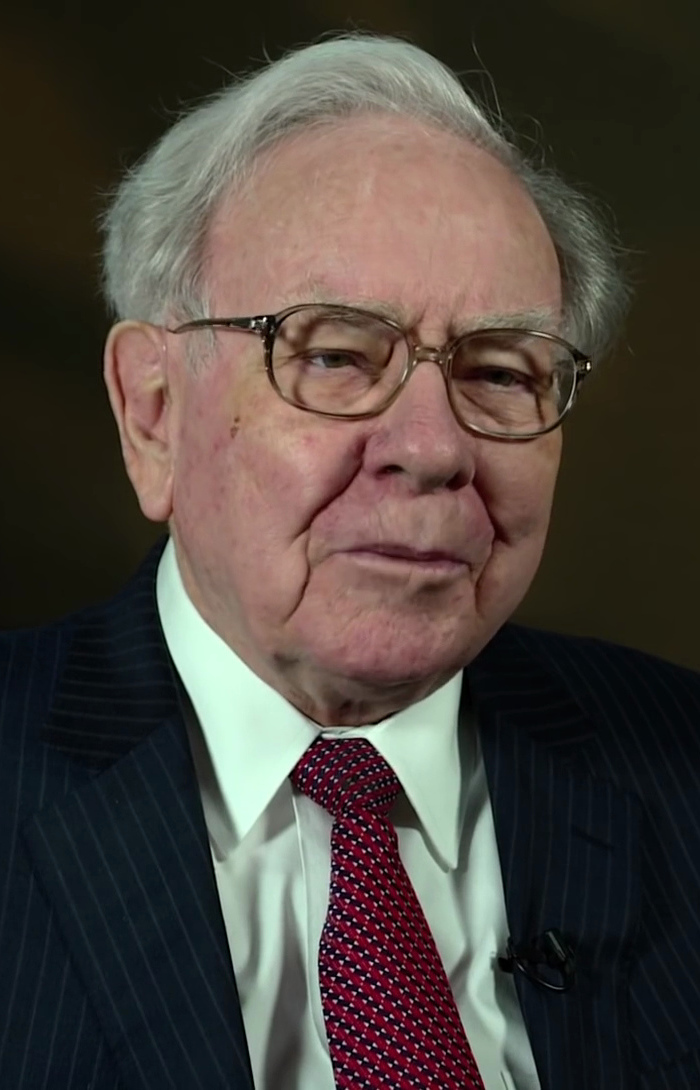
- Buffett warns against market gambling and high AI costs
- Buffett Indicator hits record 236% of US GDP
- Wealth advisors fear a 'generational' market decline
- Apple gains favour for low AI capital expenditure
- Experts warn against abandoning stocks for retirement
Warren Buffett, the legendary investor and chairman of Berkshire Hathaway, issued a stark warning to global investors on Saturday, urging caution amidst a market climate he characterised as favouring gambling over traditional investing. Speaking in a widely circulated interview, the Oracle of Omaha highlighted the massive capital expenditure required for the artificial intelligence buildout, suggesting the costs are staggering and potentially unsustainable for many firms. His comments come at a precarious moment for global equities, where enthusiasm for technology has driven valuations to heights not seen since the dot-com boom. "Since humans love to gamble so much, there's more money in actually cultivating gamblers than there are cultivating investors," Buffett told CNBC, underscoring a fundamental shift in how markets operate today. This sentiment resonates deeply with investors in the United Kingdom, where the FTSE 100 has lagged behind US tech-heavy indices, leading to a divergence in investment strategies that many find troubling. Buffett's critique is not merely about market mechanics but touches on the human psychology of risk. He noted that while opportunities are sometimes "thrown at you so fast you can't believe it," the prevailing reality is that investors are lucky to find one sound investment every couple of years. The market, in his view, has become a casino where the house—represented by high-frequency traders and speculative platforms—always wins. This perspective is particularly relevant given the current economic backdrop. Inflation remains a persistent concern for the Bank of England, and the temptation for retail investors to chase quick wins to offset the rising cost of living is higher than ever. However, Buffett's advice serves as a cold shower. He emphasised that the inclination to gamble has distorted market fundamentals, making it increasingly difficult for value investors to find reasonably priced assets. The surge in speculative assets, often driven by hype rather than earnings, has created a bifurcated market where the rich get richer and the average investor is left holding the bag.
The specific focus on Artificial Intelligence (AI) infrastructure costs adds a new layer of complexity to this warning. Unlike the software boom of the 2010s, the current AI revolution requires heavy investment in physical infrastructure—data centers, semiconductor fabrication, and immense energy grids. Buffett has historically been sceptical of tech investments he does not understand, but his current critique is financial rather than technical. He questions whether the trillions of dollars being poured into AI will yield the returns that current stock prices imply. If the ROI (Return on Investment) on these massive expenditures fails to materialise, the resulting write-downs could devastate corporate balance sheets. For UK investors, this creates a dilemma: ignore the AI boom at the risk of underperformance, or participate at the risk of buying at the top.
- The Buffett Indicator, a measure of market valuation, has hit a record 236%. • AI infrastructure costs are weighing heavily on corporate balance sheets. • Retail investor participation in speculative assets remains historically high. The warning from Omaha is clear: the easy money has likely been made, and the era of reckoning for speculative investments may be just around the corner. For UK investors, this means re-evaluating exposure to US tech giants and perhaps looking closer to home for undervalued opportunities that have been overlooked in the rush for AI glory.
Buffett Indicator Hits Record 236% Amid Generational Risk Fears
A specific metric closely watched by value investors, the Buffett Indicator, has climbed to a record 236% this week, signalling that the stock market is significantly overvalued relative to the underlying economy. This gauge, which measures the total value of all publicly traded stocks against the country's gross domestic product, has historically been a reliable predictor of market corrections. The current level of 236% implies that the US stock market is valued at more than twice the size of the entire economy, a disparity that raises eyebrows among seasoned analysts. Michael Oakley, a wealth advisor managing $2 billion in assets, expressed grave concerns about this metric, suggesting it points to a "generational" market decline that could upend the retirement plans of baby boomers. "One area of the entire stock market shouldn't be almost two and a half times what the entire economy produces," Oakley noted, highlighting the absurdity of the current valuation.
This is not merely an American problem. The interconnectedness of global financial markets means that a significant correction in the US would inevitably spill over to the London Stock Exchange and other European bourses. UK pension funds, which have substantial exposure to US equities, could face severe drawdowns if the Buffett Indicator proves accurate once again. Historically, the indicator has soared before major market crashes. It reached unprecedented levels during the dot-com bubble of 2000 and again just before the 2008 financial crisis. Each time, a painful reversion to the mean followed, wiping out trillions of dollars in wealth. The current reading exceeds even those previous peaks, driven largely by the explosive growth of a handful of mega-cap technology companies known as the "Magnificent Seven."
However, critics argue that the indicator may be flawed in the modern era because US companies derive a significant portion of their revenue from overseas, making the comparison to domestic GDP less relevant. Additionally, low interest rates over the past decade have justified higher valuations for growth stocks. Despite these counter-arguments, the sheer magnitude of the current reading is impossible to ignore. It suggests that investors are pricing in perfection, assuming that corporate profits will continue to grow at an accelerated rate indefinitely. Any hiccup in earnings growth, particularly in the technology sector, could trigger a sharp re-pricing of assets.
- The Buffett Indicator measures total market cap against US GDP. • A reading above 100% is typically considered overvalued. • The current record of 236% exceeds levels seen before the 2000 crash. For the average investor in the UK, this data point serves as a crucial risk management tool. It suggests that now might not be the time to be aggressively increasing exposure to equities, particularly high-flying US tech stocks, without a clear strategy for downside protection. The fear of a "generational" decline is not just hyperbole; it is a statistical possibility rooted in historical precedent. As Oakley pointed out, the sustainability of the AI trade is key. If the massive investments in AI do not translate into proportional profits soon, the valuations supporting these record highs will crumble.
Cultivating Gamblers: Why Wall Street Profits from Speculation
Warren Buffett's observation that "there's more money in actually cultivating gamblers than there are cultivating investors" cuts to the core of the modern financial industry's evolution. Over the last two decades, the infrastructure of the stock market has been meticulously redesigned to facilitate rapid trading rather than long-term ownership. This shift is evident in the proliferation of zero-commission trading apps, the rise of 24-hour markets, and the explosion of complex derivatives like options that allow for leveraged bets on stock movements. In the UK, the spread of such platforms has been equally rapid, drawing in a new generation of traders who view the stock market as a venue for sport rather than a vehicle for wealth creation.
The gamification of investing, complete with confetti animations on smartphones and social media leaderboards, has turned financial markets into a giant casino. Buffett, who has long championed the buy-and-hold philosophy, views this development with disdain. He understands that the house always wins in a casino, and in the stock market, the "house" consists of market makers, high-frequency traders, and brokers who profit from the churn of investor capital. Every time a retail trader buys a call option or sells a stock moments after buying it, they are effectively paying a tax to the financial ecosystem. This dynamic is exacerbated by the human propensity for risk-seeking behaviour. Behavioural finance studies have consistently shown that the pain of losing money is psychologically twice as powerful as the pleasure of gaining it, yet the thrill of the gamble often overrides this logic.
The constant flow of information, much of it noise or hype, feeds this addiction. Investors are bombarded with predictions about the next big thing in AI or the next meme stock sensation, making it nearly impossible to maintain a disciplined, long-term perspective. Mark Cuban, the billionaire investor and owner of the Dallas Mavericks, offered a starkly different perspective on risk in a recent interview. When asked what someone with $100,000 should do, Cuban suggested buying bulk toothpaste and soup and putting the rest in the bank, even if it earns nothing. While this advice is hyperbolic, it underscores a growing anxiety among market veterans about the disconnect between stock prices and economic reality. The contrast between Buffett's warning and Cuban's extreme risk aversion highlights the difficult environment investors face. On one hand, the traditional path of buying and holding solid businesses is obscured by volatility; on the other, the speculative frenzy offers tempting but dangerous short-term gains.
The structural incentives of the market are aligned against the patient investor. High-frequency trading firms, which now execute a majority of equity volume, profit from bid-ask spreads and rebates, effectively skimming a fraction of a penny from every transaction. While microscopic individually, these fractions aggregate to billions in profit, extracted directly from the capital of long-term holders. Furthermore, the rise of 0DTE (zero days to expiration) options has created a market environment that is hypersensitive to intraday news flows, causing violent swings that have little to do with the underlying value of the businesses being traded. Buffett's warning is a call to recognise this structural shift and to resist the urge to participate in a game that is increasingly rigged against the individual.
The AI Capex Dilemma: An Arms Race with Uncertain Returns
While the market speculation is a primary concern, the underlying driver of the current equity rally—the artificial intelligence boom—carries its own set of financial risks that Buffett has begun to highlight. The capital expenditure (Capex) required to build out AI infrastructure is unlike anything seen in previous technological cycles. We are not witnessing a simple software upgrade; we are seeing a reconstruction of the digital backbone of the global economy. Tech giants are projected to spend over $200 billion annually on data centers, specialized chips (like Nvidia's H100s), and the energy infrastructure required to cool and power them.
This spending frenzy mirrors the telecom buildout of the late 1990s, where companies laid fiber optic cables at breakneck speed. While the internet did eventually transform the world, the investors who funded the infrastructure buildout often lost their shirts as the capacity glut led to price wars and bankruptcies. History may be rhyming. The current AI arms race involves massive sunk costs. If the applications built on top of this infrastructure—generative AI chatbots, autonomous agents, and predictive models—do not generate revenue fast enough to service the debt and equity used to build the data centers, the returns on capital will be dismal.
Buffett's scepticism is rooted in the law of large numbers and the difficulty of sustaining moats in a rapidly evolving technological landscape. For a UK investor, the risk is twofold. First, there is the direct risk of owning companies that over-invest in unproven AI projects, leading to impaired balance sheets. Second, there is the indirect risk of a market-wide correction if the "AI story" falters. The current valuations of the US market assume that AI will be a deflationary force that boosts productivity across all sectors. If AI turns out to be merely an expensive tool with niche applications, the productivity miracle priced into stocks will fail to materialise, leading to a sharp contraction in P/E ratios.
Furthermore, the energy requirements of AI pose a macroeconomic risk. As data centers compete for electricity, power prices could rise, acting as an inflationary headwind that central banks like the Bank of England will struggle to control. This creates a paradox: technology, usually seen as a deflationary force, could become a driver of inflation in the medium term due to its immense energy consumption. Investors would be wise to scrutinize the Capex plans of the companies they hold, asking whether these expenditures are truly investment or merely expenditure disguised as progress.
What Comes Next: Strategies for a Post-Speculation Era
If the warnings from Buffett and the record-high Buffett Indicator are to be believed, investors are approaching an inflection point. The era of easy money, driven by quantitative easing and speculative fervour, appears to be drawing to a close. The question for investors is not *if* the market will correct, but *how* to position portfolios for the aftermath. The likely scenario is a shift from growth-at-all-costs to a focus on profitability, cash flow, and tangible assets.
In this environment, traditional value investing principles—those championed by Buffett for decades—are likely to come back into vogue. Companies with strong balance sheets, durable competitive advantages (moats), and consistent free cash flow generation will outperform speculative growth stocks that rely on future promises. For UK investors, this might signal a rotation back into the domestic market. The FTSE 100, often derided for its lack of tech exposure, is heavy in sectors like energy, pharmaceuticals, banking, and consumer staples—sectors that tend to hold up better during economic downturns and offer tangible yields that are not dependent on hype.
Another critical strategy involves raising cash. Buffett himself is currently sitting on a record pile of cash reserves at Berkshire Hathaway, estimated to be over $180 billion. This is a deliberate choice. By holding cash, an investor preserves optionality. When the market eventually corrects and high-quality assets are put on sale, those with dry powder will be in a position to buy generational assets at bargain prices. For the retail investor, this means resisting the urge to be fully invested at all times. Holding cash or short-term government bonds, which now offer attractive yields, is a viable defensive strategy in a volatile market.
Diversification will also take on a new meaning. It will no longer be about owning a basket of different tech stocks, but about diversifying across asset classes and geographies. This includes allocations to commodities, real estate, and perhaps even gold as a hedge against both inflation and currency debasement. The speculative mania in equities has often coincided with a weakness in the dollar or fiat currencies generally.
Ultimately, the path forward requires discipline and a rejection of the casino mentality. It involves tuning out the daily noise of social media financial gurus and focusing on the boring fundamentals of business ownership. As the market transitions from a period of excess to a period of reckoning, the tortoises will once again overtake the hares. The correction, while painful for those holding overvalued assets, will serve a necessary function: cleansing the market of excess capital and resetting valuations to levels that reflect economic reality. For the patient investor, the coming downturn is not a threat, but an opportunity.