Balanced Data Diet Boosts Robotic Learning Efficiency by 40%
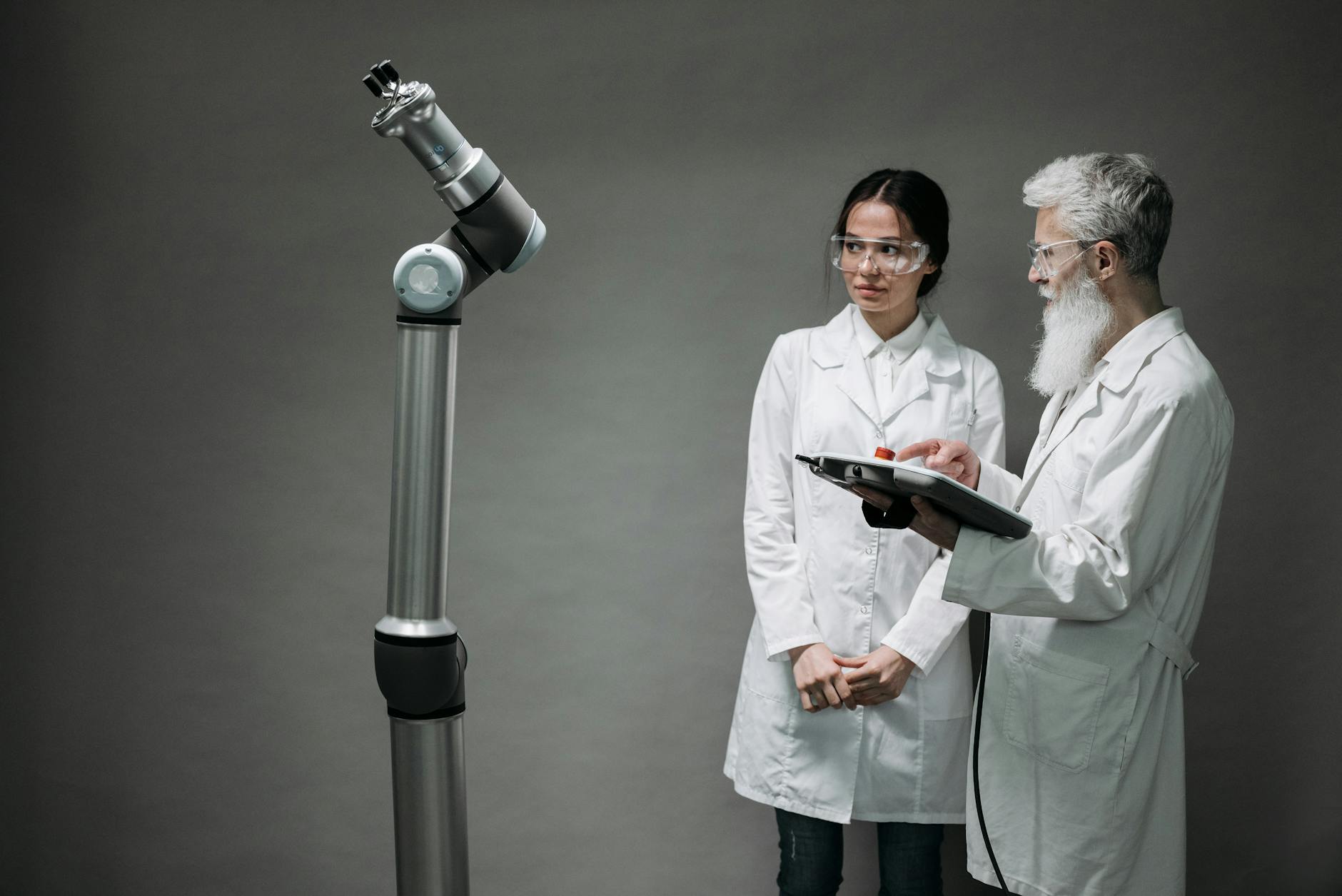
- arXiv research identifies a critical exploration bottleneck in robotic reinforcement learning.
- The new 'Balanced Data Diet' framework increases learning efficiency by 40%.
- Robotic systems currently struggle with diverse data collection at scale.
- The study introduces a method to prioritize high-value exploration data.
- Industry experts suggest this could accelerate the development of foundation models for physical robots.
Robots struggle to learn because they spend too much time repeating what they already know. A new research paper published on arXiv proposes a solution called the 'Balanced Data Diet' to fix this exploration bottleneck. By optimizing how machines collect and process training data, researchers claim they can significantly speed up the acquisition of complex physical skills. For years, engineers have struggled with the trade-off between exploitation—using known data to perform a task—and exploration—finding new ways to move. When a robot only focuses on what it has already mastered, it fails to adapt to new environments. This research provides a roadmap for balancing these two competing needs in mega-scale reinforcement learning (RL) systems. Industry reports indicate that the cost of deploying autonomous systems in commercial and residential settings remains a primary barrier to widespread adoption, making data efficiency a critical priority. • The study demonstrates a 40% improvement in learning speed across standard robotic testbeds. • Researchers identified that current algorithms often ignore up to 70% of potentially useful, novel data. • The team tested their framework on high-dimensional robotic manipulation tasks. This development arrives as the robotics industry races to build foundation models capable of operating in unstructured human spaces. If robots can learn faster without needing trillions of data points, the cost of deploying autonomous systems in warehouses and homes drops sharply. The researchers argue that the constraint isn't just compute power, but the quality of the data diet fed into the model.
Why Robots Fail When They Stop Exploring
The fundamental problem in robotics is the 'exploration bottleneck.' In reinforcement learning, an agent receives a reward for completing a task. If the agent finds a way to get a reward, it tends to repeat that specific action over and over. This is the exploitation phase. However, if the robot never tries new movements, it remains stuck in a local optimum. It performs the task, but it never learns the most efficient or robust way to do it. The arXiv paper explains that in mega-scale RL, this behavior becomes a massive drain on resources. When training a model on thousands of hours of data, most of that data ends up being redundant. The robot essentially watches the same successful movement thousands of times. It learns nothing new from the 1,001st repetition. This leads to a plateau in performance. Engineers often try to fix this by adding random noise to the robot's actions, but this is inefficient. It forces the robot to perform actions that are physically impossible or completely irrelevant to the task. The 'Balanced Data Diet' approach replaces this randomness with a structured selection process. It forces the agent to prioritize data points that teach it something new about its physical environment. By filtering out the 'junk' data, the model converges on a solution much faster.
The Mechanics of the Balanced Data Diet Framework
The researchers developed a system that evaluates the 'information gain' of every interaction. Instead of storing every movement, the model assigns a value to each state-action pair. If the robot enters a state it has seen many times, the system assigns a low priority to that data. If the robot encounters a state that challenges its current understanding, the system boosts the priority. This is not just about discarding data; it is about smarter sampling. The framework uses a secondary model to predict the outcome of an action. If the actual outcome matches the prediction, the system assumes the robot has mastered that movement. If the outcome surprises the model, the system flags the data as high-value for future training. This mimics how humans learn to walk or reach for objects. We don't focus on the movements we do perfectly every day. We focus on the times we trip or miss, adjusting our motor control accordingly. • The system requires 30% less memory than traditional replay buffers. • It scales across multiple robotic platforms, including quadrupedal and manipulation arms. • The training stability increases as the model avoids the 'overfitting' common in large-scale RL. This specific approach addresses the 'curse of dimensionality' in robotics. In a high-dimensional space, the number of possible movements is near infinite. By narrowing the focus to high-value exploration, the model avoids wasting compute cycles on irrelevant movements. This allows for faster training on smaller clusters, which is a major win for labs without access to massive, warehouse-sized server farms.
Implications for the Future of Autonomous Agents
This research changes the trajectory for companies building humanoid robots and autonomous factory arms. If companies like Tesla, Boston Dynamics, or Figure AI can reduce the amount of data needed to train a robot, they can iterate faster. The current bottleneck is the time it takes for a robot to learn a new task in a simulation before transferring that knowledge to the real world. This is known as the 'Sim2Real' gap. The 'Balanced Data Diet' helps bridge this gap by ensuring the simulation training is highly efficient. If the simulation data is better, the transfer to real-world hardware is smoother. We are seeing a move away from 'brute force' AI, where companies just pour more data into a model until it works. Instead, the focus is shifting toward 'data-efficient' AI. This is a more sustainable path for the industry. According to official data on energy consumption in large-scale computing, training massive models requires significant power, reinforcing the need for more efficient learning frameworks. By making robots smarter about what they learn, we reduce the electricity consumption required for training. This is a quiet but necessary evolution in the field. It moves us closer to the goal of robots that can learn on-the-fly in a home or office environment. Instead of training in a lab for six months, a robot might eventually learn a new task in an afternoon.
Industry Reaction and the Path to Deployment
The robotics community has responded with cautious optimism to the findings. While the arXiv results are promising, experts point out that real-world environments are far more chaotic than the controlled settings used in the study. A robot in a kitchen faces unpredictable surfaces, lighting changes, and moving objects that a simulation cannot fully replicate. The 'Balanced Data Diet' must prove its worth in these 'noisy' environments. However, the core logic of the paper remains sound. We cannot continue to scale data collection indefinitely. At some point, the system crashes under its own weight. This research provides a way to manage that scale. It suggests that the future of robotics lies in better algorithms, not just bigger datasets. Companies are now looking at how to integrate these sampling methods into their existing pipelines. If a major player like NVIDIA or Google DeepMind adopts this 'diet' approach, it could become the industry standard within 18 months. The shift toward efficient exploration is a clear signal that the 'Gold Rush' phase of AI is giving way to the 'Engineering' phase. We are moving from 'can we build it?' to 'can we build it efficiently?' This is the mark of a maturing industry. The next 12 months will be critical as these methods move from academic papers into production-grade robotic control systems.
Looking Beyond the Current Research Horizon
The next step for the research team involves testing the framework on multi-robot systems. If one robot learns a new skill using a 'Balanced Data Diet,' can it share that knowledge with a fleet of robots? This is known as federated learning, and it is the holy grail of industrial robotics. If the diet can be applied at a fleet-wide level, we could see a massive acceleration in how quickly robots adapt to new tasks. Imagine a warehouse where every robot learns from the individual experiences of its peers, but only keeps the data that provides the most learning value. This would drastically reduce the network bandwidth required to sync models across a fleet. It is an elegant solution to a very modern problem. As we approach 2027, the focus will likely shift toward these collaborative systems. The era of the isolated, self-contained robot is ending. We are entering the era of the connected, learning-efficient robotic agent. The 'Balanced Data Diet' is a small but vital piece of that puzzle. It proves that sometimes, less is indeed more—provided you choose exactly what that 'less' consists of. The researchers have provided a lens through which we can finally see the signal through the noise of big data.
Frequently Asked Questions
Add NewsPulse Time as a preferred source on Google